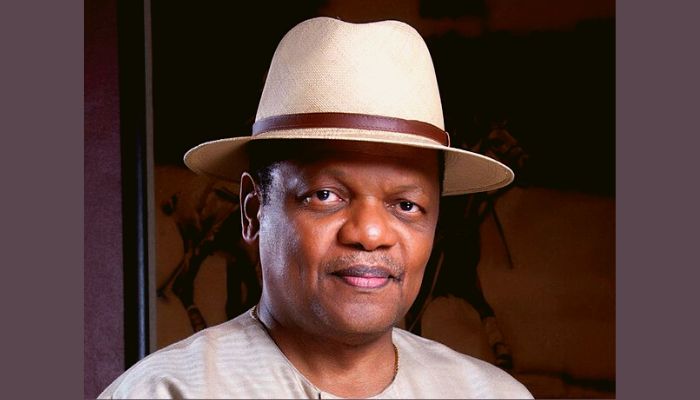
Atedo Peterside, the founder of ANAP Foundation and Stanbic IBTC, expressed his support for the Central Bank of Nigeria (CBN) in discouraging the use of FX policy as a determinant of importers’ profitability margins.
Peterside’s remarks come in response to a statement from the CBN, signed by Isa Abdulmumin, Director of Corporate Communications.
“Attacking a problem at source: @cenbank is right (See Circular) to discourage use of FX policy as a determinant of which importer achieves what margin of profitability. That is the role of levies & tariffs. FX market exclusions only fuel the parallel market & widen arbitrage.” Peterside posted on X
The CBN, in its statement, reiterated its commitment to enhancing liquidity in the Forex market, with a focus on maintaining orderliness and professionalism among market participants. The central bank aims to let market forces determine exchange rates through a “Willing Buyer – Willing Seller” approach. It also stressed that FX rates should be referenced from platforms such as the CBN website and FMDQ, as well as other recognized trading systems to enhance transparency and credibility in Forex rates.
Read also: CBN restores 43 items restricted from FX, 8years after

To promote price stability, the CBN will intervene in the Nigerian Forex Market to increase liquidity. As market liquidity improves, the frequency of these interventions will gradually decrease. Importers of the 43 items previously restricted by the 2015 Circular are now permitted to purchase foreign exchange in the Nigerian Forex Market.
The CBN is dedicated to clearing the FX backlog and achieving a single Forex market. Consultations are ongoing with market participants to reach this goal. The general public and market participants are encouraged to follow these guidelines.
The CBN’s move received mixed reactions on social media. “GREATGOD” on social media platform X argued for an outright ban on the import of certain items and urged domestic production. Meanwhile, “M_O” questioned whether the CBN could meet the demands of those excluded from the Forex market, and whether they might still turn to the parallel market.