The Financial Action Task Force (FATF) on Friday removed Nigeria from its grey list of countries that were under increased monitoring for money laundering and terrorist financing risks. The development marks a significant milestone in the country’s financial history, as Nigeria had been on the list since February 2023.
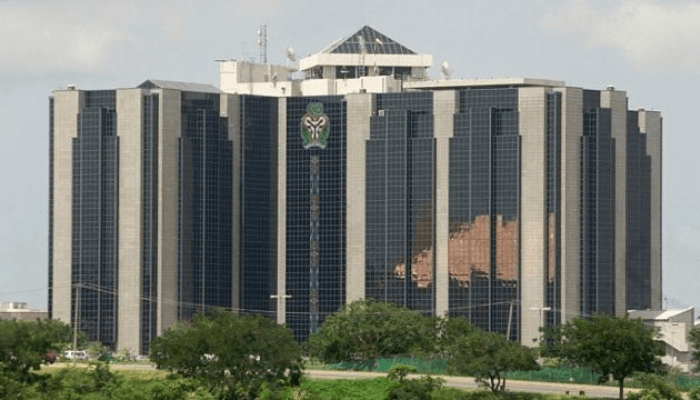
The delisting followed far-reaching reforms implemented under the leadership of Olayemi Cardoso, governor of Central Bank of Nigeria (CBN), particularly in the areas of Anti-Money Laundering and Countering the Financing of Terrorism (AML/CFT) measures.
The apex bank in May 2025, directed all financial institutions to implement real-time transaction alert systems as part of enhanced anti-money laundering (AML) compliance.
For many stakeholders, including the banking community, business operators, and investors, Nigeria’s exit from the grey list will open a new chapter of economic opportunity. It is expected to boost foreign investment inflows, ease the process of opening foreign bank accounts for businesses, and enhance the competitiveness of the naira in international markets. For over two years, the country had struggled with the severe implications of being grey-listed, a status that cast a shadow over the credibility of its financial system.

Read also: FATF delisting will boost investor confidence in Nigeria — SEC
The FATF grey list represents one of the toughest challenges for any nation’s financial sector. Countries placed on the list are considered to have strategic deficiencies in their AML/CFT frameworks, making financial transactions originating from such jurisdictions subject to enhanced scrutiny. This means banks and businesses from these countries face difficulties in international transactions, as global financial institutions exercise extra caution before processing their payments.
The FATF, a 40-member intergovernmental organization headquartered in Paris, plays a pivotal role in safeguarding the global financial system against money laundering, terrorist financing, and proliferation financing. Backed by the World Bank Group and the International Monetary Fund (IMF), the FATF develops international standards that ensure countries can trace, freeze, and recover illicit funds linked to drug trafficking, terrorism, cybercrime, corruption, and the illegal arms trade. Its decision to remove Nigeria from the grey list reflects significant progress in restoring financial system integrity and investor confidence.
According to the FATF’s latest report, as of February 2025, it had reviewed 139 countries and jurisdictions and publicly identified 114 of them for strategic weaknesses. Out of this number, 86 countries had successfully implemented the necessary reforms and were subsequently removed from the process. The FATF’s monitoring process involves identifying jurisdictions with serious deficiencies in combating money laundering, terrorist financing, and proliferation financing. For countries on the list, the FATF calls for enhanced due diligence and, in more severe cases, countermeasures to protect the international financial system from potential risks.
Nigeria’s removal from the list came alongside South Africa, Mozambique, and Burkina Faso, which were also delisted after demonstrating improved compliance with FATF standards. Nigeria and South Africa were placed on the list in February 2023, Mozambique in October 2022, and Burkina Faso in February 2021. The removal of these African countries marks a broader continental advancement toward stronger financial governance and international credibility.

Upon assumption of office, Cardoso initiated a series of strategic reforms that tackled the underlying issues that led to Nigeria’s inclusion on the list. The reforms focused on tightening supervision across the financial system, including the bureau de change segment and deposit money banks. The CBN worked to ensure banks complied with the FATF’s 40 recommendations, which mandate institutions to identify and verify their customers’ identities using reliable, independent sources of information.
Read also: NEITI commends Nigeria’s removal from FATF grey list, hails anti-corruption gains
Part of the compliance requirements also include identifying beneficial owners of accounts, verifying their identities, understanding ownership and control structures, and conducting due diligence throughout every business relationship. Nigerian banks were also required to ensure continuous monitoring of transactions to detect suspicious activities and prevent illicit fund flows through the system. Through these initiatives, the CBN succeeded in restoring transparency, strengthening regulatory oversight, and reinforcing confidence in Nigeria’s financial architecture.
Uju Ogubunka, president, Bank Customers Association of Nigeria (BCAN), described Nigeria’s exit from the FATF grey list as a welcome development and a major achievement for the country. He praised the CBN’s proactive measures and commitment to ensuring compliance with international financial standards. According to him, “It opens a new approach and opportunities in Nigerian banks’ dealings with international financial institutions. It shows that Nigeria’s financial system is safe for payments and other transactions. It is worth celebrating by all Nigerians.”
Ogubunka advised that the government should continue to uphold the standards that earned the country its removal from the list. He emphasised that maintaining compliance with the FATF’s 40 recommendations must remain a priority to prevent any future relapse. “Sustaining this success means doing things right consistently, strengthening monitoring, and ensuring that the system remains transparent and compliant,” he said.
At the just-concluded 2025 International Monetary Fund (IMF) and World Bank Annual Meetings in Washington D.C., the CBN further reinforced its commitment to financial integrity by signing a Memorandum of Understanding (MoU) with the Central Bank of Angola. The agreement, signed by CBN Governor Olayemi Cardoso and his Angolan counterpart, Manuel Antonio Tiago Diaz, was a major step towards enhancing financial sector regulation and combating money laundering in Africa.
Cardoso stated that the MoU aligns with Africa’s broader goals of economic integration and financial stability. The partnership aims to strengthen cooperation between both countries through information sharing, capacity building, and the exchange of technical expertise. The two institutions are expected to establish a bilateral framework for the reciprocal exchange of knowledge and supervision of cross-border institutions.
The MoU also covers key areas such as licensing, supervision, resolution planning, implementation of resolution measures for cross-border financial establishments, and the transparent exchange of information. Cooperation will extend to areas including foreign exchange management, financial markets, currency management, payment systems, financial sector development, banking supervision, and anti-money laundering and counter-terrorism financing. Both central bank leaders expressed optimism that the partnership will yield mutual benefits, promote financial stability, and deepen cooperation between their countries.
Stakeholders across the financial ecosystem have also commended Nigeria’s exit from the grey list, describing it as a testament to strong leadership, inter-agency coordination, and regulatory discipline. Timothy Melaye, head of the Lagos Office at the Inter-Governmental Action Group Against Money Laundering in West Africa (GIABA), acknowledged the Nigerian government’s unwavering commitment to AML/CFT implementation. Speaking at a sensitisation seminar for the organised private sector in Lagos, Melaye, who represented GIABA’s Director-General, Edwin Harris, said that money laundering and terrorist financing pose grave threats to global peace, security, and economic stability.
He noted that terrorist networks generate enormous funds through both legal and illegal channels, which are laundered through existing financial systems or underground networks. “The terrorist networks cannot be destroyed, or even made ineffective, unless concerted efforts are made at both national and international levels to block their financial sources. The promotion of well-regulated financial systems and services is central to any effective and comprehensive AML/CFT regime,” he said.
Melaye explained that money laundering and terrorist financing have become increasingly sophisticated and transnational, posing a growing threat to consumers, businesses, and governments. He emphasised that no nation can tackle the problem in isolation, highlighting the need for international cooperation. He pointed to FATF’s interest in Trade-Based Money Laundering (TBML), an emerging method where criminal groups disguise illicit proceeds through trade transactions. FATF’s reports in 2006 and 2008 identified TBML as one of the main methods of laundering criminal proceeds by manipulating trade values to conceal illicit origins.
He stressed that the private sector must play a key role in addressing these risks by raising awareness of money laundering and terrorist financing dangers, especially within trade and commerce networks. According to him, trade associations and businesses must remain vigilant in monitoring fund transfers and goods movements to prevent abuse for illicit financial purposes.
Also speaking, Pattison Boleigha, president and chairman of the Compliance Institute Nigeria, explained that the FATF grey list was developed to identify countries that need to strengthen their systems against financial crimes. He said member countries of the FATF are expected to domesticate relevant laws and regulations to fight money laundering, terrorism financing, and the proliferation of weapons of mass destruction.
He warned that failure to comply with the FATF’s recommendations has serious consequences for business and investment. “Our financial system suffers when we are on the list because correspondent banks will be unwilling to do business or open relationships with our financial institutions,” he said. Boleigha added that Nigeria’s exit from the list will restore global confidence in the country’s financial system and enhance the ease of doing business.
In a report published on its website, the FATF explained that it identifies jurisdictions with weak AML/CFT regimes through two public documents issued three times a year. It researches money laundering and terrorist financing trends, sets global standards, and evaluates countries’ implementation of its recommendations. The FATF noted that over 200 countries and jurisdictions have committed to implementing its standards as part of a coordinated global effort to combat organised crime, corruption, and terrorism.
According to the FATF, countries are evaluated with the support of nine FATF Associate Member organisations, the IMF, and the World Bank. Its decision-making body, the FATF Plenary, meets three times annually to review compliance levels and hold countries accountable. Those that fail to make progress are designated as “jurisdictions under increased monitoring” (grey list) or “high-risk jurisdictions” (black list).
Nigeria’s removal from the grey list is therefore not only a national success but also a demonstration of the effectiveness of ongoing reforms in the financial sector. It signals renewed global confidence in the integrity of Nigeria’s financial system and reinforces its position as an emerging destination for international investment. The CBN’s leadership, inter-agency collaboration, and continued adherence to international standards remain key to ensuring that the country never returns to the grey list again.