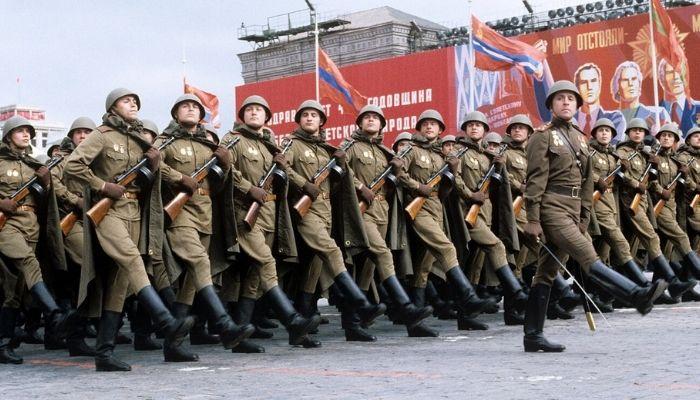
In 1988, when the impending fall of the Soviet Union was getting closer by the day, a Russian social scientist called Georgy Arbatov made the following cryptic comment to an American acquaintance, “We are going to do a terrible thing to you. We are going to deprive you of an enemy.”
When the Soviet Union fell in 1989, America had a new problem: Now that the Big Fight against the enemy had been won, what next? If for half a century, you have defined your foreign and national policy purely in terms of opposition to an enemy, what do you do with yourself when said enemy ceases to exist? How are you now supposed to define yourself when the fight against the enemy is all you have ever known?
Us vs Them: A useful but limited heuristic
Identifying oneself in terms of a fight against an enemy is something we are all too familiar with in Africa. From our anti-colonial movements where we said “Africa for Africans!” to our popular uprisings against dictatorships where we said “This person must go!” to the way we model our electoral campaigns after physical warfare, down to even the way we often relate within our family units, there is almost always as “Us vs Them”.

My friend Eugene Uzor regularly makes the point that historically and currently, selection of leaders in African societies is rarely based on who will deliver results for those they lead, but rather it is about who can apparently fight the external enemy and inflict maximum pain on them. Of course, this is not to say that political enmity or willingness to fight for causes is in itself a bad thing. I myself have previously written in this column that the missing ingredient in Nigerian politics, whose absence prevents the development of coherent political ideologies, is the ability to hold and act on political grudges.
Read also: Functional steel industry: Critical for economic growth
While the skillset needed to oppose or fight an enemy certainly has its uses – and those suited with this skillset have a place in society, especially in the military and national security space – Africa’s history over the past half century shows us that using “fighters against” as leaders in lieu of “fighters for” – actual nation builders – invariably results in economic collapse, deadly conflicts and human misery. Those who “fought the power” via activism or via warfare, and later became political leaders, such as Robert Mugabe, Idi Amin, Julius Nyerere, Kwame Nkrumah, Charles Taylor and many others – almost without exception became authoritarians who ran their economies into the ground or started off deadly conflicts. The sole exception that proves this rule is a certain Nelson Rolihlahla Mandela.
A psychologist’s perspective
This is the classic problem of positive definition vs negative definition that is explained by the work of psychiatrist Elisabeth Kübler-Ross. According to her, all human emotion boils down to one of just two things – fear and love. This means that the self-identity that is contingent on an external enemy, is built on fear and can only reproduce negative results. A positive self-identity on the other hand, centres on what an individual or group of people actually needs, hence it is built on love.

The positive identity seeks to serve the people and add value to their lives, as against simply fight an enemy. It asks “What do we want and how do we get it?” not simply “Who don’t we like and how can we cause them damage?” The negative identity by nature is insular and looks for targets. The positive one is more open to discover and explore solutions. The negative identity often looks for scapegoats excuses. The positive one looks for possibilities and solutions.
So the question that every African who claims to be future-oriented must answer truthfully is, “Am I looking up or down?”