|
Getting your Trinity Audio player ready...
|
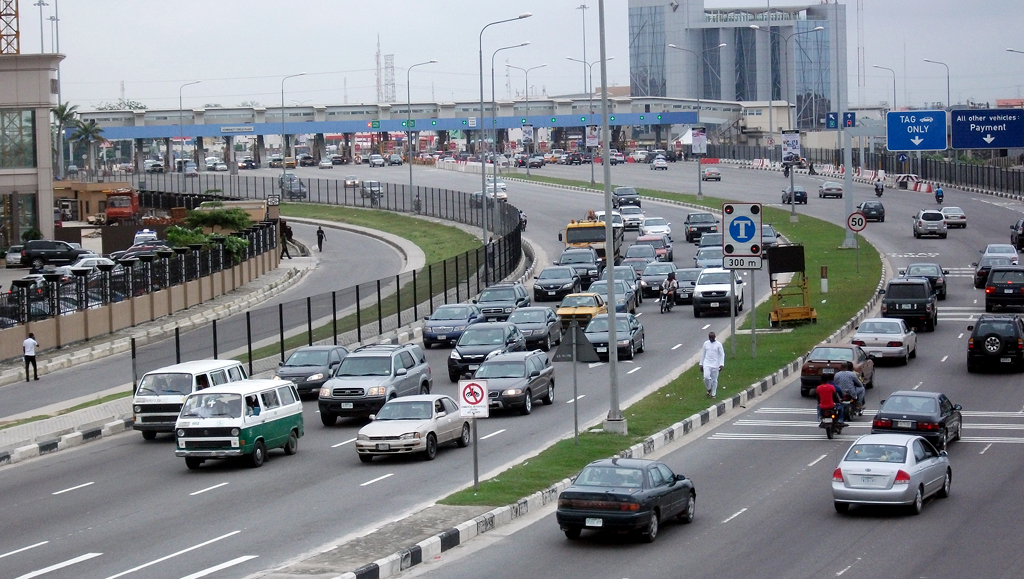
In response to pleads by traumatised residents to restore sanity to the chaotic environment, the Lagos State Task Force on Environmental and Special Offences, is stepping in to rid the roads in Apapa of the menace of commercial motorcycle operators also known as Okada.
Operatives of the task force, comprising regular and mobile policemen, armed with guns, were seen on Friday, raiding motorcycles in Apapa. Commercial motorcycle operations had been banned on expressways, major roads and bridges in Lagos since 2012.
The task force’s operation began four days after Governor Akinwunmi Ambode made his second visit to Apapa in about three years, and was greeted with basketful of complaints by business owners and residents who raised an alarm over the invasion of Apapa GRA by swarm of commercial motorcycle operators most of which have no registration plates.
The state government had been seen over the years to have failed to enforce its own legislation- Lagos Road Traffic Law, 2012, which outlaws the operations of commercial motorcycles on over 300 roads and bridges within the metropolis and some semi-urban areas of the state.

The road traffic law was enacted under the administration of Babatunde Fashola. The legislation was borne out of an urgent need to check the high rate of criminality that was associated with the activities of motorcycle operators.
Prior to the law, hardly had a day passed without cases of robbery with motorcycles in different parts of the state.
There was also the high incidence of motorcycle accidents and resultant loss of limbs and lives.
Reports from various public health institutions in the state in 2012 had shown an alarming rate of accidents involving motorcycles. For example, in February 2012, about 696 motorcycle accidents were recorded while in August, same year, about 646 cases were reported.
Statistics from the National Orthopedic Hospital, Igbobi, Lagos, however, showed a reduction in the number of motorcycle accident victims received at the emergency section of the hospital. According to the statistics, there was a drop in the number of victims received at the hospital, from 183 between June and August, to 130 between September and November, 2012.

Obianyor Ocee, an orthopedic surgeon at the time, attributed the development to the enforcement of the road traffic law. According to Ocee, “the enforcement of the ban takes a lot of them off the roads, thereby resulting in less accidents occurring.”
“In terms of economic factors, the amount of money invested or spent in treating the patients could be saved and channelled towards other needs, Ocee had said.
These gains were, however, short-lived, as the state government soon relaxed the enforcement in late 2013 into 2014 in the build-up to the 2015 general elections. The relaxation of the enforcement was such that the Fashola administration, at the peak of the 2015 electioneering campaigns, was distributing helmets to motorcycle operators, a development that was seen as playing to the gallery thereby encouraging disobedience to the traffic law.
Many had accused the government of placing politics over and above long-term gains of saving lives and sanitising the roads as obtained in other climes.
The 11th quarterly town hall meeting hosted by Governor Ambode, at the Apapa Amusement, on Tuesday, April 17, thus provided an avenue for the upset residents of Apapa GRA to again ventilate their anger over the uncontrolled invasion of their ‘homes’ by motorcycles. According to them, Apapa is susceptible to attacks, as all manners of persons are brought in by motorcycle operators without any form of restraint.
Igho Dafinone, a resident of the Apapa GRA, who spoke at the meeting, appealed for the governor’s intervention.
He was corroborated by Oye Ayinde, another resident, who called for an immediate action to restore sanity to Apapa.
In response to the yearnings of the residents, Governor had directed the security agencies especially the Lagos police command, to step up the enforcement of the road traffic law.
BD Sunday gathered that the deployment of the task force which raided the commercial motorcycles on Friday was in connection with the governor’s directive during the town hall meeting.
A member of the task force, who did not want his name in print, told BD Sunday, at Marine Bridge, where several motorcycles were seized and loaded into two trucks, that their operation was a directive from Alausa.
“There is a law that prohibits the operations of Okada in certain areas of Lagos State. We have the directive to enforce it and that is exactly what we’re doing.
Speaking further, he said “the law does not ban people who want to go into Okada business, but there’re areas they can’t operate. We expect them to obey the law,” said a member of the task force.
It is, however, to be seen whether the state government would this time sustain the enforcement it has started in Apapa or play around it like the previous administration, as the 2019 general elections approach.
JOSHUA BASSEY