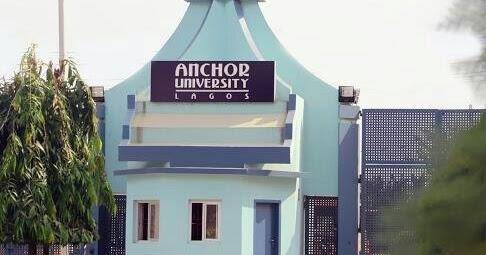
The management of Anchor University, one of the private universities licensed by the Federal Government in 2014, has approved the commencement of virtual classes for all students of the University in line with recent directive by Adamu Adamu, minister of education.
The minister in a teleconferencing meeting with all vice-chancellors, provosts and rectors of tertiary institutions in the country recently ordered that learning in such institutions be shifted online with immediate effect.
Anchor, in a bid to ensure that the global disruption caused by Coronavirus pandemic does not significantly impede students’ programmes, has begun the virtual option.
Joseph Olaseinde Afolayan, vice-chancellor of the institution while speaking about the possibilities of online classes for the semester which officially started on Monday, 20 April 2020 said the prolonged lockdown provided the University with the option to administer classes online.

“We didn’t plan for classes outside of the University campus before the lockdown order as the University had concluded the first semester and students had gone on semester break. However, we will continue to observe the developments and may revert to online classes if the need arises,” he said while discussing the possibility of classes going virtual after the lockdown.
Adekoya Ayomide, a 300-level student of Accounting, one of the students who received the information with excitement said the online session is a welcome development,
“I’m happy about this development and I look forward to taking my classes online. For this, I am happy that I’m a student at Anchor University because I used to think this kind of experience is only possible in European countries. I can’t wait to be a part of the session,” Ayomide said.
On his part, Lawal Emmanuel, a 400-level student of Political Science, expressed concern about the attitude of the students to the sessions and the quality of information to be given by lecturers.
“If students are serious about the classes, considering that there would be distractions around and lecturers provide good quality visuals, it’s going to be as good as traditional classrooms. The best part is, we will maintain the required distance while still having our classes,” he said.

Fatokun, J.O, deputy vice-chancellor expressed confidence that the classes would be seamless and productive as activities get busy across different departments.
“The truth is there are many challenges to having seamless virtual classes due to poor infrastructure across the nation but those cannot stop us from going ahead. I know there will be a couple of hitches as we commence but as classes continue both students and lecturers will adjust and we will have very productive sessions learning online,” he declared.
“We are also very confident of robust interactive sessions between lecturers and students as we are deploying the newly developed video component of Google classroom, Meet link, in our online classes,” he said.