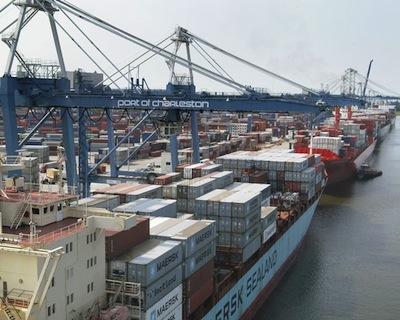
If Nigeria continues the implementation of foreign currency restriction from genuine importers in the coming year as stipulated by the Central Bank of Nigeria (CBN), it will be extremely difficult for port business to step up in 2016, analysts have predicted.
The analysts say that the sharp decline in the volume of items imported recorded in the nation’s seaports in 2015, which currently stands at 40 percent, may result to shutting down of some ports and bonded terminals in 2016 due to inactivity. Bonded or inland container depots (ICDs) are dry port facilities built during the boom period to help decongest over-used port facilities and bring port business closer to the people.
“I do not see the port business picking up in the first quarter of 2016 and there is strong indication that the volume of Twenty Equivalent Units (TEUs) will continue to reduce. This may get to the extent where foreigners who invested in Nigeria’s port terminals, will be facing borrowing. This led to a crash in treasury bills rates and loss of spread by banks.
As the economy weakens, credit collection became seriously hampered, which implies possible escalation in loans loss provisioning for the banks, as they close their accounts for the year.

“Overall, it is doubtful if the banks might have had a good year. The year 2016 may be likewise challenging, given the outlook of the crude oil market which might deteriorate further.”serious pressure of cost saving, while some, including bonded terminals, will have to close shop due to lack of business,” said Tony Anakebe, a maritime analyst.
Anakebe, who painted a gloomy business outlook in 2016, said container terminals are currently witnessing a sharp decline in activity and that this may force most of them out business in the New Year. “The year 2016 will definitely be tough for the port industry and this may even result to capital outflow, as a result fear of the unknown.”
“People believe that 2016 is going to be more difficult than 2015, but I believe that once we overcome the current downturn, things will go back to normal from the second quarter of 2016 but Nigeria needs to encourage coastal movement of goods, as well as the establishment of a good rail network to boost cargo movement,” said John Jenkins, managing director of Ports and Cargo Handling Services Limited (PCHSL) in an interview with BusinessDay.
Jenkins further observed that: “For there to be boom in business activities at the port in 2016, Nigeria needs to look into its logistics chain by not only linking Tin-Can port with Apapa by rail, but also resuscitate its bilateral agreement with landlocked countries like Niger and Chad, to bring their imports through Nigerian ports.”
Jonathan Nicole, president, Shippers Association of Lagos, said government needs to woo back Nigerian shippers who diverted their business to countries like Benin Republic, Ghana, Ivory Coast, Senegal and even Guinea-Bissau, over high cost of doing business at the port. Nicole further said there is need to reduce the cost of doing business in 2016.

Reducing the cost of doing business will make 2016 a year of greater activity and Nigerian shippers will become very proactive as they used to, he said. He further added that, “Once the cost of doing business is brought down, we will ask for the extension of our ports and revamping of Warri port for the benefit of shippers in Onitsha and Nnewi.
“We are very positive that once the government reverses the CBN forex restriction policy, the private sector will be busy and industries will have the facility to bring in raw materials to enable them function optimally and then more Nigerians will be employed. But if the government continues to hold onto the policy, there would be more job losses as volume continues to decline,” Nicole added.