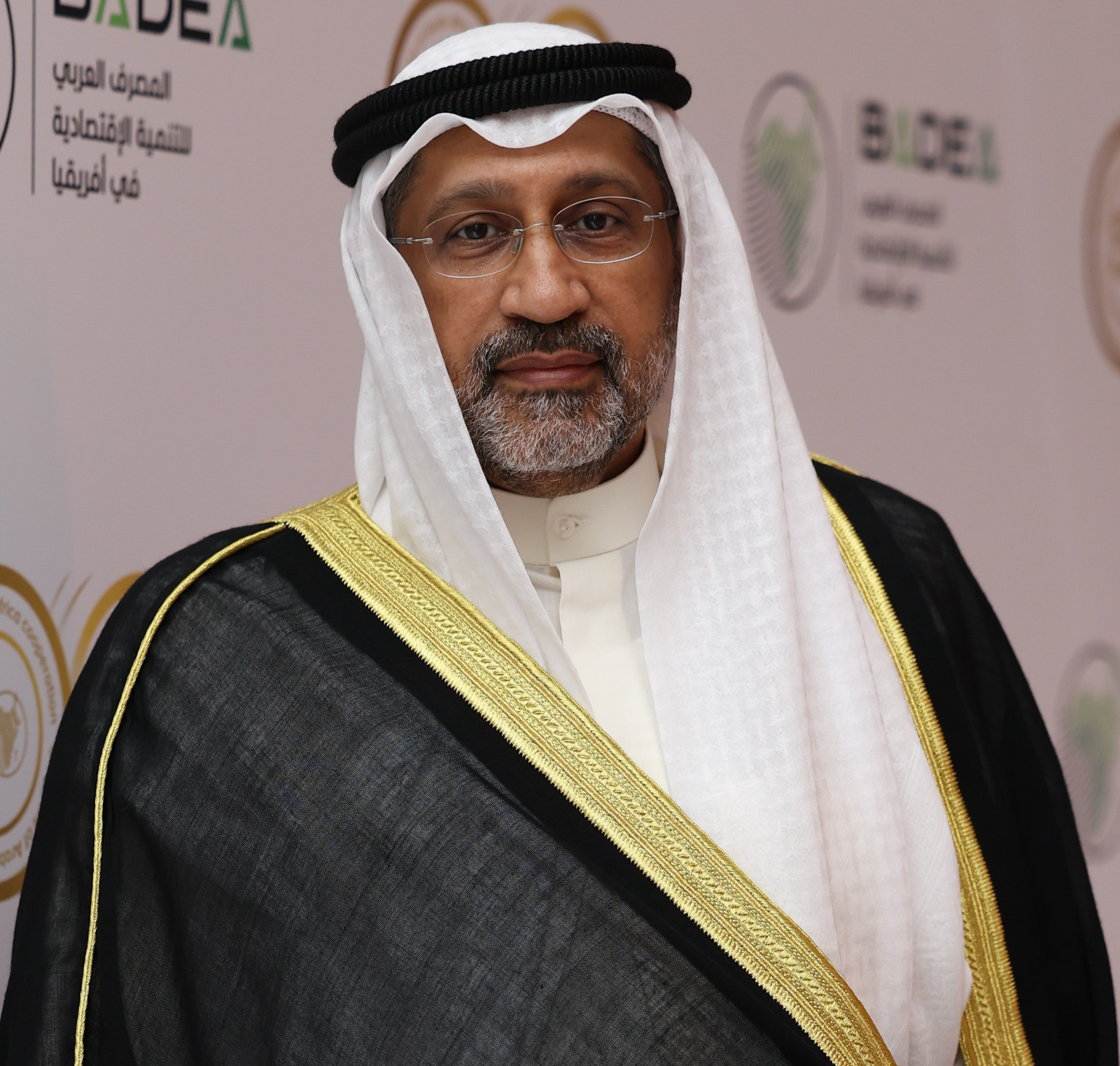
Abdullah Almusaibeeh has been appointed president of the Arab Bank for Economic Development in Africa (BADEA) as his predecessor, Sidi Ould Tah takes a bow to fully join the African Development Bank’s presidency race.
Almusaibeeh who, until his appointment was a board member of the bank, has been ratified as president following an annual meeting held in Kuwait City, according to a statement issued by BADEA.
“Mr. Almusaibeeh’s appointment is seen as a continuation of BADEA’s strategic path, with a clear ambition to consolidate its achievements and further expand the institution’s reach at a time when African economies are facing growing financial needs,” the statement read.
The new president holds a degree in Mathematics from Kuwait University and is a seasoned expert in international development finance.

He joined the Kuwait Fund for Arab Economic Development in 1993, holding several leadership roles overseeing portfolios in Asia, Latin America, the Caribbean, and the Arab region.
Since 2022, he has served as Director of the Operations Department and his expertise extends well beyond Kuwait, having represented the State of Kuwait on the steering committee of the Syria Recovery Trust Fund, and serving on BADEA’s Board of Directors, as well as on the administrative committee of the Al-Aqsa and Al-Quds Funds.
This change in baton comes at a time when BADEA is experiencing unprecedented momentum, driven by Tah’s visionary leadership since his appointment in 2015 and his tenure officially ending on June 30, 2025.
Under Tah’s watch, the Bank’s capital tripled and its operational volume also increased threefold, elevating BADEA to the ranks of Africa’s leading financial institutions.
“This growth has been marked by expanded budgetary support to states, major investments in infrastructure, and a significant increase in private sector financing,” the statement read.

Since its inception fifty years ago, BADEA has funded projects and operations amounting to over $15 billion, of which $11 billion was delivered under Tah’s leadership alone.
In just ten years, the bank has provided financing that more than doubles what was achieved in the previous forty years.
More importantly, the pace of project and operation implementation has significantly accelerated, with annual disbursements increasing eightfold over the past decade.
According to the statement, this rapid expansion did not compromise the quality of the Bank’s assets. On the contrary, the non-performing loan (NPL) ratio dropped from over 10% to just 0.5%.
Read also: AfDB presidential candidates under scrutiny
BADEA has transformed from an unrated to one that has earned extremely high ratings from international agencies. Initially self-funded, the Sudan-based bank has successfully established itself as a trusted regular issuer in the international capital markets.
The institution has also obtained ISO certifications in key areas such as ESG, quality management, and IT security, while successfully undergoing a comprehensive digital transformation.
“BADEA has demonstrated notable resilience in navigating multiple crises, including the Covid-19 pandemic, political upheaval, and the war in Sudan.”
Recognising its pivotal role and the successful delivery of its transformation agenda, BADEA’s shareholders approved an exceptional capital increase of 376% in 2022.
Under Tah’s-led bank, the institution invested $2.3 billion in more than 800 AfricanSMEs, creating over 50,000 jobs across countries including Kenya, Senegal, Rwanda, and Ivory Coast.
These targeted investments have focused on high-potential sectors such as
agriculture, renewable energy, and tech start-ups. BADEA supported major infrastructure projects, including the installation of 400 MW of solar power capacity in arid regions, supplying electricity to over 200,000 homes and businesses.
Strategic road projects connecting agricultural hubs in East Africa, representing an investment of $1.2 billion, have reduced transport costs by 15 percent, boosting the competitiveness of local agro-industries and supporting thousands of farmers sustainably.
Tah’s tenure also promoted the development of industrial corridors and smart city initiatives focused on sustainable urban planning, enabling greater participation by African businesses in BADEA-financed projects.
Alongside these achievements, Tah is now a candidate for the presidency of the AfDB, building on his widely recognised track record in economic development, financial inclusion, and infrastructure advancement across Africa.