Give us a brief background of your journey from law to being a chef.
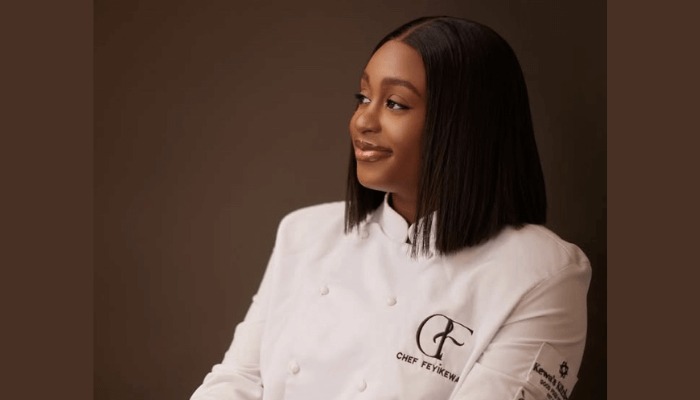
Feyikewa Animasaun: My name is Feyikewa Animasaun, and I’m both a chef and a lawyer. I founded Kewa’s Kitchen first, followed by Ajoje, which has become a significant part of my life. My academic journey began in the UK, where I studied law, and after university, I returned to Nigeria to continue my legal education. I was called to the bar in Nigeria, a milestone that solidified my foundation in law.
My path to food wasn’t a sudden shift or pivot from law. Instead, it’s been a dual journey. Equally passionate about law and equally passionate about food. From the start, I knew I wanted to establish a strong base with my law degree before fully diving into my culinary ambitions. However, I don’t see my legal career as over. I’ll probably go back to it at some point. For now, food has taken center stage, but law remains a vital part of who I am.
After finishing law school, I saw an opportunity to formally hone my culinary skills. I enrolled in culinary school, a decision that marked the moment I chose to pursue my food dreams wholeheartedly. That’s when Kewa’s Kitchen came to life. I noticed a gap in the market for quality catering at weddings, events, and after-parties in Nigeria. Kewa’s Kitchen filled that niche, offering not just event catering but also lunch delivery services to offices. It was about building a brand that people could rely on for delicious, well-executed meals.

Once Kewa’s Kitchen stood on its own as a solid brand, I turned my attention to Ajoje, my passion project. Ajoje is more than a business—it’s an extension of my identity and values. It’s now evolving into a brand in its own right, but its roots lie in my lifelong love for food and community. Law and food have always coexisted in my life. Think of it like studying multiple subjects in school: you prioritize one at a time. Right now, food is my focus, but law is never far from my mind.
Can you give an example of when your skill set in law applies to your work as a chef?
Feyikewa Animasaun: One area of law I’ve always been drawn to is intellectual property law—it’s where I wanted to specialise. When people think about food and chefs, they kind of forget that you are a creative that also needs protection. This perspective shapes how I run my businesses.
For instance, I use my legal knowledge to safeguard my recipes, branding, and original ideas—though protecting food creations can be tricky. It’s also about the practical side: drafting contracts with staff and partners to ensure clarity and fairness. My background lets me join legal conversations confidently, rather than being blindsided by them. It’s less about day-to-day cooking and more about the backend—ensuring my creative and business interests are secure.
So Ajoje is the brand. What does it mean to you, and why is it so important to build a space centered around communal dining?

Feyikewa Animasaun: Ajoje means everything to me—it’s my life’s work. “It’s a reflection of my life’s work,” I say. It’s very much a reflection of me as a person when you enter the space. It’s not just a dining experience; it’s a journey that mirrors my upbringing and passions. Growing up in England, I was surrounded by diverse cuisines, sparking my love for food, fresh ingredients, and creativity. Ajoje is where I express that love, blending Nigerian traditions with global influences.
The space feels like home—intimate and welcoming, with a communal table that invites connection. The decor mixes modern and traditional touches, reflecting my style and Ajoje’s identity. Every detail is curated to foster community. “Once you bring people together, food isn’t only the focal point,” I say. Something magical happens beyond them sitting down and eating. Strangers sit family-style, sharing meals and stories, often leaving as friends. That’s the heart of Ajoje: food, community, and connection.
You’re balancing tradition and innovation. Can you walk us through your thought process for one of your signature dishes?
Feyikewa Animasaun: Two side dishes really capture what Ajoje is about: charred broccoli with chili oil and roasted carrots. The broccoli starts with its chili oil, inspired by Southeast Asian flavors from my travels. The chili oil takes inspiration from a lot of areas of Southeast Asia, but what’s interesting is that we use Iru in the chili oil. Iru, a fermented locust bean, is a Nigerian staple— it has a unique smell we normally make fun of as kids but packed with umami. It transforms the oil, adding depth to a vegetable many avoid. Paired with charred broccoli, it’s a dish people rethink and love.
The roasted carrots are simpler but just as striking. People just kind of look down on carrots, but what we do at Ajoje with the carrots is very simple. We season them with salt, roast them with fermented honey, and spice them with coriander and cumin seeds—flavors from Thai or Indian cuisines, not native to Nigeria. This elevates a humble vegetable into a menu mainstay, a favorite since day one. Both dishes blend the familiar with the unexpected, showing how innovation can honor tradition.
Are you thinking of expanding from one location, and if so, how will other branches maintain the value of the brand?
Feyikewa Animasaun: Expansion is on my mind this year, but I’m taking it slow. What’s so unique about Ajoje is how intimate it is. I’m trying to make sure we don’t lose the core of what Ajoje is. People love its homey feel, and I don’t want growth to dilute that. Many businesses rush to capitalize on success, but I’m okay leaving money on the table if it means staying true to the vision.
I’d love to see Ajoje in other Nigerian cities or beyond, but it has to grow organically. There’s no blueprint for this concept, so I’m studying what people love about it and exploring how to adapt it without losing its soul. It’s about patience and preserving authenticity over quick profits.
What were the challenges faced opening an establishment like this in the heart of Lagos?
Feyikewa Animasaun: Opening Ajoje wasn’t without hurdles, but they unfolded in stages. The best thing for us was having everything ready by the time we wanted it to be ready. In Nigeria, timelines slip—two months become four due to construction delays or kitchen fabrication setbacks. Those were the big ones: getting the space and equipment right took longer than planned.
I designed Ajoje to avoid classic restaurant pitfalls, preempting challenges with a non-traditional structure. That foresight smoothed the launch, making it less chaotic than it could’ve been.
You mentioned changing your menus with the seasons. How often does the menu change, what factors affect it, and where do you source your ingredients?
Feyikewa Animasaun: I use a calendar to track seasonal produce. We currently have a calendar that tells me when produce is going to be in season. Take mangoes for example, I love them in savory and sweet dishes, but when their season ends, we shift gears. Same with agbalumo (African Star Apple). As seasons wind down, we develop new recipes, unveiling menus like our upcoming September one. It’s about keeping ingredients fresh and consistent.
I source from Mile 12 Markets, Makoko, Law School, Under the Bridge, and independent farmers. Nigeria’s artisanal producers amaze me—local broccoli, strawberries, and honey from beekeepers I didn’t know existed growing up. It’s been a joy discovering and showcasing this quality.
A good restaurant is as good as its chefs. How do you work with your staff?
Feyikewa Animasaun: The Ajoje team is absolutely amazing. From chefs to kitchen assistants, they’re a blessing. They buy into Ajoje’s vision, even though it’s new to them. When we roll out a menu, we taste everything together, and they give feedback. At first, the flavor profiles throw them—unfamiliar combinations—but once they get it, their creativity shines.
My favorite part is seeing them take recipes further. Like with our fish dish—they tweak ingredients, balancing it their way. It’s not just my vision; it’s a collaboration where their ideas elevate the food.
The dining experience includes question cards for interaction. How important is that?
Feyikewa Animasaun: The questions on the table are really at the heart of the experience. They spark conversations among strangers, making Ajoje more than a meal. We’ve had amazing stories of people meeting and friendships developing. Families reconnect, and new bonds form—all from those cards. It’s about feeling connected, not just eating.
So Ajoje has birthed true friendships from strangers?
Feyikewa Animasaun: Absolutely. We get that all the time. Social dinner guests have met up later in places like Abuja, and I’ve made daily friends from the table myself. We’re still waiting for the first Ajoje couple or baby, but the connections are real and lasting.
How easy is it to book a ticket and experience this communal dining?
Feyikewa Animasaun: We don’t aim to be exclusive—limited seats just come with the concept. We’re trying to ensure more people have access to Ajoje. We’re boosting social dinners—where strangers buy tickets to dine together—from once a week to possibly three. With the new menu in September, we’ll offer more dates. Right now, it’s private bookings only as the current season ends, but soon, tickets will be up for grabs.
Are the prices public?
Feyikewa Animasaun: Yes, social dinner tickets go through TixAfrica, with prices listed there. You can also book via WhatsApp, where we send details. Prices are on our website and Instagram stories too—we don’t post full menus online, just the essentials.
If you could invite anyone, living or dead, to Ajoje, who would it be and what dish would you serve them?
Feyikewa Animasaun: Anthony Bourdain tops my list. I would love to see how he would interpret Ajoje. I’ve followed his career, inspired by his food and storytelling. His Nigeria visit years ago stuck with me—I wish I’d met him. I’d serve him the charred broccoli with Iru chili oil, curious what he’d make of its bold flavors and the communal vibe. He’s somebody I’ve really looked up to. Sharing Ajoje with him would be a dream.