|
Getting your Trinity Audio player ready...
|
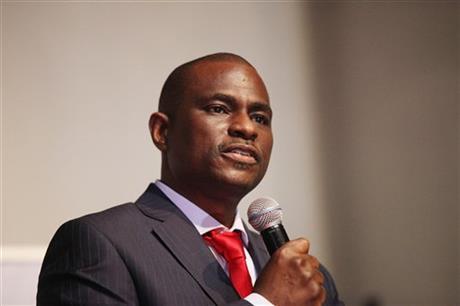
Airtel Nigeria, the second largest telecoms firm by revenue (with a customer base of 30m), is mulling a listing on the Nigerian Stock Exchange (NSE), Segun Ogunsanya, its CEO), said yesterday.
“Airtel is not shying away from a listing, we are certainly considering it, and we are in talks with the NSE to this regard,” Ogunsanya disclosed at the NSE Bloomberg CEOs Roundtable.
It would be recalled that in July, MTN Group commenced the process of listing its biggest subsidiary, MTN Nigeria, on the NSE.
Experts tell BusinessDay that another listing from the telco sector would further deepen the liquidity of the stock market. “It is also a positive development for investors and the companies to be listed,” said Kyari Bukar, CEO of Central Securities Clearing Systems, the clearing and settlement house of the Nigerian Capital Market and the NSE, by phone.
“It would bring additional transparency and boost confidence in the stock market,” Bukar added.
MTN Group Limited appointed Citigroup Inc. and Standard Bank Group Limited as advisers to list the wireless company’s Nigeria business on the NSE. The company said in a statement that it was targeting 2017 to list its shares.
Ogunsanya did not give specific details on the targeted year for the listing or the advisers it would be consulting.
The NSE All Share Index (ASI) jumped 0.4 percent t0 close at 27,599.03 points Wednesday, from 27,493 on Tuesday. Market Capitalisation stood at N9.47 trillion, while total deals were 3,302 led by the financial sector.
The Information and Communications sector contributed 12.62% to total Nominal GDP in the Second Quarter of 2016, lower than the 13.89% recorded in the same quarter of 2015, and slightly higher than the 12.25 percent it contributed in the pre-ceding quarter, data by the NBS show.
The sector grew by 1.35 percent (year on year) in real terms, in the second quarter of 2016, mainly driven by Telecommunications & information services.
Compared to the rate recorded in the corresponding period of 2015, this was 4.91 percentage points lower, and it was also lower by 2.71 percentage points when compared with rate recorded in the First Quarter of 2016.
In contrast with Nigeria’s economy, which recorded a real growth rate of – 0.36 percent in the first quarter, growth in the telecommunications sector increased to 5.00 percent from 3.49 percent in the final quarter of 2015.
The second quarter GDP results showed that the sector grew further by 1.49 per cent from 5.00 percent.
“For every 10 percent increase in broadband penetration, it equates to 1.3 percent growth in GDP. I think the government must recognise the potential of the ICT sector in driving economic diversification,” Ogunsanya of Airtel said. “If I had an audience with President Buhari I will ask him to push a ‘Digital Nigeria’ to drive growth.”
The World Bank acknowledges the socio-economic impact of broadband penetration, and the International Telecommunication Union (ITU) currently promotes broadband through the Broadband Commission, for the benefit of nations.
Recommendations of this commission make it imperative that any nation that is serious with economic development must address the issue of availability of broadband very seriously,’’ he said.
Umar Danbatta, the executive vice chairman, Nigeria Communication Commission (NCC), says broadband penetration in Nigeria is at 13 percent.
LOLADE AKINMURELE & FRANK ELEANYA