When I received an invitation to attend a function holding at the State House, Abuja last Thursday, I had mixed feelings. First, I had to confirm that the invitation was not a scam, moreso as there was a yahoo contact email on the invitation card. Ultimately, I telephoned my benefactors and received a firm confirmation that the invitation was genuine. I plucked courage to ask whether a return ticket was a part of the bargain and received an answer in the negative. I refused to be deterred. The prospect of hobnobbing, as it were, with Africa’s most powerful man was too good to miss.
Though I had pre-paid for the Nigerian Bar Association (NBA) Annual General Conference (AGC) holding in Owerri, I had argued elsewhere that the outbreak of the Ebola pandemic had made a postponement tenable. Accordingly, I had resigned myself to a sombre week in Lagos to put finishing touches to the compendium on NIGERIA’S TOP 100 LAWYERS. However, that confirmation immediately torpedoed that plan and turned everything into a frenzied preparation for my inaugural visit to Aso Rock Villa.
A multitude of challenges promptly surfaced. First, I had no chauffeur-driven limousine waiting for me at Nnamdi Azikiwe International Airport to ferry me to the State House. What is more, I had assured myself that I had no plans to splurge on a return flight ticket in light of the humongous bill dropped on my laps by the proposed printers of the compendium. In the absence of the long awaited fast-rail service, the ubiquitous road transport services beckoned.
My next challenge was how to commute to and from Aso Rock Villa, assuming I safely navigated the treacherous Nigerian roads and got to Abuja in one piece. I then consulted a friend who had made it a point to tell me he had visited the Villa sometime ago for an event and he warned that even if I got safely to the Villa, the scarcely visible and gun-toting security operatives could mistake me for a prey on their shooting range should I attempt to walk the long distance from the Villa to the outer gate in search of a taxi cab. I quickly conscripted an Abuja-based professional colleague as my ‘chauffeur.’ He would later thank me for the favour done him in allowing him see the four walls of the Villa. I confessed to him that the feeling was mutual, though in differing respects. The almost 15-hour nightmarish road trip to Abuja via one of the ‘elite’ transport services is a story for another day.

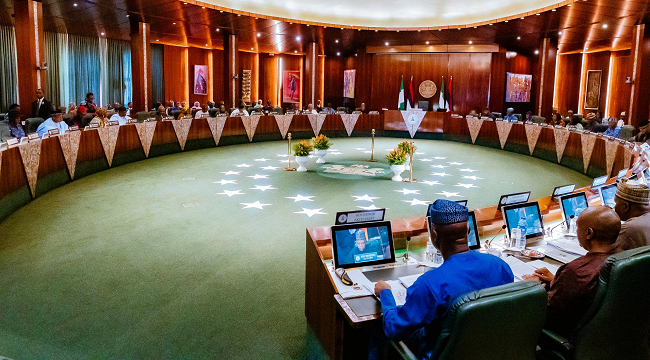
On D-Day, my friend and I arrived the Villa gate ahead of the 8:30 scheduled start-off time, scaled through the multi-layered security checks, and took vantage seats inside the expansive State House Conference Centre, formerly called the Banquet Hall. Sooner than later, the heavyweights of Nigeria’s politico-economic and public spheres started trickling in, later joined by Waje, Omawumi, Bez and Klint de Drunk among others. A playback of their Centenary Theme Song made for a powerful opening when Mr. President eventually arrived at 10 a.m. prompt. The majesty of his entry in the charged ambience of the State House told me that I was in the right place at the right time. It was also the main reason why I came – to gauge the aura around most presidencies that has led to Africa holding the dubious honour of the continent with the largest number of sit-tight rulers.
The occasion was the formal launch of the National Electronic (e-ID) Card by President Goodluck Ebele Jonathan. The president ultimately received his e-ID card, heralding the official launch of the e-ID pilot programme in the country. In the pilot phase, the Nigerian Identity Management Commission (NIMC) will issue MasterCard-branded identity cards with electronic payments functionality to 13 million Nigerians. The initiative is touted as the largest rollout of a biometric-based verification card with an electronic payment solution in the country and the broadest financial inclusion programme in Africa.
The National Identity Management Commission (NIMC) Act 2007 provides for the establishment of the National Identity Database, assignment and use of multi-purpose card and the National Identity Number (NIN), as well as the integration and harmonization of existing identity databases. The commission has the mandate to provide a secure means to access the National Identity database that can irrefutably assert a person’s identity.
The NIMC Act also directs the commission to register births and deaths as well as issue a multi-purpose (smart) card to every registered person 16 years and above. It was in discharge of the later mandate that Jonathan unveiled the e-ID card which is both a national identity card and a payment card. Indeed, the President promptly demonstrated the multi-facetted features of the e-ID card by using it to withdraw crisp Naira notes from an ATM and to purchase an I-pad from a vendor through a POS terminal.
Clearly indicating that he was satisfied with the work of the NIMC management led by Mr. Chris Onyemenam (“Mr. Identity”), himself a lawyer, the president said the NIMC is a clear example of a functional government agency, adding that it is yet a demonstration of government’s resolve to build strong institutions that can deliver on their mandates. Noting that “today is a very glorious,” Jonathan described NIMC as a “success story,” adding that he was “particularly pleased” with the work of the commission.

Diverse stakeholders including the Secretary to the Government of the Federation Anyim Pius Anyim, Finance Minister Ngozi Okojo-Iweala, Agriculture Minister Akinwumi Adesina as well as Mastercard and KPMG officials harped on the gains of the paradigm shift. Everyone agreed that the e-ID card will combat identity theft and related frauds by providing a reliable, sustainable and universally acceptable means of confirming a person’s identity (it is accepted in all 210 countries of the world), facilitate the work of INEC in managing the electoral process, enhance the work of law enforcement agencies by tracking the use of ghost identities by criminals, and checkmate the incidence of ghost workers. The new identity management system will also enable the country to better manage its security and national currency, achieve financial inclusion and bolster consumer credit by acting as a credit reference agency, and optimize deployment of resources by curtailing current duplication of Know Your Customer (KYC) projects by sundry entities including banks, TELCOs, State governments, and MDAs as it relates to pensions, drivers’ licence, and taxes among others.
Jonathan emphasized that one of the key benefits of the new identity management regime is its potential as a platform to deliver social assistance to target groups as against the current regime of general subsidies which scarcely get to the desired groups. This will enhance social security and boost the standard of living of the more vulnerable segments of the population. Indeed, his spell-binding and anecdotal treatise on the shenanigans that have befallen the subsidy regime will make a few advocates green with envy. For a reward, he received a sustained applause from the audience. Not a few must have thought that Mr. President does have the gift of the garb.
The proliferation of data collection entities remains a cog in the wheel of progress towards a centralized national data repository system. In a country where data protection and privacy laws are either non-existent or in infancy stage, this poses serious questions, even threats. This writer is not aware of any stand-alone, data protection-specific law in Nigeria. The same is true of a comprehensive national information security law. Several Bills in this regard have remained in the shelves of the National Assembly, though a multiplicity of Bills on the subject has been an additional handicap.
The omnibus Section 37 of the 1999 Constitution (as amended) merely provides that “the privacy of citizens, their homes, correspondence, telephone conversations and telegraphic communications is hereby guaranteed and protected.” Data protection clauses are often embedded in legislations dealing with data collection and management, with some being less rigorous than others. While this state of affairs is similar to the United States which has disparate privacy laws, rules and guidelines, it contrasts sharply with the United Kingdom which has a full-blown law in this area, the Data Protection Act of 1998.
Data protection principles state inter alia that personal data should be obtained only for one or more specified and lawful purposes. Generally, the rights of data subjects and others include right of access to personal data, right to prevent processing likely to cause damage or distress, right to prevent processing for purposes of direct marketing, and rights in relation to automated decision-taking, all of which have been captured by the UK Act. There are remedies for breach of these rights, including compensation for failure to comply with certain requirements as well as rectification, blocking, erasure and destruction of the data or information.
Individuals are not alone in showing privacy concerns. An independent survey of 300 UK and Canadian businesses commissioned by web infrastructure and cloud hosting provider PEER 1 Hosting showed that 25 per cent of businesses were moving data outside of the United States due to the NSA and Snowden privacy scandals, even as 96 per cent consider security and 82 per cent consider data privacy their top concerns. Another 81 percent wanted to know exactly where their data is being hosted.
Mercifully, the president has directed the Bureau of Public Procurement to stem the multiplicity of data gathering entities and ensure that such duplication gives way to a harmonized database regime, with NIMC as the lynchpin. Also, Section 5(g) of the NIMC Act directs the commission to “ensure the preservation, protection, sanctity and security (including cyber-security) of any information or data collected, obtained, maintained or stored in respect of the National Identity Database.” The Act criminalizes unauthorized access to data or information stored in the database. In line with Section 26 of the NIMC Act, information in the national database may be released only with the consent of the data subject or registered individual, for the purposes of crime detection and prevention, or “in the interest of national security.” It is only hoped that these later clauses will not be abused.
The need for a reliable and sustainable national identity management system cannot be sufficiently stressed. That Nigeria has been thriving without a reliable national database is a pointer to the potentials inherent in the new regime. However, till date, only about three million Nigerians have enrolled under the national identity scheme while about half of the funds approved for the commission in September 2011 is yet to be released, thereby impeding its attraction and retention of skilled manpower to optimally drive the project.
Section 27 of the NIMC Act empowers the commission to determine a cut-off date when the use of the National Identity Number (NIN) shall become mandatory for key transactions such as the issuance of international passports and opening of bank accounts among others. Perhaps the activation of Section 27 by the commission may be the real game-changer. When that day arrives, I won’t be caught napping, having utilized the opportunity of my visit to obtain my NIN, even if I sacrificed the mouth-watering lunch in the process!
My work done, I headed back to the park to catch a bus to Lagos. This time, the journey was less harrowing but more eventful. It took only 13 hours, a detour to ward off some daylight marauders, and my self-imposed appointment as an emergency mediator between our driver (we were warned to call him “captain” or he would not respond) and some gun-wielding MOPOL operatives for decapitating the mirror of our rough-and-tumble bus.
As the bus meandered through hills, valleys and bush paths, I ruminated on how I would have felt had I gone to Aso Villa as a shoeless teenager from a remote village in Anambra State than a full-blown adult. I imagined a programme that would take teenagers and potential leaders from Daura, Ukwuani, Ikare, Kaura Namoda, Agulu, Gwoza, Ikoyi, Ajegunle and elsewhere on a guided tour of the State House. That would be my Nigerian Dream. As this was playing on my mind, I had fleeting thoughts of the Godfather now watching over my privacy rights! Or is he?
Emeka Nwadioke is a legal practitioner.