|
Getting your Trinity Audio player ready...
|
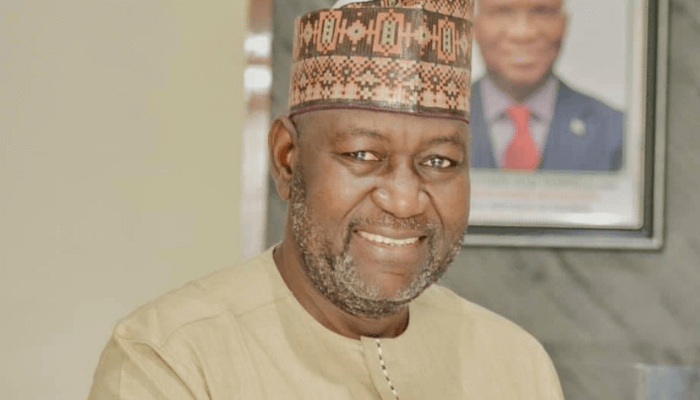
The new minister of power Abubakar Aliyu who takes office, after the Federal Government’s purported cabinet reshuffle is going to have his work cut out as he takes over a sector bogged by tariff fights, unstuck metering programmes and a creaking grid incessantly collapsing.
Nigeria’s electricity market operates on the Multi Year Tariff Order (MYTO), a structure used to set wholesale and retail prices for electricity in the industry by employing a unified way to determine total industry revenue requirement that is tied to measurable performance improvements and standards.
MYTO provides a 15-year tariff path for the Nigerian Electricity Supply Industry (NESI) to achieve cost reflective tariff with limited minor reviews each year based on changes in inflation, interest rates, exchange rates and generation capacity, and major reviews every 5 years.
But politicians with little to show in terms of concrete achievements to justify another term, prevent a normal tariff increase using threat of strike action by labour groups as cover. Other times, lawyers file spurious motions and get a tariff adjustment tossed.

Former president Goodluck Jonathan first interfered with the MYTO rules in 2015 ordering the Nigerian Electricity Regulatory Commission (NERC) to stop a scheduled tariff that year. The Buhari government took a step further, blocking eight more MYTO reviews.
The Buhari government finally set up a serviced based tariff model in 2020 which is also based on MYTO rules but this time, allows those with the most electricity consumption suffer the burden of higher tariffs.
The Service-based tariffs enabled cost-reflective tariffs in Nigeria’s electricity sector but tariff increases will always happen due to changes in market conditions but it won’t take long for labour leaders and so-called activists to whip up public sentiments and start a messy fight that would test whether the new minister will sustain market reforms or kowtow to interests.
The national grid has collapsed twice in less than a month with its attendant consequences, but the government is yet to inaugurate a board for the grid management company, the Transmission Company of Nigeria (TCN).
Early this year, the presidency issued a press statement in which it announced the appointment of a board for the transmission company of Nigeria, TCN and which had a highly acclaimed technocrat M.K Ahmad as chairman. The board’s primary goal had been to stabilize the grid and then expand it.

However, the plan to inaugurate the board has been locked up in the office of Sale Mamman who is hiding under the cover of a plan to unbundle TCN.
Nothing has so far emerged in relation to the unbundling plan and in the eight months that have passed, Nigeria has suffered four total collapses of its power grid.
Under Mamman, the Federal government began free meter distribution to customers under the National Mass Metering Programme. It promised delivery of 6 million free meters in four phases to be funded by the Central Bank and cost recovered from tariffs.
Read also: Why I sacked power, Agric Ministers- Buhari
The government claimed it has delivered 750,000 meters to DISCOs in just under 8 months but the trouble is, many customers are still not getting meters and brought confusion into the system.
On the one hand, the Federal Government claims it is issuing free meters under the National Mass Metering Programme (NMMP) but DisCos tell customers that meters are not free. The Meter Asset Providers tell them that the government has suspended metering, the regulator says someone will pay for the meters, and the Central Bank is writing checks and imposing new conditions.
It would be the job of the new minister, a man who spent the better part of his career drawing up plans to build roads, bridges and dams for the government to navigate these complex issues.
Besides these messy issues aside, there are deals and projects that are too critical for the nation. Buhari, had on July 22, signed a power agreement with German company Siemens, to double Nigeria’s electricity generation and raise distribution capacity three-fold to 11,000 MW by 2023. Siemens would also fix transmission systems.
In June last year, the board of the World Bank approved Nigeria’s long-standing loan request for about a billion dollars, releasing the first tranche of $750million credit to support the country’s power sector recovery, throwing a lifeline to the cash-strapped sector.
This was to provide financing to help the government repay the Central Bank for loans to the power sector on the condition that Nigeria begins a tariff regime that will guarantee cost recovery and abolish subsidies. This World Bank intervention could reach $3billion in the coming years if the Nigerian government meets the terms something the previous minister struggled to meet and will now fall on Aliyu.
Analysts advise that the minister should concentrate on delivering the Siemens deal, reduce indiscipline in the sector and ensure market rules are followed.
“We also need to support States that are ready to regulate electricity distribution. There is also a need to forge a good synergy with the ministry of finance. Maybe he can see the 14 (now around 11 or so) grid connected solar power projects through,” said Ayodele Oni, energy lawyer and partner at Bloomfield law firm.
Oni also said he should work hard on Mambilla, aggressively improve the transmission network and system operation to reduce the incidence of grid collapse.
“Maybe he should also encourage NERC to not over-regulate the sector. I think for the power sector, less (regulation) is more effective in driving private participation and investment in the sector. He should also work more with the ministry of petroleum in connection with gas supply to the power sector,” Oni said.