Africa is poised to outperform global economic growth in 2025, with rising intra-African trade, declining inflation, and stronger investment flows cushioning the continent against a backdrop of global volatility, according to new forecasts by the African Export-Import Bank (Afreximbank).
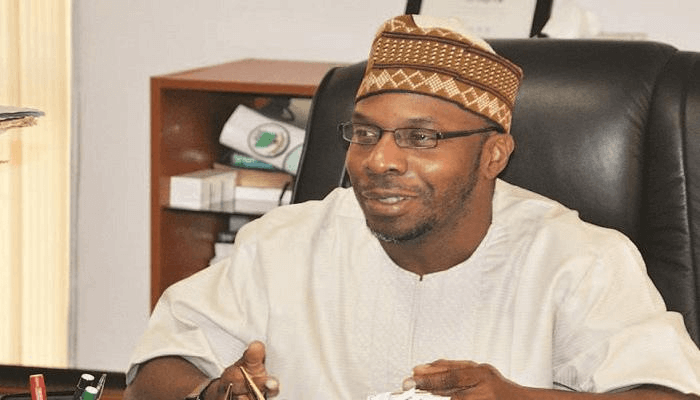
Despite ongoing geopolitical tensions, inflationary pressures, and supply chain disruptions, Africa’s macroeconomic fundamentals are improving, Yemi Kale, Afreximbank’s Managing Director and Group Chief Economist said.
“We expect the African growth to be stronger than it was in 2024,” Kale said Wednesday at the launch of the bank’s flagship reports in Abuja.
Africa’s economy grew 3.3% in 2024 — “one of the strongest growth rates in the world,” he said — and is projected to expand by 4% in 2025. Roughly 41% of African countries are expected to grow by more than 5%.

The outlook, presented in the African Trade and Economic Outlook for 2025 and the Africa Trade Report 2025, was unveiled during the bank’s 32nd Annual Meeting which began Wednesday in Abuja under the theme “Building the Future on Decades of Resilience.”
According to Kale, key drivers of growth include surging intra-African trade, strong domestic demand, and the ongoing implementation of the African Continental Free Trade Area (AfCFTA).
“Nigeria, for the first time ever, traded more with Africa… than anywhere else,” he said, citing a shift toward regional trade that helps shield African economies from external shocks.
Read also: Africa needs new tools to fund intra-south trade – Afreximbank president
Africa’s trade volume jumped 30.9% in 2024, with intra-African trade rebounding by 12.4% after a decline the previous year. That momentum is expected to continue, with trade volume growth forecast at 5.1% in 2025 – outpacing global trade — and intra-African trade projected to grow at an annual average of 6.6% through 2030.

Inflation, which peaked at 19% in 2024, is expected to ease to 15% next year, supported by tighter monetary policy and improvements in global supply chains. Debt-to-GDP is projected to improve slightly to 65% from 67.2%.
“These figures underscore Africa’s capacity to adjust and push forward, even in the face of global turbulence,” Kale, who once served as Nigeria’s Statistician-general said.
While the outlook is broadly positive, Afreximbank warned that structural challenges, including a $120 billion trade finance gap threaten to slow progress.
That shortfall, Kale said, is driven not just by demand-supply imbalances but also by regulatory and systemic barriers.
“It’s also likely driven by structural constraints like the Basel IV regulatory impact… and systemic rating biases that disproportionately affect African financial institutions,” he said.
The dollar-dominated global trade system further complicates access to affordable financing for African businesses, particularly small and medium enterprises that make up over 80% of the continent’s firms.
To address this, Kale said Afreximbank is promoting African-led solutions such as the Pan-African Payment and Settlement System (PAPSS), which allows trade in local currencies. Fifteen African central banks have already joined the platform.
The bank also disbursed $18.7 billion to support trade, industrialization, and post-pandemic recovery just in 2024.
Kale emphasised the need for a reimagined global financial system that includes Africa as a co-architect. “We need to be agents, not passive recipients, in shaping the global financial architecture,” he said.
He therefore called for reforms including a fairer allocation of Special Drawing Rights (SDRs), expanded trade finance instruments for SMEs, increased capital for African Development Finance Institutions (DFIs), and investment in digital infrastructure and logistics.
Africa’s growing neutrality in global trade — engaging with both East and West without geopolitical entanglements — may also become a strategic asset.
“If you trade more with African countries, you are not going to go through those challenges. We are not involved in all this their drama. We trade with the East. We trade with the West… whoever you are. We don’t take sides,” Kale told a press conference.
Despite the optimism, Kale cautioned that Africa must move from just weathering global shocks to pursuing structural transformation.
“Resilience is not enough. We must transform from merely surviving shocks to structurally transforming our economies,” he said.
That transformation, he added, hinges on three core priorities, including closing the trade finance gap, scaling up DFIs, and deepening intra-African trade integration.
While noting that no forecast is perfect, Kale expressed strong confidence in Afreximbank’s projections. “We are not soothsayers… but based on all that we have seen, we are pretty confident. Our forecasts are much more accurate than even the IMF.”