Africa’s major problem is not scarcity of resources, but leadership, former registrar and chief executive, Joint Admission and Matriculation Board (JAMB), Mohammed Abdulrahman, said.
”Africa is poor because we have not been able to put our money where our mouth is,” he told BusinessDay in a telephone interview.
In his view, there are two steps towards economic emancipation. They are: Political independence, which he says Africa has now overcome, and Worth-while citizen-based industrial development.
It was indeed a broad session, touching on economy, politics, education and other vital national and international issues.

To the educationist, Africa is still suffering the hangover of the 1980s, which he describes as ”a lost decade” in Africa.
”No matter what indicators need, we are worse than we were in past time,” Abdulrahman said, adding, ”The standard of living of the average Africa is fallen in education, health and social services – all these have suffered tremendously.”
Abdulrahman, who was the registrar and chief executive of JAMB in the Ibrahim Babangida regime between 1986 and 1996, notes that when in the 1960s, Nigeria was a major exporter of food, regrets that in the 1980s,it had turned to ”chief importer of food.”
His argument is that the structural transformation required for change is yet to be placed, resulting in the depreciation of our relative importance in the world.
He blames the problem on the elite, saying: ”We have been let down by the elite,” and therefore stresses the need for soul searching ”as to where we have gone wrong and how to overcome these.”

Accusing the elites of shying away from politics, the former JAMB boss, who turned consultant to many Africa countries, described politics and development as a two sides of a coin.
To achieve meaningful economic development, he says, ‘‘There is the need to exhibit confidence in ourselves.”
On the Economic Community of West African States (ECOWAS), he advocates an effective, dynamic regional cooperation to bail the countries out of their economic mess.
”ECOWAS is our national market and backyard, ” he says.
On the sub-regional body’s achievements, he notes: ”The dream still remains the same after 35 years of its existence.”
The educationist traces the problem of ECOWAS to the repatriation of foreigners in Nigeria in 1984, saying it virtually killed ECOWAS.
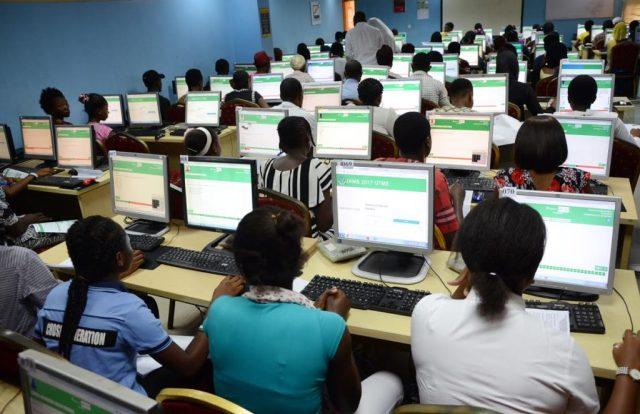
He also says a redefinition of Nigeria’s educational system was necessary ”if the Nigerian dream towards economic development is to be attained in the near future.
”Our educational system has collapsed. Why must lecturers go on strike in the first place if our elites are committed to nation’s development.
”The infrastructural facilities in most public universities are decaying. Research grants not forth coming to the lecturers. Government and relevant agencies should endeavour to provide adequate fund if we are to get out of the ongoing mess,” he stresses.