



|
Getting your Trinity Audio player ready...
|
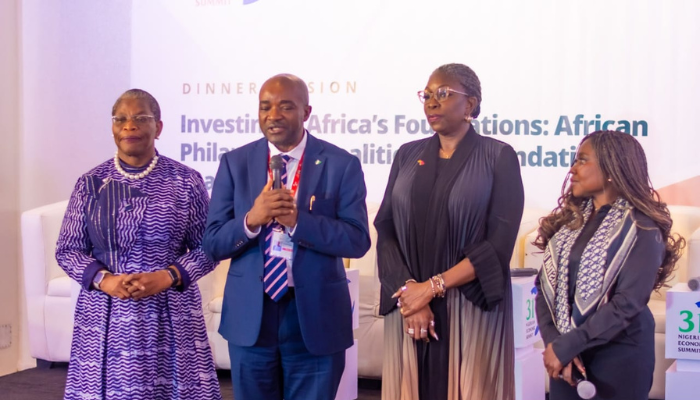
Human Capital Africa (HCA), the Nigerian Economic Summit Group (NESG), the Aliko Dangote Foundation, and the African Philanthropy Forum have jointly launched two high-level coalitions to address the learning crisis in Africa.
The African CEOs’ Coalition for Foundational Learning and the Africa Philanthropy Coalition for Foundational Learning aim to drive collective action by leveraging private sector influence and philanthropy to strengthen education delivery, shape policy, and develop a skilled workforce for the continent. The launch took place at a high-level dinner at the Transcorp Hilton, Abuja, bringing together business leaders, philanthropists, and policymakers to mobilise urgent action. The event highlighted the need for African-led initiatives to address what experts describe as a human capital emergency. Across Sub-Saharan Africa, nine out of ten children are unable to read and understand a simple text by the age of ten, one of the highest rates of learning poverty globally.
This crisis is compounded by a projected 24 percent drop in global education aid between 2023 and 2026, equivalent to a US$3.2 billion decline. West and Central Africa could face a 25 percent reduction in funding, while Eastern and Southern Africa may see a 28 percent decrease.
At the Abuja event, discussions centred on practical steps to strengthen collaboration among African stakeholders, fill the education finance gap, and scale up effective, locally driven solutions already showing results in some countries.
Oby Ezekwesili, Founder and CEO of Human Capital Africa, said African-led philanthropy and private sector leadership can “change the trajectory of education on the continent.” She stressed that “Africa can no longer depend on others to solve its challenges, but must lead by mobilising domestic resources, designing solutions for its contexts, and building powerful partnerships that put foundational learning at the centre of our development agenda.”

Niyi Yusuf, Chairman of the Nigerian Economic Summit Group, emphasised that business leaders have a vested interest in ensuring a productive and innovative population. He said: “By 2050, Africa will have 2.5 billion people, and the majority of them will be young people. They are not just the workforce of the future; they are the consumers of the future. If Africa can’t produce quality, can’t earn properly, they cannot consume. As the NESG, we would like to publicly commit to this work on foundational learning. The journey starts today.”
Zouera Youssofou, CEO of the Aliko Dangote Foundation, endorsed the Africa Philanthropy Coalition, saying: “If you don’t get foundational learning right, nothing else will matter. That is the message that we need to keep repeating. We all know it. But we are not paying enough attention, and we are not investing enough in it.” She added that African philanthropies are better positioned to act, being “close to the beneficiaries of our work and aware of the context.”
Tayo Aduloju, CEO of the NESG, highlighted the limitations of focusing solely on infrastructure spending. “We are budgeting and spending our limited resources on building more schools and employing more teachers, and we are told that just spending money solves the problem. It doesn’t,” he said. “Our children are struggling to learn in a system that does not teach learning. Many of them are smart enough to realise that they are not learning, and that realisation is a key driver of our children leaving school.”
Mosun Layode, representing the African Philanthropy Forum, noted the financial potential within the continent. “Africans have an estimated investable wealth of $2.7 trillion, and the number of millionaires is expected to grow by 65% in the next decade,” she said. “We need to ensure our philanthropy is aligned with national plans, does not work in silos, and invests its resources collaboratively in the areas that drive impact.”
The two new coalitions will complement the African Ministerial Coalition for Foundational Learning, which has secured commitments from more than 30 countries to end learning poverty in Africa by 2035.






