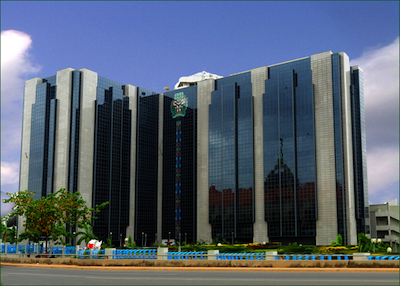
The central bank, exercising its powers as the lender of last resort, injected N620 billion into the nine distressed banks as loans, reaffirmed its guarantee of the local interbank market to ensure continued liquidity to all banks, and guaranteed the credit lines of foreign creditors and correspondent banks. These immediate steps went a long way in shoring up confidence, locally and internationally, in Nigeria’s banking system. The liquidity injection enabled the nine banks to continue business operations and prevented a run on the banks. The loans were later fully repaid to the CBN.
With the banks thus initially stabilized, the CBN proceeded to unveil a reform agenda with four main pillars: (a) enhancing the quality of banks; (b) establishing financial stability; (c) enabling healthy financial sector evolution; and (d) ensuring that the financial sector contributes to the real economy.
The reforms
Enhancing the quality of banks. This leg of the reform was aimed at making Nigerian banks more solid entities in terms of quality and not just quantity. This meant steps to improve the quality of the capital held by banks, and improving their risk management, corporate governance and transparency. The CBN introduced the Risk-Based Supervision of the banking system. This approach seeks to establish the present and likely future health of banks by focusing on the risk factors in their business activities and the quantum and direction (escalation or deceleration) of those risks and their possible systemic impact. This forward-looking approach is different from the previous technical approach in bank examination that was focused exclusively on what is known as the CAMELS (capital adequacy, asset quality, management quality, earnings, and liquidity, with sensitivity to market risk added later as a rating issue).

As noted above, the boards of directors of several banks were mere window-dressings dominated by the CEO, which was a fundamental corruption of the principles of governance by supervisory boards. This situation arose largely as a result of the fact that many CEOs of the banks were significant or even dominant shareholders on their institutions and thus “owned” the banks. Amongst several steps to improve corporate governance and manage “key-man risk” in Nigerian banks, the CBN imposed a maximum tenure of 10 years for bank CEOs and a three-year hiatus before such executives could return to the boards of their banks. The bank imposed a mandatory uniform reporting annual reporting timelines in the industry in order to improve transparency.
Establishing financial stability. After stabilizing the distressed banks with liquidity injections, removing and replacing their executive management with temporary managements, the CBN initiated the establishment of the Asset Management Corporation of Nigeria (AMCON), a “bad bank” whose main task was to buy up toxic assets from the banking system and thus clean up the banks’ balance sheets with bonds it issued, recover and restructure these bad debts over a longer period, and contribute in recapitalizing some distressed banks. Despite several issues regarding the work of AMCON, including the matter of possible moral hazard, without the establishment of AMCON, an approach that has been utilized in other jurisdictions including Malaysia, South Korea and Ireland, it would clearly have been difficult if not impossible to stabilize Nigeria’s banks in 2010. This is simply because unlike in many jurisdictions in advanced industrial economies where the fiscal authorities bailed out their banking systems with taxpayers’ funds, Nigeria’s fiscal balance sheet was in no position to carry this burden at the time.
Enabling healthy financial sector evolution. This leg of the reforms focused on restructuring the banking system in a manner that would facilitate its healthy growth. To achieve this, the central bank enacted a new banking model under its regulatory powers. The new model abolished the universal banking system in which banks could operate as financial supermarkets owning non-banking subsidiaries but which operators had abused through regulatory arbitrage that utilized those same subsidiaries. The new model forbade commercial banks from engaging in non-core banking business and ring-fenced depositors’ funds from being utilized for proprietary trading and other speculative activities. Three categories of banks namely commercial banks, merchant banks and specialized banks such as non-interest banks were introduced, with new capital requirements. Commercial banking licenses could now be issued at three levels, each requiring different amounts of capital: international banks with subsidiaries outside Nigeria (i.e. global banks), national banks, and regional banks that could do business in two contiguous geopolitical zones in the country. Extensive payment reforms designed to reduce the use of cash and promote efficiency in payments are also included in this rubric of reform.
Financing the real economy. The CBN took steps to mobilize and encourage banks to increase lending to the real economy, in particular agriculture and agribusiness, in a manner that would develop the agricultural value chain to create a more developed and industrialized agricultural sector. The main instrument utilized for this reform has been the Nigerian Incentive-based Risk Sharing Agriculture Lending (NIRSAL) programme in which the central bank and the commercial banks combine through risk-sharing schemes and incentives to lend to agriculture at market-based interest rates. This has led many banks to overcome previous fears of lending to the agriculture sector as a result of exaggerated perceptions of the risks therein.
Unique reforms

Nigeria’s banking reforms under both Governors Lamido Sanusi and Soludo were unique in several ways. No African country has carried out such radical and far-reaching banking sector reforms, let alone in a relatively short span of 10 years. First of all, the reforms were bold and decisive, benefiting from a combination of factors such as strong leadership, the independence of the CBN (enacted in the CBN Act of 2007 by the National Assembly through the efforts and advocacy of Governor Soludo) which enabled the bank to do what was necessary for Nigeria’s economy despite powerful vested interests in what has predominantly been a crony capitalist system. Very importantly as well, the CBN governors enjoyed complete political backing by Presidents Olusegun Obasanjo for the Soludo-led consolidation and Umaru Yar’Adua in the era of Lamido Sanusi.
Second, the reforms were driven by clarity of vision. Both CBN heads were clear about what they wanted to achieve in the face of the tasks before them, and followed through with single-mindedness. Soludo, unimpressed with two-thirds of Nigeria’s banks being marginal players, wanted big banks that could expand the economy and be reckoned with globally.
Being a keynote speech at the Commerzbank Investment Banking Conference for African Banks, Frankfurt, Germany, October 20, 2015.
Kingsley Chiedu Moghalu