At first glance, the $750 million financing agreement between Afreximbank and Heirs Energies might look like another large-ticket energy transaction signed in a Lagos hotel. In reality, it tells a far deeper story about confidence, patience, and Africa’s growing capacity to finance its own development. The deal, which refinances and optimises the capital structure of OML 17, links Nigeria’s oldest producing oil asset—dating back to 1958—with one of Africa’s most consequential financial institutions.
What made the moment striking was not the paperwork, but the presence of senior leaders who had lived through the journey together. These were not transactional partners meeting for the first time, but long-term collaborators who had stayed engaged through regulatory delays, restructuring, and operational risk. In a global environment where capital often hesitates at the first sign of uncertainty, the signing symbolised something rarer: African institutions backing African enterprise with conviction, and doing so at a scale that materially reshapes outcomes.



Seven years of staying power
This transaction did not emerge overnight. It is the product of a seven-year process that tested both resolve and trust. The original acquisition plan was ambitious, combining multiple oil assets, pipelines, and power infrastructure. Political and regulatory resistance forced a reset, stripping the deal down to a single asset after significant capital and advisory costs had already been incurred.
For many investors, that would have been the exit point. Instead, both Afreximbank and Heirs Energies chose to adapt rather than retreat. The deal was resized, restructured, and re-approved multiple times, reflecting a willingness to absorb short-term discomfort in pursuit of long-term value. That persistence is often missing from discussions about African finance. Yet it is precisely this stamina—rather than speed—that differentiates catalytic capital from speculative flows. Markets may reward quick wins, but development is built by those who remain engaged when conditions turn difficult.

Performance that changes the conversation
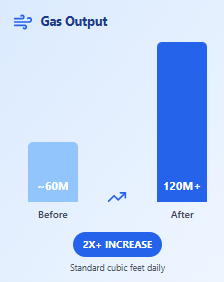
What ultimately justified renewed financing was not goodwill, but results. Under indigenous management, OML 17 has delivered one of the most impressive operational turnarounds in Nigeria’s energy sector. Oil production has doubled from around 25,000 barrels per day to over 50,000, while gas output has more than doubled to above 120 million standard cubic feet daily.
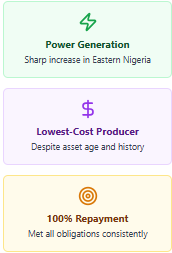
These gains have had real economic spillovers, including a sharp increase in power generation capacity in eastern Nigeria. Just as important is cost discipline. The asset now ranks among the country’s lowest-cost producers, despite its age and history. Perhaps most telling is what did not happen: even through periods of oil theft, community tension, and macroeconomic stress, the company met its repayment obligations. In finance, consistency builds credibility faster than ambition. That track record transformed perceived risk into bankable confidence and earned the platform for expansion.

Why African finance makes the difference
The repeated refrain from the ceremony was simple and powerful: Africa will be developed by Africans or not at all. Afreximbank’s role illustrates why indigenous financial institutions matter. By providing early, sizeable commitments, they crowd in capital, validate local operators, and absorb risks that global lenders often avoid. In this case, an initial African-backed commitment unlocked wider funding and legitimised an indigenous firm’s bid in a highly competitive space.
Crucially, this support was not unconditional. Performance, governance, and repayment discipline were non-negotiable. That balance—patient yet demanding capital—is what turns development finance into a catalyst rather than a subsidy. It also explains why the partnership has endured. Trust was built not through rhetoric, but through delivery. In an era when many international financiers are retreating from hydrocarbons, African institutions are stepping forward to ensure energy security, industrial growth, and economic sovereignty are not left to chance.
From refinancing to scale
The tone of the agreement was unmistakably forward-looking. With the balance sheet stabilised and the asset optimised, attention is now shifting toward scale—across Nigeria’s energy value chain and beyond its borders. This matters because Africa’s energy deficit remains one of its most binding constraints on growth, industrialisation, and resilience. Indigenous operators, backed by long-term African capital, are uniquely positioned to navigate local complexities while delivering commercially viable solutions.
The broader lesson is not limited to oil and gas. When African institutions trust African entrepreneurs—and those entrepreneurs repay that trust with performance—the result is a repeatable model. Capital stays on the continent, value compounds locally, and development is driven from within rather than imported. The $750 million deal is therefore not just a financing milestone. It is a statement of confidence in what African capital and African capability can achieve together, when both are willing to think long-term.