Introduction: The gap between perception and reality
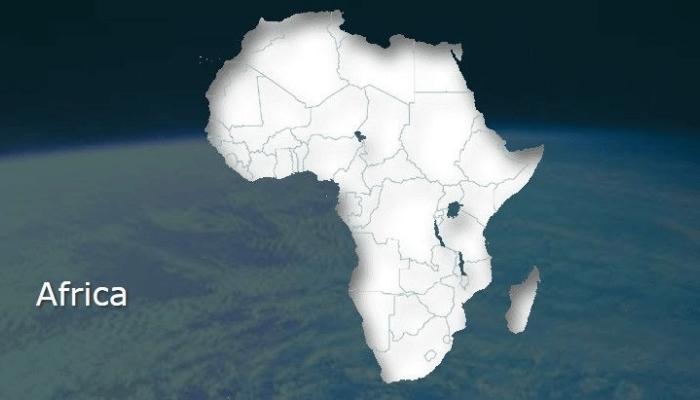
There are rare moments in economic history when perception lags behind structural reality. Those moments create the most significant wealth transfers. Africa today stands at precisely such a moment. Africa is not a charity case. It is not a peripheral geopolitical theatre. It is not merely a development narrative. It is the most overlooked investment opportunity of the 21st century. The world sees risk. The disciplined investor sees asymmetry. The gap between perception and potential is where value lives.
The mispricing of a continent
Markets misprice assets when information is incomplete, when bias clouds judgement, or when narratives become stale. Africa suffers from all three. Too often, the continent is viewed through outdated lenses — conflict, governance challenges, infrastructure gaps, and currency volatility. These factors exist, but they are transitional variables within an evolving system.

The structural fundamentals tell a different story:
• A population exceeding 1.4 billion
• The youngest median age globally
• Rapid urbanisation
• Accelerated digital adoption

• Expanding intra-African trade through AfCFTA
• Vast renewable energy potential
• Untapped agricultural capacity
When a young, urbanising, digitising population begins to industrialise and trade internally, compounding effects follow. Yet global capital allocation remains disproportionately low relative to demographic weight and long-term growth trajectory. That imbalance is not a weakness. It is an opportunity.
Demographics: The emerging dividend
By 2050, one in four people on earth will be African. While Europe and parts of Asia grapple with ageing populations, Africa is entering its demographic dividend window. Demographics alone do not create prosperity. But demographics combined with education reform, digital infrastructure, capital formation, and institutional strengthening generate exponential growth curves. Africa is not short of talent. It is short of patient capital aligned with long-term transformation. The future workforce, future consumer base, and future innovation hubs are being built on African soil. Those who understand demographic economics understand the magnitude of this shift.
Digital leapfrogging as a strategic advantage
Africa’s infrastructure gaps are often framed as disadvantages. In reality, they enable leapfrogging. The continent skipped landlines and embraced mobile telephony. It built fintech ecosystems in areas with low traditional banking penetration. It is adopting telemedicine, digital payments, and ed-tech solutions at a remarkable speed. Fintech, health-tech, agri-tech, renewable energy, logistics platforms, and digital commerce are not experimental ideas in Africa — they are structural necessities. And structural necessities create durable demand. When necessity meets innovation, markets are born.
Natural resources and the energy transition
Africa holds critical minerals essential to the global energy transition — lithium, cobalt, manganese, and rare earth elements. It possesses vast solar and wind potential. It has arable land capable of feeding export markets. The global decarbonisation agenda is materially dependent on African resources. The greater opportunity, however, lies not in raw extraction but in value addition — local processing, refining, manufacturing ecosystems, and regional supply chains. Industrialisation in Africa is not a moral aspiration. It is an investment thesis.
Undervalued enterprises and asymmetric returns
African enterprises frequently trade at lower valuation multiples relative to comparable firms in developed markets. Risk premiums are high. Capital is cautious. Yet for investors who understand governance frameworks, currency hedging, due diligence, and local partnerships, risk-adjusted returns can be compelling.
Infrastructure deficit? Creates an opportunity for infrastructure funds.
Healthcare gaps? Create an opportunity for pharmaceutical manufacturing.
Logistics inefficiencies? Create an opportunity for integrated distribution platforms.
Education deficits? Create an opportunity for scalable digital learning ecosystems.
In markets where problems are significant, scalable solutions generate outsized returns.
Governance: Imperfect but improving
No serious investor ignores governance. But governance should be evaluated dynamically, not historically. Regulatory frameworks are strengthening. Digital tax systems are expanding. Central banks are reforming. Intra-African trade protocols are advancing. Capital markets are gradually deepening. Progress is uneven — but trajectory matters more than perfection. Investors who waited for perfect governance in emerging Asia missed extraordinary value creation. Those who understand reform cycles enter before global consensus shifts.
The psychology of global capital
Africa suffers from narrative inertia. Global media amplifies crisis events but rarely tracks incremental reform. Capital markets, however, do not reward comfort. They reward foresight. When perception shifts — and it will — capital inflows will accelerate rapidly. Valuations will adjust. Early entrants will benefit from repricing. The most significant returns often occur before mainstream endorsement.
Strategic sectors for the next decade
The overlooked opportunities are concrete and investable:
• Digital financial services
• Local pharmaceutical manufacturing
• Agri-processing and food security
• Renewable energy and mini-grid solutions
• Logistics and last-mile distribution
• Affordable housing
• Health systems digitisation
• Education technology
• Consumer brands designed for African realities
The future high-growth enterprises in Africa will not merely replicate foreign models; they will solve uniquely African structural challenges. And solutions to structural challenges create enduring enterprises.
Risk and reward: A balanced perspective
Yes, currency fluctuations exist.
Yes, infrastructure gaps persist.
Yes, regulatory inconsistencies remain.
But risk without compensation does not exist in markets. Investors are rewarded for risk that is understood, mitigated, and priced appropriately. Africa’s risk premium is often exaggerated relative to operational realities in several jurisdictions. The disciplined investor separates headlines from fundamentals.
The role of African capital
Perhaps the most significant strategic question is this: Will African capital seize this moment? Pension funds, sovereign wealth funds, family offices, and institutional investors across the continent must recognise that transformation cannot be outsourced. Ownership matters. A capital that understands culture, regulatory nuance, and local market dynamics possesses a structural advantage. When African capital invests confidently and intelligently in Africa, global capital follows. Confidence is contagious.
Conclusion: The window is open
Africa is not a future opportunity. It is a present mispricing. The continent sits at the intersection of demographics, digitisation, resource advantage, and structural reform. These are the ingredients that historically precede exponential growth cycles. History rewards those who see clearly before consensus forms. Africa is not overlooked because it lacks potential. It is overlooked because narratives change slowly. But markets eventually correct misperceptions.
The question is simple:
Will you invest while Africa is discounted—or after the world has revealed it?
Prof. Lere Baale, CEO – Business School Netherlands International, Nigeria