Recently, an unintentionally viral tweet from Duke University began making the rounds in my social media circles. The post was about a Duke University research team looking into ways to reduce Sub-Saharan Africa’s carbon emission footprint by replacing wood burning stoves with cleaner technology. On the surface, a tweet about replacing a method of cooking that has potential respiratory risks is not a bad thing, and could be quite laudable in fact. There was just one problem.
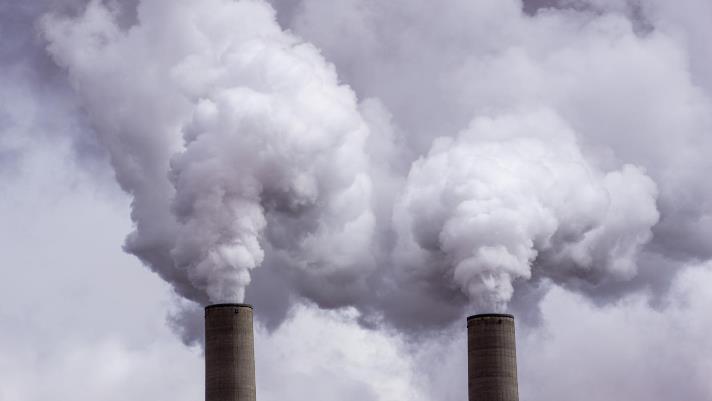
Africa – the entire continental mainland plus Madagascar – is responsible for a princely 3.8 percent of global carbon emissions. By contrast, just 100 of the world’s biggest corporations are responsible for over 71 percent of carbon emissions. As one responder humorously opined, there is a credible argument that Duke University itself is responsible for more carbon emissions than all the dirty wood-burning stoves in Darkest Africa put together. If ever there was an advertisement for the concept of “Research Grant That Should Never Have Been Approved,” this was it.
Africa’s defining problems that should animate any kind of conversation about the continent revolve around economic stagnancy, lack of infrastructure, political instability and abysmally low state capacity
Focus on the real issues please
Of the world’s 6 inhabited continents, which of them harbours the largest concentration of humans without immediate access to electricity, all-weather roads, clean water, basic healthcare, minimally competent education, enforceable legal and judicial frameworks, or in fact any other paraphernalia of what makes up a modern nation-state? You get no prizes for guessing the right answer.

Africa is the continent with 15-17 percent of the world’s population, but just 3-5 percent of global trade volumes. It is a continent of 1.2 billion people with a median age of 19.7, of whom anything from 6 to 30 percent are unemployed at any given time, depending on whose statistics you believe. In Nigeria, Africa’s most populous country, which can be used as a bellwether for most of Sub-Saharan Africa, youth unemployment, recently topped 40 percent.
It is also the continent with the world’s youngest country and the world’s largest concentration of active secession struggles and civil wars, as several postcolonial African states continue to struggle with the most basic realities of statehood. Competition for land and water to feed itinerant cattle herds owned by pastoral ethnic groups is a real contributing factor to several ongoing and unrecognised ethnic genocides taking place concurrently in parts of West, North and Central Africa.
The point? Africa’s defining problems that should animate any kind of conversation about the continent revolve around economic stagnancy, lack of infrastructure, political instability and abysmally low state capacity. It is unfair, ignorant and even wicked to place restrictions on Africa’s ability to spark some economic growth and trade expansion for itself by burning its hydrocarbons and building an industrial base – yes, including the dreaded carbon emissions. Do you have a better idea?
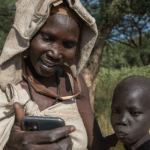
These are the issues that research grants and Twitter conversations about “changing the face of Africa” should focus on – not on how utopian projects to replace wood burning stoves in Mauritania will lower carbon emissions, as though the impoverished, wood burning folks in question can be expected to understand or care about carbon emissions.
Read how these Malian refugees living in Mauritania reduce their carbon footprint while improving their environment ? https://t.co/GX9QcCNC9J
— UNHCR, the UN Refugee Agency (@Refugees) July 12, 2021

Please leave Africa out of certain conversations
The same principle applies to the Western culture wars and political paradigms that some in Africa’s upwardly mobile chattering classes insist on importing into the continent. Rather than engage with realities like the fact that absolutely nobody in Nigeria – no matter how wealthy or educated – lives more than 10 minutes away from a slum with people literally struggling to feed, it is often comforting to suspend our reality and spend time arguing about concepts that are esoteric and academic.
“Normalisation” this, “deplatform” that, “range and capacity to engage” the other – we spend productive time hurling vast amounts of English at each other to the net effect of zero. Whether it is persecution of LGBT people or discussions about racism – which most Africans statistically have not and will never experience – these topics are generally Western-first, which is why they are argued through the prism of Western discourse and using the language of First World Problems. Meanwhile in the real world, these are the real issues facing us:
Have you ever suffered involuntary hunger before?
(In this context that means one 24-hour period or more without nutrition because you couldn't afford it due to circumstances out of your control).
— David Hundeyin (@DavidHundeyin) March 24, 2021
Even worse, a number of well-meaning individuals and organisations from the developed world have imported the political discourse franchise of Europe and North America into Sub Saharan Africa, placing real money behind sterile, fruitless and sometimes even destructive engagement. This has incentivised an entire demographic of upwardly mobile Africans to spend their entire lives cosplaying Western culture and gender wars while ignoring the incredible irony of doing so in a country where families literally agree to mortgage their children in exchange for bread.
It is not the first time this has been said, but it’s time for all of us to get real.