|
Getting your Trinity Audio player ready...
|
The African Natural Resources and Energy Investment Summit (AFNIS 2025) was a bang, with African ministers of mining and solid minerals embracing the need for collaboration to drive economic growth in Africa. Ruth Tene Natsa was there for BUSINESSDAY.
The 4th African Natural Resources and Energy Investment Summit (AFNIS 2025), themed “Harnessing Local Content for Sustainable Development,” reflects the urgency of the collective mission to leverage Africa’s abundant natural resources for the benefit of its people.
Africa, known for its rich variety and vast mineral deposits, is known to hold vast ratios of precious metals such as gold, platinum, and diamonds. It is also known to host critical minerals such as cobalt, lithium, and graphite. Industrial minerals such as bauxite, manganese, and phosphate are also not left out. As well as other key minerals such as copper, chromium, and uranium.
It is no wonder that experts, governments, and major mining chief executives stressed the need for regional collaboration to drive economic growth during the strategic meeting of CEOs and inter-ministerial discussions on the sidelines of AFNIS 2025 on Thursday, July 17, 2025.

In his presentation titled Strategic Minerals and Energy Resource Management: Lessons From the Past and Pathways for the Future, Gbenga Okunlola, president of the Geological Society of Africa, said science has already confirmed it: “Africa is the richest continent on the earth in terms of mineral resources.”
“In terms of investments, we have over $20 billion in new mining projects, which are expected in 2025 alone. And about $50 billion in mining-related infrastructure projects between 2003 and 2013. Now, it means that the focus, whether the world likes it or not, must be in Africa, one way or the other.”
Noting that Africa’s mineral wealth has the potential to drive economic growth and development on the continent, the geologists called for African countries to work together to develop a comprehensive strategy for the mineral sector, including value addition, intra-African trade, and regional cooperation.
“Africa is the richest continent in terms of mineral resources, with every rock unit from the oldest to the youngest found on the continent. He noted that Africa produces 80% of the world’s platinum, two-thirds of all cobalt, and has significant reserves of gold, iron ore, and other critical minerals.
The professor acknowledged that Africa’s mineral wealth has not translated to economic prosperity for the continent’s population. He cited the example of the Democratic Republic of Congo, which has vast copper deposits but remains one of the poorest countries in the world.

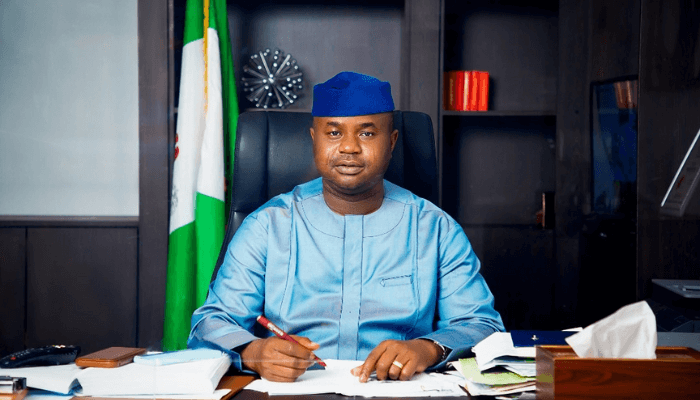
In his remarks, Oladele Henry Alake, Nigeria’s minister of Solid Minerals Development and chairman of the Africa Minerals Strategy Group (AMGS), acknowledged the significant potential of Africa’s mineral wealth.
Alake emphasised the need for African countries to work together to develop a comprehensive strategy for the mineral sector and to use their mineral resources to drive economic growth and development.
For centuries we’ve been exploited in and out. Both human and material resources of Africa have been exploited for centuries.
Recall that while over 300 million Africans went through slavery, transatlantic crossing, and exploitation of able-bodied Africans, there is no global consciousness about reparations to Africa, whereas the world has been reeling from the guilt of the extermination of 6 million Jews.
But rather than whining and moaning, we must turn these challenges into the great opportunities that we have now. The world’s largest deposit of cobalt is in the DRC, and this has been exploited for years.
Alake was emphatic that “ideally, Africa should be dictating the best for the world. So, our responsibility as a generation is to turn the tide and change the narrative for the delta. With the cooperation of like-minded people across the world, because we do not seek to be an island.”
Alake expressed Africa’s readiness to welcome development partners that will transact business with Africa on an equal exchange basis to create a win-win situation for everybody. “We are not looking for charity. We are looking for equity with dignity and responsibility to our population.” He said,
In his remarks, Moses Michael Engadu, Secretary General of the AMGS, described the gathering as champions of a new reckoning: “We have beyond doubt confirmed that Africa is rich in vast mineral resources, but we also acknowledge that Africa is rich in resilience.”
He noted that beyond lamenting past failures, what Africa requires is turning our vision and potential into prosperity. He charged the leaders to leverage the continent’s vast wealth and the unity to work together and a mental cultural shift to ensure that the entirety of Africa first has a clear acceptance and understanding that we are indispensable in the world today.
The first part is we must have an Africa consensus, documented through protocols and charters over critical things that will take us to the next step, recognise that we need to keep exploring to discover more, and also tackle a key element, which is financing, and financing has to be African capital, and we can do it as a continent. And lastly, we should be looking at critical mineral security because they are what make us indispensable.
“Africa is neither for the East, West, North, or South. We are for Africa. Our strategic interests are what matter to us.”
Also speaking, Prof. Kevin Urama, vice president and chief economist at the African Development Bank (AfDB), charged the gathering of leaders to invest in research & development that will allow Africa to understand the resources and how they can be transformed into assets for development and also partnerships that allow us to identify resource corridors that can allow us to achieve scale.
He said rare earth minerals, copper, nickel, cobalt, and lithium are estimated to hit a market value of $16 trillion dollars in the next 25 years, and a lot of that is in Africa. He, however, noted that despite the resources and policies noted, the natural resources sector is not actually contributing significantly to African development but rather contributing negatively.
He urged the members to focus on green minerals, asking what they can do to ensure that Africa stops exporting its raw minerals and starts processing and developing its minerals locally.
Urama recalled that with financing being a major challenge in the sector, the AfDB is investing in the African Natural Resources Investment Centre as well as the African Legal Support Facility to help African countries in negotiating as well as renegotiating proper mining concession agreements.
He also charged the continent to focus a lot more on domestic capital/the private sector to domesticate the resources and capital to develop resource sovereignty.
Adding his thoughts to the fray, Hassan Ali Joho, Cabinet Secretary, Ministry of Mining. Blue Economy and Maritime Affairs, Republic of Kenya, backed the commitment of other speakers, adding that Kenya is committed to ensuring there is a shift in Africa. In his words “Kenya is committed, to ensure there is a shift, really, in the narrative. “
“Besides the geopolitical nature of the conversations around the world today, ours in Africa is interesting. What works for us? What works for us today? What secures us tomorrow? And what safeguards do we put in place for the future? Because of the way we deal with minerals, my position is that minerals are highly depletable, so we must leave a story behind. We will not be doing justice if all we leave are abandoned sites or quarries or shafts or pits that were used to extract.”
He, however, charged members to ensure they read the thin lines in all MOUs and learn to tell their stories differently.
“Whether business interest orbilateral relations, you’ve just handed over your treasures. The minister here may not be the minister for finance, but he’s the custodian of your national treasure. He’s the minister who looks after your national treasures, because this is the way that we can turn the conversation around our narrative.
“So going forward, I agree, we must have a working group. We must have partners. We must have a sense of ownership. And finally, we must tell our story. Everybody must tell their story, because otherwise it will be told by other people. We say in political terms, If you sit at the table and you don’t have a seat, then you may be on the menu.”
Jacob Kabakole, chairman of the Board of the Liberia Petroleum Regulatory Authority, charged that Nigeria’s experience in the industry should not be seen only as an isolated success but rather as a continental model, noting that Liberia is making baby steps.
It is clear that for Liberia, we’ve leaned on you before, and we are going to continue to lean on you. In my role as chairman for the Liberia Petroleum Regulatory Authority, you can rest assured that we are putting our hands in your hands to learn and to grow in this sector. Liberia is endowed.
Nobody needs to tell us that; I don’t care where you come from. We know. We just don’t have the technical and the financial means.
“But we must put our laws together, and when we return, we will put our president on the great success of this forum. I joined my brother from Kenya to say, partnership is the way to go. The working group we support—we’re going to vote for that—that this forum should put together a working group that we would love to be a part of to ensure that this does not remain in this room as a round table, but it becomes a reality for Africa.”
“For as long as the extractive world has taken away from us, it’s time to take advantage of the opportunity.”