Here’s a pop quiz: Which historical figure when talking about his country’s relationship to Africa, stated that their only concern was “preserving the free flow of natural resources from Africa to the global market” in addition to tackling “challenges” to his country’s interests? Cecil Rhodes? Frederick Lugard? King Leopold II? The answer is Robert Moeller, U.S. Vice-Admiral. Speaking at a military conference at the National Defense University in February 2008, Moeller declared that AFRICOM was about preserving ‘the free flow of natural resources from Africa to the global market’, with its secondary concerns being terrorism, oil disruption and China’s “growing influence,” which apparently constitutes a “challenge to US interests.”
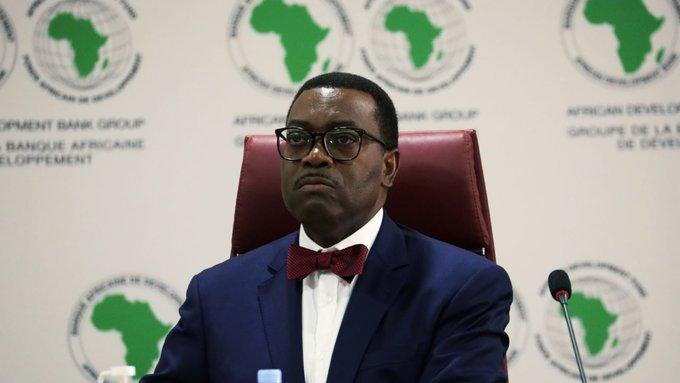
Mr Adesina is little more than a supporting character in the cast of real issues fueling the crisis. The real protagonists are the Americans and their established Africa doctrine on the one hand, and the Chinese and their Africa strategy which happens to be diametrically opposed to that of the Americans on the other
Listening to this speech, one would be forgiven for thinking that the “Africa” he referred to was the continent of the 1970s to 1990s — stalked by a multitude of foreign interests hunting for natural resources and wracked by bloody, widespread warfare. In fact at the time, Africa was one of the world’s fastest growing continental economies with a fast-expanding young population, relative stability and ambitions of accessing the investment required to refresh its aged infrastructure stock and create millions of new jobs. To the American establishment, however, “Africa” can only mean one thing, and that thing is what it meant 40 years ago — warzone.
The unfolding boardroom crisis at the African Development Bank is only the latest installment in an increasingly obvious pattern of U.S. engagement with Africa that is stuck in a bygone era and actually harmful to U.S. interests in the long run. Let us be clear about something – it is not an attack on the person of AfDB Akinwunmi Adesina, as widely presented. It is something much bigger and more fundamental than that.
It was never about Akinwunmi Adesina

The maelstrom of headlines accompanying the unfolding saga has managed to centre the AfDB president as the key figure in the crisis. The popular African narrative is that the bank’s US interest group led by board member Stephen Dowd wants to “take out” Mr Adesina for a number of reasons, including his purported independent-minded leadership and his acceptance of increasing amounts of Chinese capital.
This expansion of Chinese influence under Adesina’s watch is in fact the real crime that has been committed from an American point of view
Under this narrative framing, a lot of the conversation has been about how to protect Mr Adesina from the big, bad American bullies who simply do not want him to get a second term.
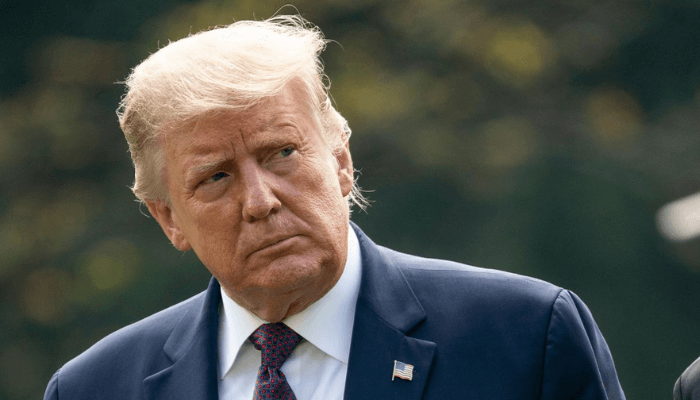
In reality however, Mr Adesina is little more than a supporting character in the cast of real issues fueling the crisis. The real protagonists are the Americans and their established Africa doctrine on the one hand, and the Chinese and their Africa strategy which happens to be diametrically opposed to that of the Americans on the other. As most people who follow the global news cycle are aware, the US under Donald Trump’s leadership, is currently pursuing a twin strategy of pulling out of global organisations and isolating itself from erstwhile trade and diplomatic partners, while at the same time flexing its muscles and screaming “USA! USA!” at the rest of the world like a 2009 crowd in Jacksonville when Landon Donovan makes it 2-0 against Mexico.
Whether it is starting a damaging trade war that almost ended the longest American stock market bull run in history, or threatening to pull out of the World Health Organisation, present-day US economic and diplomatic policy seems geared to achieving only one goal at all cost — fighting growing Chinese influence across the world. Knowing that America’s entire conceptual worldview was primarily built around warfare against a big, bad rival, former Soviet Communist Party adviser Georgy Arbatov famously remarked in 1987, “We are going to do a terrible thing to you — we are going to deprive you of an enemy.” Whereas that enemy used to be the USSR, the baton is now in China’s hands today, which is where Akinwunmi Adesina comes in as a victim of these circumstances.
Putting aside the accusations made against Adesina in the multiple petitions and appeals, there are two key issues that stand out. The first is that under his leadership, the AfDB — which has multiple non-African states as members, including the US and China — China’s role as a lender and a power centre has expanded dramatically. A simple search of the bank’s website using the keyword “China” returns 11 separate results between when he took office in 2015 and the present. Each of these results tells a story about Chinese funding or bilateral cooperation or knowledge and technology sharing, and there are not many people reading this article who are not aware of China’s world-leading levels of investment in African public infrastructure.

This expansion of Chinese influence under Adesina’s watch is in fact the real crime that has been committed from an American point of view. This outdated and impractical worldview believes that global influence is a zero-sum game, therefore if China is gaining influence in Africa, the US must be losing it. Of course, no one actually needs to provide evidence showing that this is the case. All it takes is some jingoism with a side of scaremongering, and you get the foreign policy equivalent of the away section screaming “USA! USA!” when Landon makes it Dos a Cero at the Estadio Azteca.
This brings us to the second key issue that the AfDB power tussle has highlighted.
“But you’re Africans: What do you mean you want more?”
Responding to Adesina’s exoneration by the bank’s ethics committee in a letter, US Treasury Secretary Steve Mnuchin stated that the Treasury has “deep reservations about the integrity of the committee’s process.” It is easy for the significance of this comment to escape one reading through cursorily, because we are all used to American messages to African institutions written in condescending, paternalistic language. In this case, however, the idea that accusations like “bad process” and “bad lending” can be placed in the same sentence with this institution is borderline ludicrous because the AfDB is not in fact, an African institution in the real sense of it.
The bank is made up of 82 member countries including all 54 regional (African) countries and 27 non-regional countries including Canada, the Netherlands, France, Germany, Denmark, Sweden, Switzerland and the United Arab Emirates. It is rated AAA by Fitch, Moody’s and S&P, and its shareholders have such strong confidence in it that they recently voted for a capital increase of $115bn, or an additional 125 percent of the existing capital. This is clearly not an institution with a corporate governance problem because the typically African opportunity to abuse systems and processes does not even exist. This is not an African bank so much as a bank with African members in it. It is a bonafide international finance institution that cannot be controlled by even Nigeria, its largest shareholder, much less a single individual who happens to be its president. So why would someone as educated as Steve Mnuchin make such a ridiculous claim?
The answer can be surmised from a statement made earlier this year by his former colleague, World Bank President David Malpass, who until recently served as Under Secretary of the US Treasury for International Affairs alongside Mnuchin. Malpass accused the AfDB of compounding the debt problem of African nationals by “providing loans too quickly.” He made this comment in the context of economic slowdowns in several African countries that were later compounded by the coronavirus outbreak. Malpass apparently does not see why the AfDB under Adesina should be highly responsive or proactive about providing support for African states that need it.
According to the decades-old school of US-Africa engagement he comes from, Africa is not a place that deserves to operate by the same rules as everybody else. If a global pandemic threatens to wipe out a fragile African country’s export supply chain without financial support, why should anyone provide said financial support? Why should the AfDB provide funding to invest in African infrastructure and use grandiose terms like “economic growth” and “value adding” when justifying the facilities it gives out? What do you mean Africa needs infrastructure and jobs and growth and prosperity for its people? Are they not Africans?
Have they not always survived without those things? Why are this Adesina bloke and his Chinese friends not only threatening the continental American hegemony, but also filling the heads of African people with hopes and expectations of a better life? Since when is it the job of the African Development Bank to aggressively invest in developing Africa? Sure, the bank’s mission might appear implicit in its name, but why not do what it has always done and pretty much stay out of the way while issuing a few milquetoast facilities in ineffective bits and pieces here and there? Since when do Africans deserve more? Don’t they normally sort out their economic issues by smearing paint on their faces and chucking spears at each other or something? Why upset the apple cart with this Chinese-backed Nigerian fellow who thinks he is Marcus Garvey?
It sounds like an exaggeration, but this is exactly the prism through which the US relates with Africa to date. While even former colonial powers have accepted that this is no longer 1969 and engaging with their former African colonies has to be more nuanced than simply digging out natural resources and providing military enforcers to protect the supply chain, US foreign policy insists on treating Africa as merely the mysterious Dark Continent With Resources. In a highly connected world heading into the 4th industrial revolution, Africa is no longer mysterious to any real degree, nor are its famed natural resources as important as they once were. Seeing Africa in the year 2020 as only a giant ‘The Last King of Scotland’ movie set will just not cut it going forward because — like it or not — Africa’s median age of 19.7, continued investment into its infrastructure, and its relative stability (give or take a few localised conflicts) mean that this will become an increasingly important continent in the 21st century.
Currently, the US has no actual plan for counteracting Chinese influence-buying on the continent by making large scale statement-of-intent investments of its own. While Xi Jinping was signing deals to build economy-changing railroads in Nigeria and Ethiopia, the only answer from Barack Obama and his successor has been AFRICOM — a military body set up to fight vague and undefined “threats.” This is unlikely to change under Donald Trump, who famously rates Africa’s value somewhere between ‘waste of time’ and “shithole” continent, but the US foreign policy establishment needs to think long term and come up with a credible strategy to engage Africa in the 21st century. It has done this before when it found a way to bring South Korea, Japan and Germany into fold, back when the enemy was a Siberian bear instead of a sweatshop dragon.
This is no longer 1970. Guns, natural resource extraction rackets and passive aggressive letters from white men in Washington D.C. are no longer the keys to engaging with the world’s second most populated continent with the world’s youngest population. The 21st century will be an African century for better or for worse. Will America choose to be a positive part of that story, or will the US continue on its journey to “USA! USA!” itself into isolation from the rest of the world in service to outdated Cold War-era diplomatic doctrines?
Maybe we should ask Landon Donovan.