|
Getting your Trinity Audio player ready...
|
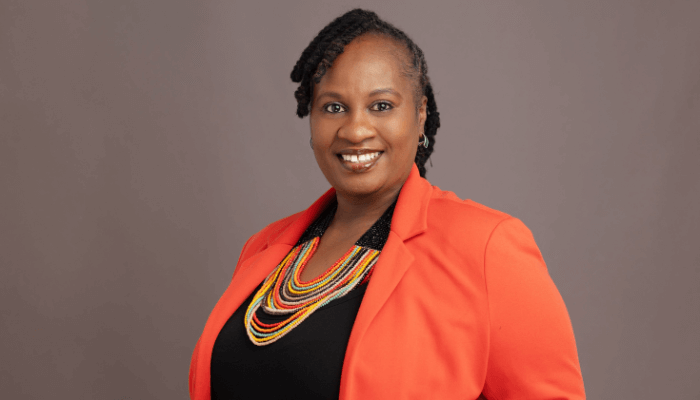
Adijat Adeola Okuyelu is a seasoned finance executive and visionary entrepreneur with over two decades of experience in leadership, strategy, and global business development. As the Director of Finance and New Global Initiatives at Maynard Leigh Associates, she plays a pivotal role in steering the company’s expansion into international markets, including recent ventures in India and the United States. A Chartered Management Accountant (ACMA, CGMA), Okuyelu joined Maynard Leigh in 1999 after earning her degree in Accounting & Finance. Her strategic financial oversight has been instrumental in positioning the firm as a prominent player in the global learning and development sector.
Beyond her corporate achievements, Okuyelu is deeply committed to social entrepreneurship. She is the founder of the Enatta Foundation, an organization dedicated to empowering underserved communities through education and economic initiatives. Additionally, she established Crusties Bakery, merging her passion for culinary arts with community development. Adijat also serves as a director of ADG Foods Ltd, a UK-based bakery and specialty food company known for its artisanal products under the brand Art de Gâteau.
Renowned for her mentorship and leadership, Adijat is a natural people developer who believes in nurturing individual potential to enhance collective success. Her multifaceted career reflects a harmonious blend of financial expertise, entrepreneurial spirit, and unwavering dedication to social impact.
In this interview with IFEOMA OKEKE-KORIEOCHA, she takes us through her journey of joining Maynard Leigh in 1999 to becoming Director of Finance & New Global Initiatives. She also speaks on how she balances financial strategy with social impact in her leadership roles and how she merges culinary arts with community development, amongst others.

Can you share your journey from joining Maynard Leigh in 1999 to becoming Director of Finance & New Global Initiatives? What key experiences shaped your career?
Absolutely, I would be happy to share my journey. I joined Maynard Leigh in 1999, and to be honest, I did not have a crystal-clear vision of where it would all lead. I initially found myself less drawn to financial accounting and more intrigued by management accounting, which offered a more dynamic lens into how businesses operate. It allowed me to explore how financial principles can be used to solve real business problems and create value for both businesses and individuals. This analytical yet creative approach resonated with me and shaped much of my professional thinking. After joining Maynard Leigh, I discovered a deeply people-centred, values-driven organisation, one that prioritises humanity at its core. It was here that my passion for understanding people, appreciating the unique value they bring, and applying that insight to my professional and socio-entrepreneurial journey truly came together. This convergence marked the beginning of a career where both purpose and performance could flourish side by side. In the long run, through dedication and hard work, I have progressed through different finance positions to my current role as the Director of Finance & New Global Initiatives.
As a Chartered Management Accountant, I have developed expertise in financial control and strategic management, which has been instrumental in driving growth and shaping the business direction of the company. One of the most enriching aspects of my journey has been working within Maynard Leigh’s creative environment. This has significantly influenced my ability to solve complex problems through creative thinking. My role has also taken me across diverse cultural landscapes including the UK, Nigeria, India and the U.S. where I have learned to navigate diverse business standards and leadership systems which range from communication styles and decision-making processes to expectations around hierarchy and collaboration which differ according to culture.
The innovative solutions we foster at Maynard Leigh, combined with my passion for people and purpose, have been pivotal to my success not only in leading the company’s global initiatives, but also in the wider impact work I do. This includes my involvement with the Enatta Foundation, a non-governmental organisation focused on furnishing Nigerian fisherwomen in underserved riverine communities with relevant tools for success through financial and empowerment programmes. Also, Crusties Bakery is another significant enterprise that I am invested in. It is a community-driven business that provides employment and training opportunities for individuals from underprivileged backgrounds.
These social-impact expressions reflect my commitment to blending strategic leadership with community development. In all, my journey has been a learning curve, full of rewarding experiences that have sharpened my cultural intelligence and enriched both my strategic and people-centred leadership.

How do you balance financial strategy with social impact in your leadership roles?
In my opinion, financial strategy and social impact are not competing priorities. They are complementary forces that create long-term value when aligned. In my leadership roles, I focus on embedding purpose into performance by ensuring that commercial decisions are guided by ethical, inclusive and sustainable principles. At Maynard Leigh, I work to align financial strategy with our mission of unlocking people’s potential, ensuring that investments support both profitability and cultural transformation.
I also carry this ethos into my work outside the corporate sphere. While my financial acumen ensures operational discipline and strategic clarity, my commitment to social entrepreneurship fuels initiatives that empower underserved communities like the Enatta Foundation as I have previously noted. Whether I am leading a business expansion or a grassroots programme, I always ask: “Does this decision serve both our financial goals and our wider responsibility to the society?” This mind-set propels me to drive sustainable growth with purpose at the core.
What advice would you give to aspiring finance professionals who want to make a global impact?
I would say start by grounding yourself in the fundamentals. This is much more than understanding the numbers but more importantly, understanding what they mean. Finance is not just about spreadsheets and forecasts; it is about telling the story of a business and helping shape its direction. If you can see finance as a tool for insight and impact, rather than just compliance, you would find it easier to apply such a perspective when it comes to making a global impact.
Second, you must develop your curiosity. Making a global impact means stepping outside your comfort zone. This includes learning about different markets, cultures and ways of doing business.You have to listen and sometimes unlearn what you think you know.
Finally, being open-minded is important. Your path may not be linear, and that is okay. Some of the most valuable lessons I have learned came from unexpected challenges or roles that were not finance related, but they gave me a broader view and made me a better leader
What inspired you to establish the Enatta Foundation, and how do you measure its success?
The Enatta Foundation stemmed from a desire to empower women and create lasting, positive transformations in underserved communities. One of the most powerful moments that inspired the foundation was a first-hand encounter with the challenges faced by local fisherwomen whose livelihoods were limited by a lack of resources and infrastructure. Their resilience and potential motivated me to establish the foundation as a platform to provide them with the tools and opportunities to thrive.
A standout initiative is the Boat Project. We started with the donation of just two boats to a community and this immediately transformed the ability of the fisherwomen to reach more profitable fishing areas. In recent times, what began with two boats has been increased to 16 boats across 8 communities. This growth has had a profound impact: greater fish hauls, higher profitability, and increased financial stability for families. Additionally, the initiative has strengthened community ties, as the women work together to maximize the boats’ potential and support one another.
Success for the foundation is measured not just by financial outcomes, but by the personal stories of transformation. Through the Boat Project, we have seen women gain greater independence, children access better education and communities build resilience. These stories of empowerment and sustainable growth are what truly define the success of our work.
Can you tell us about Crusties Bakery and how it merges culinary arts with community development?
Crusties Bakery is more than just a business; it is a social enterprise with a mission to blend the art of baking with community empowerment. At its core, Crusties Bakery aims to create job opportunities, build skills and foster a sense of pride among local communities through the culinary arts. We focus on training and employing individuals from underserved backgrounds, helping them develop both technical baking skills and soft skills like teamwork and leadership.
The bakery serves as a platform for collaboration where business, creativity and social impact intersect. By integrating local ingredients, supporting small-scale farmers and investing in sustainable practices, we create products that reflect our commitment to both quality and community. Every loaf, pastry and dish we serve tells a story of empowerment, whether it is a young person gaining their first job or a local supplier benefiting from a steady income.
At Crusties Bakery, we believe that food has the power to bring people together and through this venture, we aim to create both delicious products and lasting, positive change in our community.
How do you see social entrepreneurship evolving in the next decade, and what role do you hope to play?
In every regard, I am convinced that social entrepreneurship is set for significant growth in the coming decade. As the world faces increasing challenges—whether climate change, inequality, or social unrest—businesses must play a more active role in solving these problems. The future of social entrepreneurship lies in its ability to scale impact, integrate sustainability into business models and generate long-term solutions that are beneficial both to people and the planet.
I believe that the next phase of social entrepreneurship will be characterized by more collaborations between the private sector, governments and communities. The focus will shift from isolated projects to systemic change thereby creating ecosystems that allow for sustainable and community-driven developments.
As for my role, I aim to continue leading initiatives that bridge the gap between business success and social impact. Through the Enatta Foundation, Crusties Bakery and other ventures, I want to be at the forefront of this evolution, helping communities and women unlock their potentials and creating pathways to self-sufficiency. I hope to inspire other leaders to see social entrepreneurship not just as a trend but as a critical driver for a better future by focusing on sustainability, inclusion and empowerment.
You’re known for your mentorship and leadership. What qualities do you look for in a mentor or leader?
In both mentorship and leadership, I am of the opinion that the most important qualities are empathy, integrity and a commitment to continuous growth. For me, a great mentor or leader is someone who is genuinely interested in the development of others and takes the time to listen, understand and guide them. They should be able to inspire confidence and trust, not just through their expertise but by demonstrating authenticity in their actions and decisions.
I also value humility; that is, mentors who are open to learning, who are not all-knowing but are willing to seek out new perspectives. Strong communication skills are important as well because a leader’s ability to clearly share their vision and bring others along with them is what makes real progress possible.
Lastly, I am of the opinion that a good leader should be committed to creating an inclusive environment where individuals can thrive. It is about more than just achieving goals; it is about lifting others up, fostering their growth and ensuring that everyone feels seen, heard and valued in the process.
How do you nurture individual potential to enhance collective success in your teams?
I have no doubt that every team member brings a unique set of skills, perspectives and experiences. Therefore, it is my role as a leader to create an environment where these strengths can flourish in varying ways.
I often begin by fostering a culture of trust and sincerity where individuals feel safe to express their ideas, take risks and learn from failure. Regular feedback and personalized support are key methods I adopt in helping team members develop themselves, as well as providing them with opportunities to step outside their comfort zones and take on new challenges. I also empower team members by giving them ownership of projects, while also offering mentorship and guidance to help them grow.
Moreover, I encourage collaboration and cross-functional teamwork because the collective intelligence of a diverse team can solve complex problems more effectively than any one individual. By aligning personal goals with the broader team vision and mission, each team member can see how their contributions are vital to the bigger picture. This sense of purpose, combined with the belief in their own growth, drives both individual and team success.
What advice would you give to young professionals looking to develop their leadership skills?
My advice for young professionals looking to develop their leadership skills is for them to embrace continuous learning and seek opportunities to step outside their comfort zones. Many young professionals miss out on the opportunity to lead because they are held back by fear or sheer laxity which is very limiting. Also, leadership is not about being all-knowing, but about developing the ability to listen to others and guide them toward achieving a common goal. Furthermore, you should seek to be mentored by experienced individuals who can offer guidance and help you navigate the complexities of leadership. You should equally be open to mentoring others as this is one of the best ways to refine your own leadership skills.
Lastly, as a leader, always keep people at the centre of your leadership. A great leader inspires and empowers their team, creating an environment where everyone can thrive. Personally, I have applied these principles and they have helped me in becoming a better leader.
How do you navigate cultural differences in your global business ventures?
Working across different countries—from Nigeria to the UK and beyond—have helped me understand that listening intentionally and approaching every interaction with respect, makes all the difference when it comes to navigating cultures. Each culture comes with its own strengths and nuances, and I see those differences not as challenges, but as opportunities to learn and grow.
I consciously try to learn about local contexts, values and communication styles wherever I am working. I have also noticed that small acts of awareness make huge differences, whether it is adjusting how I lead a team meeting, tailoring a financial presentation to suit different decision-making norms or simply being mindful of language and tone.
Ultimately, I believe that cultural intelligence is about empathy. It is about creating spaces where individuals feel heard and are able to make contributions regardless of their backgrounds or qualifications. When you lead with that mind-set, collaboration becomes more meaningful and the impact becomes truly global.
What opportunities and challenges do you see in expanding business into emerging markets like India and Nigeria?
Well, going into any market space often presents a unique blend of opportunity and complexity and it is safe to say that this is also the case with emerging markets like India and Nigeria. These countries have an abundance of talents, entrepreneurial energy and growing consumer bases which make them highly attractive for business expansions. These regions also present the potential to drive meaningful impact through the creation of solutions that address local needs in innovative and sustainable ways.
However, going into these markets requires a deep understanding of their socio-economic dynamics, regulatory landscapes and cultural contexts so as to maximally benefit from them. Unfortunately, infrastructure gaps, currency fluctuations and policy shifts can pose real challenges to business expansions in these areas. In these countries, success often hinges on adaptability and a willingness to engage deeply with communities rather than applying general models.
What excites me most is the potential for collaboration with local leaders, businesses and change makers to build inclusive growth strategies that are both commercially sound and socially responsible. With the right approach, expanding into markets like India and Nigeria will not only be profitable, but also foster growth and transformations in these countries.
What drives your passion for social impact and entrepreneurship?
My passion for social impact and entrepreneurship is grounded in a strong belief that economic empowerment can be a powerful driver of sustainable change, especially when it is people-led and purpose-driven. I have always been drawn to opportunities where I can use my skills not just to grow businesses, but to make a real difference in people’s lives.
This vision came to life through both the Enatta Foundation and Crusties Bakery. At Enatta, initiatives like the Boat Project, which we began with giving out just two boats and have now commissioned 16 across 8 communities, have shown me how targeted support can shift entire local economies and give women greater control over their futures. Similarly, with Crusties, I have been able to merge culinary creativity with community development, offering employment opportunities and skills training that uplift the underprivileged.
As a Chartered Management Accountant, I bring a commercial lens to everything I do, but my drive comes from seeing the tangible impact of aligning finance with purpose. Whether in a rural fishing village or a growing local business, I am motivated by the potential to build inclusive and expansible solutions that leave a lasting legacy.