|
Getting your Trinity Audio player ready...
|
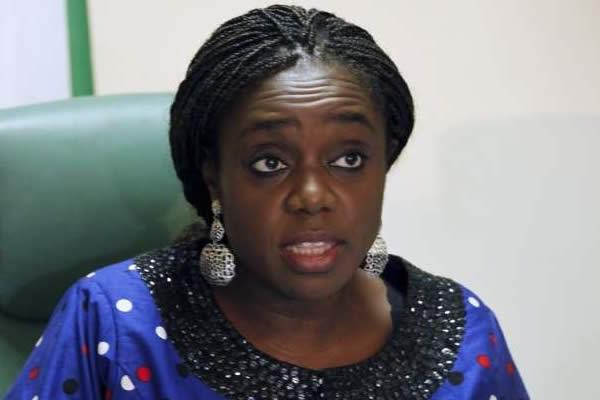
Nigeria’s finance minister, Kemi Adeosun has confirmed the Federal Government’s plans to sell some of its assets in order to raise cash needed to redirect the economy to growth, putting paid to wide discusions around the positions of these assets.
Adeosun argued that the sale of some underutilised assets was critical at this time because the kind of money needed for infrastruture building would be too much to be borrowed, though she said government was yet to decide which assets to dispose of.
Some analysts however said at the weekend that it would be proper for government to first generate an inventory of Nigeria’s financial requirements before disposing of assets. They further observed that it would be necessary to bring about an improvement in the ease of doing business situation, as well as the general attractiveness of the business climate in the country, so as to stimulate investor interest for the planned disposal of national assets to generate revenue for the embattled economy.
They also said that in making a choice of what to dispose of, care should be taken to distinguish between assets and liabilities and that those establishments which were well run and profitable should be retained and used to generate much needed revenue for government.

One of such establishments, they said, is the Nigeria Liquidfied Natural Gas (NLNG) which is presently doing well and would be better deployed to accruing dividend for development of the economy. Adeosun said at the weekend that a number of assets are being considered for sale.
“I think there are a number of assets that are being considered and I don’t think we’ve said this one or that one.
“There are some unused assets that are just lying idle which people have come and suggested that ‘this thing you are not using, can we lease it from you for money?’
“Hence, when they lease it from us, the taxes are still going to come to us. So there are some things government is sitting on, we don’t have money to do it, it makes sense for me to unlock those things. So it brings money into the economy at these difficult times, so that we can move forward.
“We have not gotten to the stage of saying, it’s this asset, or that. But it’s more of the conversation around should we just keep on borrowing or shall we now that things are a lot more difficult than we envisaged, turn on to alternative strategy, which is looking at some of the underutilised assets and releasing them?” Adeosun stated, speaking to select journalists at the weekend.

She acknowledged that government recognises that funding could be raised through borrowing, but lamented that this is not the best option now because of the huge infrastructure deficit.
“We think that the infrastructure challenges that we face are so serious, and the kind of money that we need, we can’t borrow.
“When you have an accumulated deficit, you need to look for the money that will sustain what you are doing for the next three to four years,” the finance minister added.
“That is what we are doing, having more of a strategic approach so that over time, we borrow less, and which of course is good.”
She explained that Nigeria is not the only country selling its national assets, which according to her, the present harsh global economic situation had necessitated.
“It is not exclusive to us. Saudi Arabia for instance is enlisting part of their ARAMCO which is their own version of the NNPC.
“They have announced, with all the money they have, ‘let’s sell some of it to get money in’. Because they too are in the same (problem), we need to get off dependence on oil and drive other sectors.
“So, if we sell off these assets, and use the funds to finance other assets, which are going to give us more, I don’t have problems with that,” she added. When asked how the government intends to sell these assets, Adeosun said this depended on the asset classes.
“It depends on which one. There are some assets which you can lease and others you might need to divest.
“The investor would also have to look at the risks and the pricing. Some assets just make sense to just leave and there are some which you may just sell but still hold on to the majority. “So it makes sense and you can sell to the Nigerian people and list on the Stock Exchange. So, there are different kinds of sales.”
Olisa Agbakoba, Lagos based lawyer and human rights activist believes that it is after the inventory that President Muhammadu Buhari can propose to the National Assembly, a Reinvestment and Recovery Bill and an Emergency Economic Stabilisation Bill to stimulate the economy and bailout the ailing financial system.
Razia Khan, managing director, Chief Economist, Africa Global Research, Standard Chartered Bank, said, “However, hand in hand with the proposed asset sales, there will need to be an effort to improve the attractiveness of the business climate in Nigeria, in order to stimulate investor interest. Recent discussion of outsized fines for some corporates and perceptions of a less predictable regulatory environment may have some impact on investor appetite.”
Charles Robertson, global chief economist at Renaissance Capital, told BusinessDay by email that privatisation is often a policy economists support. Companies are more efficient when they are run for profit, without the interference that political overlords often impose, as they provide revenues for the government, while state owned companies too often are costs to the government.
Robertson advised that caution must be taken to ensure the fair value of the assets as political considerations may come into play.
But privatisation, according to him is often politically difficult. If a government tries to sell when prices for shares and companies are expensive, purchasers often have to borrow money to afford the company. This can hurt the privatised company in the future. And governments can rarely tell when prices for a company are at their highest.
If a government privatises when prices for shares and companies are low, they are often criticised for “selling the nations silver” at too low a price.
“So it can be tough to explain to the population, the benefit of privatisation. Perhaps the best example the government can cite is telecoms – when there was one state owned company, service was poor and 1% of Nigerians had a phone. Private companies have made phones cheaper. They have improved the service and now most adult Nigerians have a phone. The government makes money by taxing the phone companies. That is the benefit of privatisation,” he added.
But the issue has continued to generate divergent views, as while some have expressed total rejection to the sale and would rather prefer a structured relationship between the Federal Government and the joint venture operators, which would enhance efficiency in the managements of the country’s assets, others feel selling these assets would engender better management of those assets.
According to Toyin Akinosho, the publisher of Africa Oil and Gas Report, if the structural problems within the oil and gas industry are addressed, it would be better for the government. Akinosho said the NLNG is already in the area where the country wants to go and therefore should not be touched.
The government, he warned, should not be seen as being desperate in selling the assets, as they could be priced cheaply. He however stated that the overbearing influence of agencies like the National Petroleum and Assets Management Services (NAPISM) on oil companies, especially when it comes to the Production Sharing Contracts (PSC) whereby it determines what is to be used and what not to be brought by the contractors is not good for the business. Henry Biose, Petroleum Economics and Policy researcher with the University of Port Harcourt, also disagrees that NLNG assets should be sold.
“NLNG has been run very efficiently and is one of the most well managed Oil and Gas Companies in Nigeria. Nigeria should be thinking of increasing its investments by building other trains, rather than selling its stake in NLNG.”
Biose further said, “Look at the financial report of NLNG, the company has been doing very well, so what is the rationale for proposing to sell it, it does not make sense, whose interests will it be?”
In his own response, Cyprian Nwuya, former Lagos State chapter chairman of the Institute of Chartered Accountants of Nigeria, said “While government can sell a lot of its abandoned assets, I don’t think selling NLNG is a good move for Nigeria because it is one of the best run businesses here, what is the rationale for selling it? Rather the FG should sell off a lot of its abandoned properties and assets scattered all over Nigeria. The refineries are there adding little value to Nigeria, those are the things that should be sold.”
Taiwo Oyedele, PwC head of Tax, told BusinessDay that he believes that NLNG, is one of the best run organisations in Nigeria and unless government wants to sell it to Nigerians through the stock market, which would be fine . Oyedele however stated that he is in total support of selling virtually all of government’s assets on the basis that private sector led businesses are better managed.
“Generally, in terms of assets, I think government should sell off everything, not just because we need this money but because we need those things to run efficiently.
“If you look at our national assets, the airport, ports etc you discover that when you sell them and they are properly managed, they become more efficient and they contribute more to the economy. You know when government taxes them, sometimes they make more money than shareholders.
America produces more than nine million barrels of crude oil per day, they don’t have a national oil company, they make more money from oil than Nigeria, so from the angle of efficiency of the private sector, I will support sale of assets.
Olusola Bello, Onyinye Nwachukwu, Hope Ashike–Moses & Isaac ANyaogu