|
Getting your Trinity Audio player ready...
|
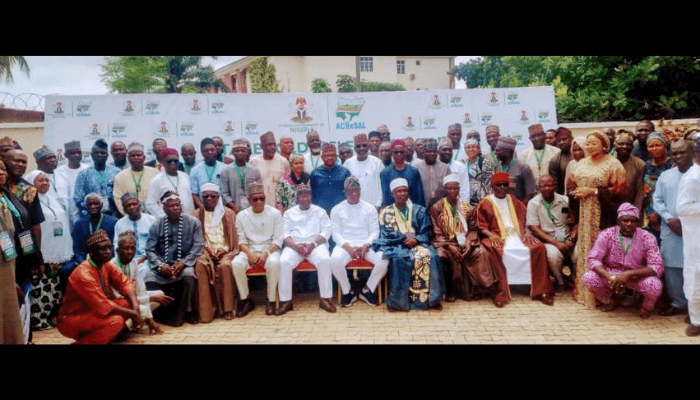
The Federal Government, through the Agro-Climatic Resilience in Semi-Arid Landscapes (ACReSAL) Project, has launched a stakeholders’ engagement for the development of eleven strategic catchment management plans (SCMP).
While speaking at the meeting on Friday in Lokoja, Abdulhamid Umar, national project coordinator of ACReSAL, said that the engagement is for the development of Sarkin-Powa-Kaduna, Okwa-Mada, Gurara-Gbako, Lokoja-Niger, and Aloma-Ebonyi catchments.
“This initiative aims to promote sustainable development, restore degraded lands, and strengthen the resilience of millions of people across northern Nigeria,” he said.
He said that the stakeholders’ engagement, brought together strategic stakeholders from 10 ACReSAL states, including Kogi, Kaduna, Niger, Katsina, Plateau, Benue, Bauchi, Kano, Nasarawa, and FCT.

Represented by Shettima Adams, he said that it aimed to derive a shared vision for an ideal riparian catchment that will build and forestall peace in the catchments.
“The engagement will also consider the opportunities and challenges in the catchments, which will form part of the catchment management plan.
“Catchment management plans are critical for sustainable development, as they provide a framework for managing natural resources, mitigating environmental challenges, and promoting social and economic development.
“The plans will be segregated into short, medium, and long-term plans, ensuring that the ACReSAL Project achieves its objectives of restoring one million hectares of degraded land and impacting 3.4 million direct beneficiaries,” Umar said.
He stressed that the ACReSAL Project was designed to promote long-term transformation, restore dignity to dry lands, rebalance ecosystems, and strengthen the resilience of millions of people, adding that the project would also ensure that women and girl – child benefit from the project and are integrated fully into society.

“With the guidance of the World Bank and the support of the Federal Government of Nigeria, the ACReSAL project is poised to make a significant impact in the lives of millions of Nigerians,” he said.
He urged stakeholders to make meaningful contributions to the document and ensure that their concerns are integrated into the plan, as he expressed gratitude to the World Bank and the Federal Government of Nigeria for their support and guidance in implementing the ACReSAL Project.
“With the stakeholders’ engagement, Nigeria is one step closer to achieving sustainable development and environmental sustainability”.
Olusegun Joseph, Kogi Commissioner for Environment and Chairman State Steering committee, praised the selection of Lokoja for the ACReSAL stakeholders’ engagement.
Joseph, who declared the engagement open on behalf of Governor Ahmed Ododo, reaffirmed the governor’s commitment to supporting the project , as he described the ACReSAL as a transformative initiative to tackle environmental challenges and climate vulnerability.
He urged stakeholders to share practical knowledge and corporate solutions to address environmental issues.
He emphasised the importance of sustainable environmental management and climate resilience.
Joseph commended Governor Ododo’s vision and commitment to the environmental sector and ACReSAL project.
Earlier, Ladi Jato, Kogi State Project Coordinator, emphasised the shared commitment to environmental restoration and sustainable resource management.
She highlighted the project’s achievements in Kogi including restoring 11,064 hectares of degraded land through gully remediation works.
She said, “Increasing water storage capacity by 800 cubic meters through water harvesting initiatives.
“Enhancing agricultural productivity and livelihoods through dry season farming support, and restoring over 3,000 hectares through agroforestry and tree -planting activities”.
Jato expressed gratitude to the World Bank and FPMU teams for their support and commitment to the ACReSAL project, aiming to restore and safeguard the ecosystem for present and future generations.