|
Getting your Trinity Audio player ready...
|
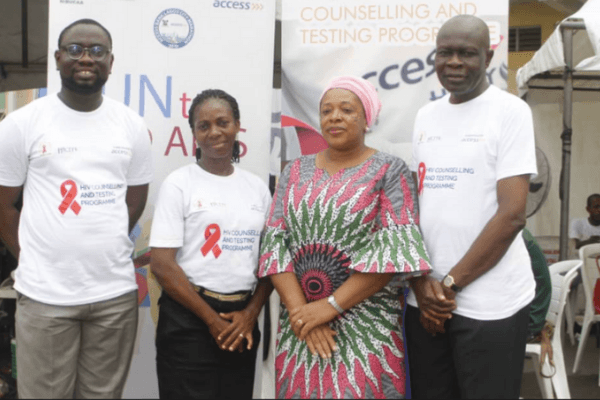
The Nigeria Business Coalition Against AIDS (NiBUCAA) has partnered with HACEY Health Initiative to provide free HIV counselling, testing and referrals to participants at this year’s Access Bank Marathon.
The collaboration with the support of Access Bank Plc have join forces to leverage on the yearly held global event and are targeting to reach at least 2,600 people including athletes and communities along the race path.
Gbenga Alabi, executive secretary, NiBUCCA, explained that the exercise seeks to promote HIV prevention messages to over 1 million Nigerians via online and physical activities during the Access Bank marathon as well as help provide a case study for private sector leadership to end HIV/AIDS in Nigeria.
“Significant progress has been made in the AIDS response since 1988, and today three in four people living with HIV know their status. But we still have miles to go, as the latest UNAIDS report shows, and that includes reaching people living with HIV who do not know their status and ensuring that they are linked to quality care and prevention services,” Alabi said.

Also Speaking on the HIV sensitization campaign, Isaiah Owolabi, project director, HACEY Health Initiative, noted that its health officials and volunteers will also make referrals and follow-up of up to 100 percent population of beneficiaries in need of it.
Nigeria has the second largest HIV epidemic in the world, with 3.4 million people living with HIV in the country in 2014. However, with increased investment in the AIDS response from Nigeria and its partners, the situation has improved in the past decade.
The new HIV infections dropped from 310 000 in 2004 to 230 000 in 2014, and coverage of antiretroviral therapy increased from 13 percent in 2011 to 22percent in 2014, providing more than 747 000 people living with HIV with access to life-saving medicine.
The UNAIDS recommend that HIV prevention efforts must be reinvigorated if the world is to stay on the Fast-Track to ending the AIDS epidemic by 2030.
The UNAIDS Prevention gap report shows that worldwide an estimated 1.9 million adults have become infected with HIV every year for at least the past five years and that the number of new HIV infections is rising in some regions.

“HIV testing is essential for expanding treatment and ensuring that all people living with HIV can lead healthy and productive lives. It is also crucial to achieving the 90–90–90 targets and empowering people to make choices about HIV prevention so they can protect themselves and their loved ones,” Omobolanle Victor-Laniyan, Head of Sustainability at Access Bank Plc said.