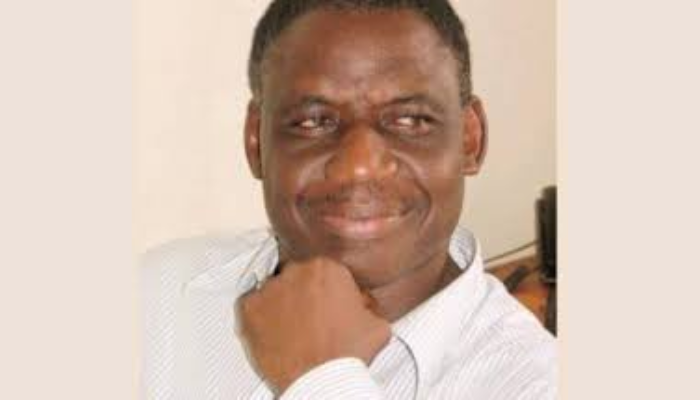
As Dr Akinwumi Adesina concludes his two-term presidency of the African Development Bank (AfDB) this September, it is proper to pause, reflect, and celebrate a Nigerian whose vision reshaped not only the institution he led but also the future trajectory of the continent.
From Ibadan to Indiana: Anchored in faith and purpose
Born in Ibadan in 1960, Adesina’s journey was rooted in discipline, faith, and a sense of mission inherited from his father, a farmer and schoolteacher. At the University of Ife (now Obafemi Awolowo University), he distinguished himself as the first student to graduate with First Class Honours in Agricultural Economics, a feat that hinted at his lifelong commitment to using agriculture as a tool for human development.
He married his lifelong partner, Grace, early in his career, and together they built a home anchored in Christian faith and mutual service. During his doctoral studies at Purdue University in the U.S., he struggled financially but found community in the local church, where he absorbed Calvinist ideals about creating impact for God’s kingdom across all spheres of life—not just within the church.

From philanthropy to Pan-African Leadership
Adesina’s professional journey began in earnest at the International Institute of Tropical Agriculture (IITA), one of the prestigious Consultative Group for International Agriculture Research (CGIAR) centres. But it was at the Rockefeller Foundation that he sharpened his ability to combine science, policy, financing, and strategy. Mentored by Dr Gary Toenniessen, one of Norman Borlaug’s lieutenants, Adesina quickly rose to prominence—first in Harare, where he led Southern Africa programmes and helped shape the landmark Abuja Fertiliser Summit of 2006 with President Obasanjo, and later in Nairobi, where he became the intellectual force behind Rockefeller’s Africa-wide agriculture portfolio.
“Through these interventions, Adesina not only elevated the bank’s balance sheet and project footprint, he ignited confidence across the continent.”
It was there that he leveraged his relationships with leaders such as Bill Gates to help establish the Alliance for a Green Revolution in Africa (AGRA), chaired by Kofi Annan. As AGRA’s inaugural Vice President for Policy and Partnerships, he championed innovative finance, fertiliser access, and market systems, laying down a playbook for modern agricultural transformation.
A mentor and colleague: Lessons in vision

It was during this period that I first came across Dr Adesina’s influence. As a young consultant at McKinsey, I was tasked with developing Kenya’s national agriculture strategy under its ambitious Vision 2030. Though I did not meet him directly at the time, every Kenyan agricultural leader, from the minister to the permanent secretary to CEOs of the major commodity boards, insisted I seek his advice. When I did, his counsel was incisive, practical, and far-sighted, shaping my recommendations in ways that proved transformational for Kenya’s strategy.
Later, when I joined the Rockefeller Foundation’s Africa Regional Office in Nairobi in 2008, I finally met Adesina in person. I was, technically, his grant officer liaising between Rockefeller and AGRA. But in truth, he was my teacher and became a mentor. From him, I learnt what philanthropy could be when done with integrity and vision, how impact investing could mobilise capital at scale, and how agriculture could be a driver not of subsistence but of prosperity.
Together, our teams pushed innovations that would echo across the continent: the establishment of the Africa Risk Capacity, the African Union’s insurance agency for climate disasters; early work on weather-based agricultural insurance; the introduction of impact investing across Africa; one of the earliest examples of the field that became mAgri – an agriculture information call centre in partnership with KenCall, at the time the driving force behind Kenya’s emergence as a Business Process Outsourcing (BPO) destination; the first major agriculture financing initiative with Standard Bank; and the creation of the Nigeria Incentive-Based Risk Sharing System for Agricultural Lending (NIRSAL) in Nigeria to unlock agricultural finance. He pushed climate adaptation into Africa’s policy agenda long before it was fashionable.
From Minister to AfDB President
When he was appointed Nigeria’s Minister of Agriculture in 2011, I was certain he would transform the sector—and he did. In just four years, Adesina dismantled the corrupt fertiliser subsidy racket with bold use of technology, redirected billions into the hands of real farmers, and inspired a new generation of Nigerian youths, some fresh out of Ivy League universities, to enter agribusiness. I had moved back to Nigeria before him, in 2010, to become the inaugural CEO of the Tony Elumelu Foundation. This again provided an opportunity to collaborate through initiatives related to youth entrepreneurship in agriculture and in the establishment of Africa Exchange Holdings (AFEX), today Africa’s largest commodity exchange company.
“Africa’s future today looks markedly different: marked by ambition, resilience, and strategic finance rather than charity.”
President Akinwumi Adesina is currently serving as the 8th President of the African Development Bank (AfDB).
That same clarity of vision carried him to Abidjan in 2015, when he became the first Nigerian elected as President of the AfDB. Against the odds, coming not from finance ministries but from agriculture, he made history.
Honoured with the World Food prize
In 2017, two years into his tenure at the AfDB, Dr Adesina received the World Food Prize—the foremost global award for individuals who have advanced human development by improving the quality, quantity, or availability of food. Often called the “Nobel Prize for Food and Agriculture”, it recognised his bold reforms as Nigeria’s Minister of Agriculture, particularly his pioneering e-wallet system that delivered subsidised seeds and fertiliser directly to millions of farmers.
The award placed him in the lineage of global agricultural giants, including Nobel Prize winner Norman Borlaug, M.S. Swaminathan, and others, underscored his conviction that Africa could feed itself and the world with the right policies, innovation, and political courage.
A decade of dynamic leadership at the AfDB: Building finance, infrastructure, and hope
Dr Akinwumi Adesina’s tenure as AfDB President, from September 2015 through September 2025, rewrote the bank’s playbook and redefined Africa’s development narrative. Under his leadership, the institution underwent transformative growth:
· Capital expansion & financial muscle: Grew the Bank’s authorised capital from USD 93 billion to USD 318 billion, unlocking over USD 102 billion in low-cost financing for African countries. Maintained the Bank’s coveted AAA global credit rating for ten straight years, despite Covid-19, debt, and geopolitical crises.
· Transforming lives at scale: Through the High 5s strategy, the Bank directly impacted 565 million people, including 231 million women. It secured food for over 101 million people, mobilised USD 72 billion in agricultural investments, and delivered transformative results across power, transport, water, health, and education.
· Infrastructure & green finance leadership: Devoted USD 55 billion to infrastructure, making the AfDB Africa’s largest multilateral financier of roads, energy systems, and transport. Under his watch, Africa50 matured into a pan-African powerhouse, managing USD 1.4 billion in assets and raising USD 275 million for its Infrastructure Acceleration Fund.
· Innovating for Africa’s financial sovereignty: Pioneered the rerouting of IMF Special Drawing Rights (SDRs) to multilateral banks for 4–8× leverage, championed the creation of an African Financial Stability Mechanism, and launched innovative financial instruments, including a USD 3 billion social bond, the world’s largest at the time; a USD 750 million hybrid capital issuance, the first ever by a multilateral development bank; and a USD 10 billion Covid-19 Crisis Response Facility.
· Strengthening Africa’s poorest nations: Revitalised the African Development Fund, raising a record USD 25 billion for Africa’s 37 low-income countries. The Fund was ranked the second-best concessional financing institution in the world, ahead of all 55 OECD peers.
· Mobilising global investment: Created the Africa Investment Forum (AIF) in 2018, which has become the premier deal-making platform for the continent, mobilising over USD 225 billion of investment interest.
· Championing women and youth: Launched the Affirmative Finance Action for Women in Africa (AFAWA), which has already delivered USD 3 billion in financing to 25,000 women-led businesses across 44 countries. Pushed for the creation of Youth Entrepreneurship Investment Banks, including in Nigeria, where USD 100 million has been approved.
· Global recognition & influence: Positioned AfDB as a globally respected institution, named the Best Multilateral Financial Institution in the World by Global Finance and ranked Most Transparent Financial Institution in the World for two years running by Publish What You Fund (with a record 98.9% score).
· Climate action & resilience: Launched the USD 25 billion African Adaptation Acceleration Programme (AAAP), the largest climate adaptation initiative in the world. Played a leading role in forging the USD 10 billion Alliance for Green Infrastructure in Africa.
· Continental & global honours: Awarded the inaugural “African of the Decade” honour in 2024, received national decorations from more than 13 African countries, and earned recognition as “Africa’s optimist and visionary-in-chief.” Tanzania renamed a major highway after him, Dr Akinwumi Adesina Road, to honour his legacy. In Kenya, he was bestowed the country’s highest national honour, the Chief of the Order of the Golden Heart (CGH), an accolade equivalent to Nigeria’s Grand Commander of the Order of the Federal Republic (GCFR), reserved only for the most distinguished global statesmen.
Through these interventions, Adesina not only elevated the bank’s balance sheet and project footprint, he ignited confidence across the continent. Africa’s future today looks markedly different: marked by ambition, resilience, and strategic finance rather than charity.
Africa’s optimist-and-visionary-in-chief
Yet beyond the numbers, Adesina’s greatest gift was his narrative power. He relentlessly rejected the deficit lens through which Africa is often seen, insisting instead on the continent’s potential as the world’s last growth frontier. He challenged global partners to replace aid with investment and demanded equity in how Africa is taxed, rated, and financed. His was a moral and economic argument combined, rooted in dignity and possibility.
Even as he carried the burdens of high office, he remained a mentor. I had the honour of inviting him to deliver the graduation address at Calvin University during my presidency there. He inspired not just the students but also the American business community—people who had long seen Africa through the lens of charity and mission work suddenly saw a continent of opportunity, thanks to the vision and gravitas of one man.
The next chapter: Greater still
Now, as Adesina steps down, tributes pour in from across Africa and the world. But for those of us who have walked with him, his story is not one of retirement but of redirection. His vision, optimism, energy, and faith are undimmed. If his past decades have taught us anything, it is that his post-AfDB chapter will be marked by even greater impact—for Nigeria, for Africa, and for the world.
Dr Akinwumi Adesina’s life reminds us that leadership is not about titles but about mission. His mission remains unfinished. And Africa is better poised for the future because he carried it this far.
Dr Wiebe Boer, Chief Growth Officer, JIPA Network & Editorial Advisory Board Member, BusinessDay.