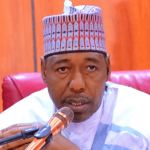
Victor Uchenna Moses is a scholar and advocate of ethical adoption of Artificial Intelligence (AI) across Africa.
As a Nigerian digital strategist now working as a Digital Project Manager at the UK’s Medicines and Healthcare products Regulatory Agency (MHRA), he has observed how digital inequality affects students both in the Global South and in UK universities.
“Access is not the same as opportunity,” Moses explained in our interview. “Many learners, especially international students, have the talent, but not the tools. Ethical AI education means meeting them where they are.”
Following the conference, his advocacy received significant attention in British and African media. In April 2025, Bolton News described him as “championing technology literacy across continents.” WAN Magazine echoed the sentiment, noting that Moses’ keynote had “become a movement that believes in people.”

Across multiple appearances on Bolton FM Radio, he explored how AI tools like natural language processing could help international students learn more effectively, especially those learning in a second language.
Read also: Nigeria taps artificial intelligence to accelerate growth
A voice rooted in experience
In 2024, as the president of the Students’ Union of University of Bolton, now University of Greater Manchester, Moses co-organised the Next Generation Artificial Intelligence conference alongside Professor Celestine Iwendi and Sam Johnson, with institutional support from NHS Digital, IEEE, Red Visual Effects, and Manchester City Council.
Over 500 participants gathered for the landmark Next Generation Artificial Intelligence Conference, which brought together academic, government, and industry voices to explore the future of AI and its ethical integration into society.

At the heart of the event was a young Nigerian leader whose message as at then he didn’t know would go on to shape policy conversations far beyond the United Kingdom. Victor Uchenna Moses, then President of the Students’ Union at the University, co-organised the conference
The conference also marked the launch of the Centre of Intelligence of Things (CIOTH), a research and education hub focused on translating applied AI into real-world social value.
Moses’s discourse can be summed up in “Digital Tools and Global Equity in an AI Future which is now gaining widespread attention. “Inclusion is not charity,” Moses said,“It is infrastructure.”
The statement has since echoed across policy roundtables, academic forums, and global development debates. He challenged institutions to stop treating AI as a threat to be banned and start guiding its responsible use, especially in classrooms and communities often excluded from digital transformation.
From conference to policy influence
What began as a keynote soon informed wider institutional change. Within months, UK universities began shifting away from blanket AI bans toward curriculum reform, responsible AI literacy, and inclusive design frameworks. In early 2025, the UK government introduced the Digital Inclusion Action Plan and the AI Opportunities Action Plan, aligning with themes raised at the Bolton summit.
The establishment of the AI Safety Institute in London further reinforced national interest in ethical, inclusive AI systems, a call Moses had voiced during the conference. “Ethical AI cannot be theoretical,” he said. “It has to be taught, debated, and tested in every lecture hall, not just in labs.”
Building systems that work
In addition to co-leading the conference, Moses was directly involved in curating speaker sessions, managing institutional partnerships, and aligning the event’s outcomes with broader policy narratives. According to stakeholders, his contributions were structural, not symbolic.
Professor Celestine Iwendi, co-organiser and Head of CIOTH, described Moses as “a generational leader whose clarity of purpose brought global relevance to a local summit.”
Today, Moses continues his advocacy through public-sector projects in the UK and education initiatives across West Africa. He remains committed to embedding ethical technology not only into systems but into classrooms, communities, and public policy.
“Inclusion begins at the design stage,” he said. “We need to stop importing ethics and start building frameworks that reflect who we are and what we need.”
Victor Uchenna Moses is not waiting for inclusion to happen. He is helping to design the infrastructure that makes it possible. From Bolton to Abuja, from university podiums to national policy rooms, he is proving that ethical AI leadership can emerge from anywhere and reach everywhere.
Oni, writes from Akure, Ondo State.