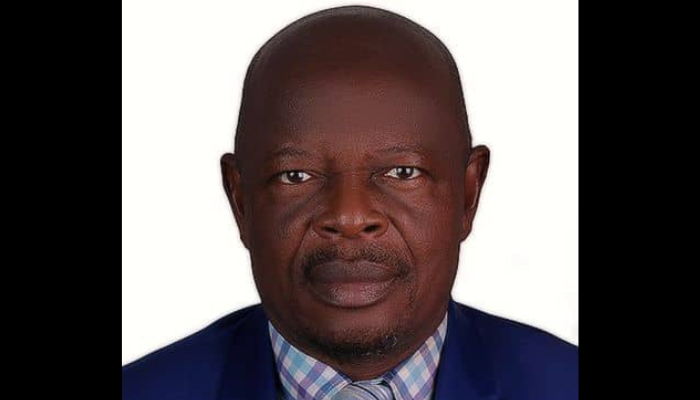
Okorie Augustine Uche is the Registrar and the CEO of the Council for the Regulation of Engineering in Nigeria (COREN). Uche who is a professor of Civil / Structural Engineering in the Department of Civil Engineering, Bayero University Kano over the years has contributed to engineering academic in the country.
In this interview with NGOZI OKPALAKUNNE, the professor spoke on how the government can address challenges in the regulation of the engineering profession in Nigeria. Excerpts
How can you describe the level of professionalism and astuteness involved in handling the provision and maintenance of the up-to-date civil engineering profession and others in connection with repositioning Nigeria to the path of wealth creation and economic growth?
Professionalism in civil engineering is the bedrock of national development. At COREN, we ensure that only qualified, ethically grounded, and well-trained engineers are licensed to practice. Our commitment to Continual Professional Development (CPD) and regulatory compliance guarantees that engineers are equipped with current global best practices. With the evolving complexity of infrastructure demands, our emphasis on multi-disciplinary collaboration, sustainability, and digital technologies directly supports Nigeria’s aspirations for wealth creation and inclusive economic growth.

With your experience in the last few years in the Civil Engineering Education, what other innovative approach can you say has impacted the running of COREN, in particular to the Sustainable Development Goals (SDGs)?
One significant innovation is the Outcome-Based Education (OBE) accreditation system, which COREN has embraced in alignment with global standards and the Washington Accord. This has ensured that engineering graduates are not only technically sound but also societally responsible and globally competitive. We have also initiated programmes that link engineering practice with SDGs, especially in climate resilience, infrastructure, clean water, and sustainable cities.
Furthermore, COREN has deepened its stakeholder engagement and embraced digital transformation in registration, monitoring, and capacity building, directly contributing to industry, innovation, and infrastructure.
What steps do you think the government needs to take to address challenges in the regulation of the engineering profession in Nigeria to fast-track economic development?
The government must prioritise the domestication and enforcement of engineering practice laws, ensuring that only licensed professionals handle public infrastructure projects. Secondly, there must be a policy-backed investment in engineering education and research, as well as retooling polytechnics and universities for practical training.

Lastly, promoting local content in engineering projects, curbing quackery, and supporting agencies like COREN with adequate funding and autonomy will enable us to regulate the profession robustly and drive innovation-led economic growth.
The federal government should support and fund efforts to attain full signatory status to the Washington Accord of the International Engineering Alliance (IEA).This would enable engineering graduates from Nigerian universities to practice globally, particularly in member countries such as the US, UK, Canada, Malaysia, Pakistan, South Africa, among others.
In what ways can the council ensure standards are maintained in the Civil Engineering Profession in Nigeria?
COREN ensures standards are maintained through; accreditation of engineering programmes based on global benchmarks; mandatory CPD (Continuous Professional Development) for all registered engineers.
Others include; disciplinary mechanisms to address ethical breaches or professional misconduct; regulation of engineering practice via the Engineering Regulation Monitoring and Enforcement(ERM & E) scheme; collaboration with NSE, stakeholders and international bodies to keep abreast of trends and reinforce quality.
Also, introducing digital tracking systems for real-time monitoring of compliance and project delivery standards and; collaboration and advocacy with other sectorial regulators in the engineering practice (NERC, NEMSA, CORBON among others.)
Your views about the passion that brought your career to life?
The passion that brought my career to life is a deep-seated desire for excellence and impactful service, particularly in the development of infrastructure and capacity building through engineering education.
From a young age, I was driven by a vision to contribute meaningfully to society by solving practical problems. That passion found expression in both academic pursuits and professional practice.
The opportunity to influence lives through teaching, mentoring, and ensuring professional standards in engineering has kept the flame alive throughout my journey.
Can you take us through your career trajectory?
My career began after graduating with and HND Distinction in Agricultural Engineering from Federal Polytechnic, Nekede in 1988. I served in Plateau State’s College of Agriculture during my NYSC in 1989, then took up a role at Champion Newspapers, Lagos. My transfer to Kano in 1991 opened the door to further education at Bayero University, Kano, where I earned a BEng in Civil Engineering in 1994, emerging as the best graduating student.
Driven by the pursuit of knowledge, I obtained an MSc (2000) and later a PhD (2008) in Civil Engineering from Ahmadu Bello University, Zaria. I joined Bayero University Kano as an Assistant Lecturer in 2001 and have risen through the ranks to become a professor. My trajectory has included significant contributions in teaching, research, and academic leadership, professional consultancy work, as well as deep involvement in professional engineering regulation and administration, culminating in my appointment as Registrar/CEO of COREN in March 2025.
Who and who have been most influential on your life and career?
First, my parents, particularly my father, late Anyabuoke Jude Uchegbusi, laid the foundation of discipline, hard work, and faith. Academically, I have been fortunate to have mentors and senior colleagues who believed in my vision and supported my growth. Professionally, institutions like Bayero University Kano and Ahmadu Bello University shaped my academic identity, while organisations like the Nigerian Society of Engineers (NSE), Nigerian Institution of Civil Engineers (NICE) and COREN provided platforms for leadership and service. Spiritually, my active involvement in the Methodist Church Nigeria has played a profound role in shaping my values and guiding principles.