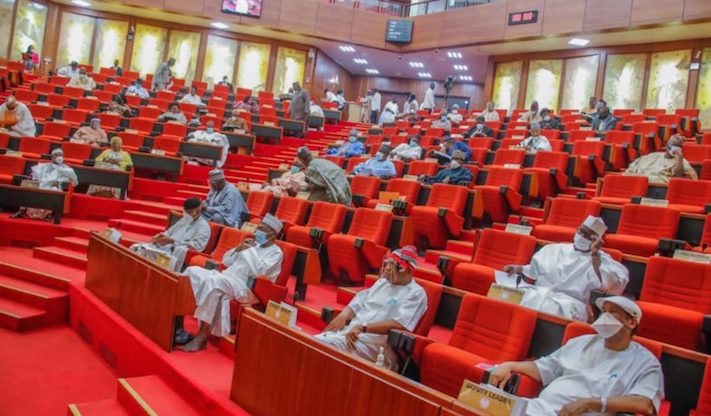
The Nigerian Senate appears to have discovered a new legislative pastime: approving the establishment of federal universities.
In recent months, the number of university establishment bills introduced and passed has grown so rapidly that attempting to count them individually would be a daunting task.
From technology-focused institutions to specialized universities in health, mining, and vocational training, the Senate’s enthusiasm for expanding Nigeria’s higher education map shows no signs of slowing down.
On Thursday, July 10, during plenary, the Nigerian Senate passed seven bills aimed at creating new federal tertiary institutions across the country.

This legislative push comes amid growing momentum in the National Assembly.
Just a day earlier, the Senate had passed four concurrence bills forwarded by the House of Representatives, and on Wednesday, Peter Nwaebonyi sponsored a bill for establishing a “School of Skills and Trade” in Ebonyi State, reflecting the legislature’s recent focus on expanding educational infrastructure.
The suite of bills approved on Thursday seeks to establish or upgrade a range of specialized universities. Among these are: Federal University of Technology, Asaba (SB.570), sponsored by Ned Nwoko, which converts the existing college into a university focused on technology.
Federal University of Technology, Offa (Kwara State) sponsored by Lola Ashiru; Federal University of Technology, Omoku (Rivers State) – sponsored by Harry Banigo; Federal University of Technology, Odukpani (Cross River State) sponsored by Sen. Asuquo Ekpenyong; Federal University of Birnin Kebbi (SB.224), sponsored by Sen. Adamu Aliero; Federal University of Science & Technology, Epe (SB.739), sponsored by Sen. Opeyemi Bamidele; Federal University of Sciences, Deba (SB.874) – sponsored by Sen. Danjuma Goje, Federal University of Technology & Vocational Training, Yaba also sponsored by Sen. Bamidele.
On Wednesday, there was the establishment of Federal College of Education, Ilo, Kebbi state, sponsored by Abdullahi Yahaya.
Additionally, bills for the Federal University of Medical and Health Sciences, Bende, and the Federal College of Education, Bende, passed third reading.

The Senate further approved earlier this year the Federal University of Information Technology, Ikare-Akoko (Ondo State), and the Federal University of Education (Technical), Gombe State, both introduced on May 22, 2025.
In December 2024, the chamber also passed the Federal University of Mining and Geo-Science, Jos bill, sponsored by Sen. Diket Plang (APC, Plateau Central).
Patterns from the Last Year: A Legislative Wave
Over the past twelve months, the Senate has taken extraordinary steps to restructure the federal tertiary education landscape. Notable cases include: Passage of the Federal University of Mining and Geo-Science, Jos, repealing the 2018 act, with support from the Senate Committee on Tertiary Education and TETFund ; Approval of Information Technology and Technical Education universities in Ikare-Akoko and Gombe respectively.
This upward trend demonstrates a clear legislative intent to intervene directly in the establishment and upgrading of federal tertiary institutions, with an emphasis on niche, technology-centric, and state-of-origin-based campuses.
While politically appealing, this rapid expansion raises several critical concerns, many of which are likely to demand parliamentary oversight and strategic intervention.
Establishing a federal university requires significant recurring investment, covering infrastructure development, faculty recruitment, student services, and ongoing operations.
Historical precedent shows that existing institutions have struggled with funding, and adding new ones without increasing the federal allocation risks diluting resources further.
Also, upgrading or creating universities of technology and specialized disciplines demands not just buildings, but laboratories, research centres, digital infrastructure, and qualified academic staff.
The Asaba proposal, while laudable, currently lacks publicized details on funding mechanisms, facilities, or academic recruitment strategies
Multiple closely related institutions—such as two separate technology universities in Lagos (Epe and Yaba) may result in overlapping mandates, duplicative administrative structures, and inefficiencies.
Several of the new bills have raced through legislative stages ahead of formal accreditation by regulatory bodies like the NUC.
The mining university bill, for example, was approved without clear evidence of accreditation plans or existing faculty pipelines.
Similarly, while introducing universities in unserved areas promotes regional equity, the absence of a cohesive national higher education strategy increases the risk of politically driven siting, disconnected from regional economic needs or labour market demand.
Read also: Tinubu, slow down on creation of universities
To mitigate these challenges and ensure that these bills translate into sustainable institutions, Parliament must focus on the following oversight measures:
Budgetary Assessment: Demand full cost-benefit analyses, clear funding breakdowns, and potential utilization of the TETFund. Require that these institutions receive dedicated budget lines rather than being absorbed into existing funds.
Phased Implementation: Tie institutional establishment to specific milestones, existence of land, infrastructure, faculty hiring targets, and accreditation status. Monitor progress through follow-up reports.
Accreditation Assurance: Ensure the NUC or specialized councils are involved early in the process, with the authority to withhold accreditation until standards are met.
Avoiding Redundancy: Commission an audit of all federal tertiary institutions to identify gaps, vacated capacity, and regional needs, to avoid opening wholly new campuses where existing facilities could be upgraded.
Stakeholder Engagement: Insist on public hearings and inclusive stakeholder consultations, as seen in the mining university case Nigerian Mining Marketplace
.Civil society groups, professional bodies, and state governments must be part of the planning stages.
The wave of university-establishment bills passed by the Senate marks a bold and immediate response to longstanding demands for expanding tertiary education nationwide.
However, without deliberate, transparent implementation, this legislative momentum risks creating underfunded, under-resourced, and unaccredited institutions.
Parliament’s role moving forward should be less about approving legislation and more about ensuring oversight, from financial scrutiny and accreditation to infrastructure readiness and national educational coherence.
Only through such vigilant stewardship can these bills fulfill their promise of equitable, high-quality educational access across Nigeria.