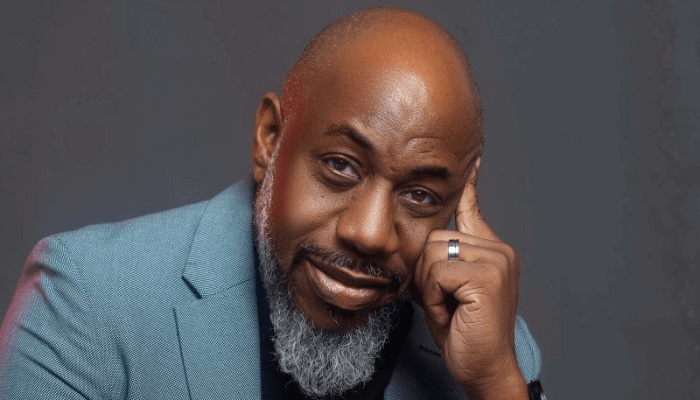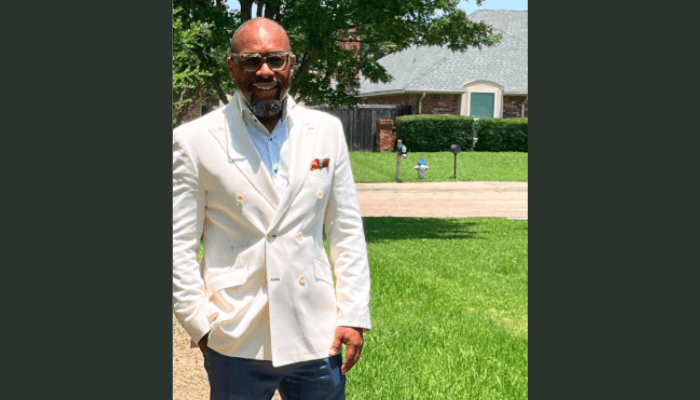
Stephen Amagba is a Nigerian strategist and innovator who has worked across sectors in Web3, Cloud, AI, and entrepreneurship.
The multi-skilled professional, who started from engineering lecture halls in FUTO, Nigeria, has built strategies for personal projects and giant brands like Binance, Dfinity, and GAIMIN.
In this exclusive interview, he shares how a curious college student became a full-stack value creator, team leader, and founder of multiple projects pushing boundaries in one of the world’s fastest-changing industries.
Chisom Michael brings the excerpt…

You started your career studying Mechanical Engineering. Today, you’re deep in marketing, sales, and business development. How did that switch happen?
Honestly, I would say it’s a sequence of actions that took place when I got into the University. While in secondary school, I was a very bright science student; Physics, Chemistry, and most importantly, Math were my strong points. So when the time came for me to choose a course for my undergraduate degree, it was very easy for me to choose Engineering.
However it seemed my business background (from family) kept ‘drawing’ me to the space, so around my 200 level, coupling the engineering problem-solving skills I was garnering at the time, I started exploring entrepreneurship and seeking ways to provide value to businesses, starting from the one place I knew so well—The Internet. And that’s how I started acquiring and applying marketing and business development skills online as a freelancer, while still maintaining good grades in my engineering studies.
Furthermore, after my undergraduate studies, I now have a post-study business degree (MBA), which is still relevant for any field, even for an engineer.
You have worked for many blockchain companies and have undertaken massive projects at such a critical time in the industry. What was it like working at some of the world’s biggest crypto firms, and what even made you take that bold step in your career, at a time when not many were thinking about it?

Binance was my big break, and it’s a company that I love and use to this day. But getting to work there was not a thing of chance and was far from being an easy task; it was a case of opportunity meeting preparation. Remember when I said I had started a new path sometime at the end of my 200-level in the university; yes, Crypto was one of those endeavours. 2017 was the year I became very interested in this new technology, and I saw it as something that would totally change the world, most especially, the financial sector.
But as a broke kid from my background in Nigeria, I didn’t have any money or means (crypto exchanges were not predominant for an average Nigerian at that time, even Binance was launched that year). So I had to find an alternative, which was to offer my skills in exchange for Bitcoin, and that was my first “job hunt” in crypto; I still have proof of some job emails I sent in 2017 till this day. So, fast forward to 2021, my final year in College (which was delayed by 1 year due to Covid), I was now a full-blown marketing specialist and crypto enthusiast. I was helping crypto companies like Binance host and organise online and offline events to educate and drive adoption among students under the Binance Affiliate and Campus Ambassador programs.
This experience and my strong belief in the brand would prove pivotal in my decision to formally apply for a full-time role after college. After several months of trying, I finally got my CV across to someone in a leadership role within the company who was impressed by my work so far and gave me a chance. After numerous gruelling interviews and tests, I got the job and started officially sometime in July 2022.
And while I had left the company the following year, my experience set me up to work on other great projects in the industry, which include Dfinity (Internet Computer Protocol), Axone, and GAIMIN. I must say, it’s been an amazing feeling so far, and I see my career advancing to even greater heights in this sector. I do not doubt that this is the industry for the present and the future; this is where I want to be.
In addition to your CV boasting of key full-time roles like the giants you mentioned previously, you have also done stints as an AI researcher, social community manager, and other freelance roles. How does this tie altogether for you?
For me, the common thread is problem-solving. Whether I’m building in a full-time project or in a part-time or freelance setting, the most important thing for me is that I’m solving problems and being of value in the setting I’m in. Furthermore, these gigs helped me hone and perfect my skills when I was starting out.
They also help you keep your skills sharp and stay relevant at times when you aren’t working on a full-time project, for example, the gap between leaving a previous company and finding a new one. You can call me a ‘workaholic’, I am a value beast, I’m always doing something because I hate being idle. That’s probably why my CV looks like a buffet, haha.
What excites you most about the Web3 space? What makes you think that this tech sector is not only the one for you, but also for the world?
Well, Web3 flips the script; it gives users ownership and has vast applications in many sectors that affect our lives. Web3 is not just a tech product or trend; it’s a generation of the Internet that touches almost everything we do in the world. The cryptocurrency side of it is just one part—Finance. Web3 is currently reshaping almost every sector around us; Real estate, Content creation, AI, Cloud technology, Art, Social media, you name it.
And I say this as both someone who is actively building in this industry and also using the products that come from the technology. Web3 is here to stay; take it as the early 2000s internet boom in our current times. The hype and the trend catchers will inevitably phase out for the real use cases to shine and change the world!
Tell us about your first major “win” in marketing. What was the moment you thought, “I could do this for a living”?
My first win, if I’m not mistaken, came in late 2020 (3 years later), I think, when someone sent me $200 for a quick gig. And then not long again in early 2021, when I got a $350/month freelance contract to create content for an NFT project at the time. That was when I realised that I might be on to something here, and kept doubling down ever since.
You founded C2S Enterprises. What inspired you to start the company, and what gap were you aiming to fill in the market?
Wow, now speak of things that happened simultaneously, my company, C2S Enterprises, was one of them. You have to understand that between 2019-2021, I was massively learning, applying a lot of skills, and just generally doing a lot of things; those were my biggest years of learning and relearning.
C2S Enterprises was a company that I created and registered in Nigeria and the United Kingdom as an umbrella company that would help me accumulate and properly brand all the services I was offering. It all started on October 1, 2019 (Nigerian Independence Day), while I was at a friend’s place, I just had the idea to start training people on how to trade, since at the time I had already mastered trading the financial markets (Forex, Crypto, etc). So there and then, I started building a brand for a trading academy. Not long after that hit some level of success, I decided to also brand my marketing services and my e-commerce side hustles, too. And since it was now becoming a ‘legion’ of businesses, one day in my parents’ bedroom, I created C2S Enterprises. I created the logo (which you see today), the Websites, the social media pages, etc; I was a jack of all trades at this point, so I did this all by myself.
Till this day, C2S Enterprises will continue to be the holding company for my businesses and personal projects, which I’m still building on. One of such projects I feel like spotlighting is WorkWaveHub, which I co-founded with some of my friends. With our experience in garnering freelance gigs over the years, we have used this company to get and outsource these minor gigs and provide a livelihood to a lot of college students in my country, Nigeria. I was once in that struggle, and that’s why this company is very important to me, not just for profits but for the impact we make in the lives of hustling students, like we once were.
You’ve been a team player and a team lead. How do you lead when you’re in charge, and how do you stay effective when you’re not?
I will address the general team player part first, because even when you are a leader, you still have to be a team player first. As a member of the team, I usually don’t only focus on my set roles, maybe because I have a lot of skills. Whenever I’m in a team, in addition to my assigned role, I always like figuring out how I could use my other skill sets to help my team achieve our collective goals.
This is important for me in every project I work on; it’s about providing value first in any capacity I can. Then, as a team leader, I also make myself aware that it’s my responsibility to motivate the team and also have them contribute in the same manner as above, not just being fixated on roles, but always bringing up more ideas and skillsets that help the team achieve the collective goal.
You’ve worked in fast-paced roles and high-growth environments. What’s one underrated skill that’s helped you thrive?
Adaptability. If there’s something that has helped me a lot and has given me an edge sometimes, it’s the fact that I’m able to adapt to settings. Things change quickly, especially in crypto and tech in general. Being able to unlearn and relearn fast is a superpower for anyone in this space. Oh, and also avoid desperation as much as possible.
As much as some people want to romanticise pressure, I’m sure we can agree that life is better when you are doing things in a calm, collective mindset. Although sometimes, life can hit you with things unexpectedly and hence you are forced to adapt quickly, otherwise, it’s better to always think ahead and start figuring out things you need to do and start doing them when you can, to avoid being in unnecessarily difficult positions.
You have a diploma in Latin, which is quite uncommon these days. What’s the story behind that choice?
That surprises a lot of people; it’s part of those “What you didn’t know about me” flex. I went to two different seminaries during my 6 years of secondary education; yes, I went to a school for priests. And in the later stage of your study, you have the choice to study for and take a Latin Diploma Certification issued by the Urban Pontificate University in Rome, Italy.
I have always been the one for learning new things and taking up challenges, so of course I took it. It was truly one of the most study-intensive periods of my life, and a difficult examination. However, it’s something I’m very proud I undertook; it was part academic curiosity, part personal challenge. Learning a “dead” language taught me patience, and honestly, it’s great party trivia, haha!
What does your ideal project look like in 2025? What gets you out of bed right now?
I’m still working on projects; never idle, always grinding. So that alone “gets me off the bed”. However, at some point in my life, soon, I want to start focusing on my projects and start building my tech products. I have a couple of ideas I want to introduce to the world, which require intensive work. Who knows, these might also change the world in their way.
What’s the biggest myth people believe about marketing in tech?
That “marketing is not part of core tech”. Or looking at marketing, sales, and business development professionals condescendingly, even when they are working hard to make sure that whatever the developers (the “tech guys”) build reaches the right people. I feel it’s an uninformed thing to say. You have to understand that no matter how good a product might be, it’s nothing if it doesn’t end up in the hands of the right user. That’s how revenue comes in, and without revenue (or cash flow), businesses die; good tech products die all the time in this industry.
Also, looking at it from the perspective that a marketer, sales, or business development specialist, bridges the tech and the “non-tech” side (in most cases, the customer). In this position, you have to understand the tech side of the product/project so much that you figure out a way that you can sell it to your audience in simple terms; like they say, you never truly know something till you can explain it to a 3-year-old. So, if this doesn’t define pure technical ability, I wonder what does.
And finally: If you could go back and give 2016 Stephen one piece of advice, what would it be?
You are trying, but you still have to try harder. Start sooner. Trust your instincts. And please, build more genuine connections along the way. Find people to build together with.