… Stakeholders call for quick behaviour change
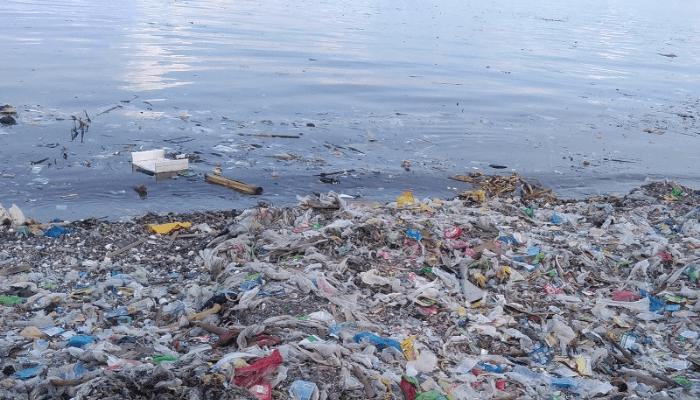
Fears have been expressed that before the year 2050, human may be farming plastics rather than fish. This is because it has been noted that out of 400 million tons of plastics generated, not less than 10 million tons end up at sea.
For this reason, an environment expert, Akpabio Essien, President Waste Management Association of Nigeria (WMAN), has advocated the need for behavioral change on the part of all residents in Nigeria, as a panacea to plastic waste pollution in the country. He said this is to protect the environment for posterity.
These were fallouts at a plastics pollution seminar at the Rivers State University (RSU) in Port Harcourt where the keynote speaker, Chidi Ikocha, Corporate HSE Manager NLNG, in his speech entitled: “Beat Plastic Pollution-The Role of the Universities,” issued alerts.

He recommended the use of biodegradable bags, cups, and packages against plastic products especially for food packaging, attributing it to increase of various diseases including cancer that is now prevalent in the society even among children.
On the role of the universities and research institutes in the fight against plastics pollution, Ikocha, charged them to come up with research ideas that can yield profit to the society and environment, such as employment, improved living conditions, clean and safer water bodies, and environment as some of plastics clog water channels leading to flooding and it’s attendant effect.
Speaking, Essien of Waste Management Association of Nigeria has advocated the need for behavioral change. He made the call the World Environment Day 2025, at the University main campus, Nkpolu-Oroworukwo Port Harcourt.
He noted that from the extraction of fossil fuel to the production of plastic, the operations have inflicted a severe blow to the environment resulting in climate change in Nigeria, especially the Niger Delta region where he said the activities of the petroleum, natural gas, and petrochemical activities are taking place.
Essien emphasized the need for a single-use plastics to curb its proliferation, and urged the people to desist from panic and impulse-buying, saying some of the items purchased and packaged in plastics end up as waste. He said this is later pushed onto the environment, accounting for more pollution.

The environmentalist also stressed the culture of proper waste segregation in Nigeria to enhance effective management, stating that lack a proper waste segregation is a major factor responsible for plastic pollution.
The President further urged Nigerians to return to the use of non-plastic bags since countries are now out to reduce plastics production by 40% in 2040. He commended companies in Nigeria such as NLNG, TotalEnergies for taking steps to reduce global plastic footprint.
He called on the government of Nigeria to emulate Kenya and other countries who has since banned the use of plastics to enhance a plastic pollution-free environment.
The expert also called on the government and private entities such as the oil and gas companies to join the Global Plastics Partnership, emphasizing that plastic pollution has an adverse effect on humans and Climate Change.
The keynote speaker urged the universities and research institutes not to be deterred by the issues of funding as organizations such the NLNG and others in fight against plastics pollution are ever ready to provide the needed support for such ideas see the light of day.
Ikocha called on universities to hold the polluters accountable by championing advocacies to draw the attention of relevant authorities to their destructive activities.
Also, John Azuta-Mbata, a onetime senator, who was the Special Guest of Honour at the event, assured the people of his readiness to collaborate with the University through the Centre for Climate Change, Departments of Geography and Environmental science, Forestry Fishery in the area of studies and research by providing the needed funding.
He stressed that the World Environment Day provides an opportunity to be sensitized on the dangers of plastics pollution to the environment.
The United Nations Training and Research, in their goodwill message, quoted a report from UNEP which states that adopting best practices in the quest to beat plastics pollution will save governments around the world $70 bn every year, and save the society another $4.5trn in social cost by the year 2040.
Zeb Obipi, Vice Chancellor of the Rivers State University, said the University will institute series of awards for the cleanest faculty, department and residential area as part of efforts to beat plastics pollution and ensure a clean planet.
The University also presented the award to key persons for their contributions to a clean environment.