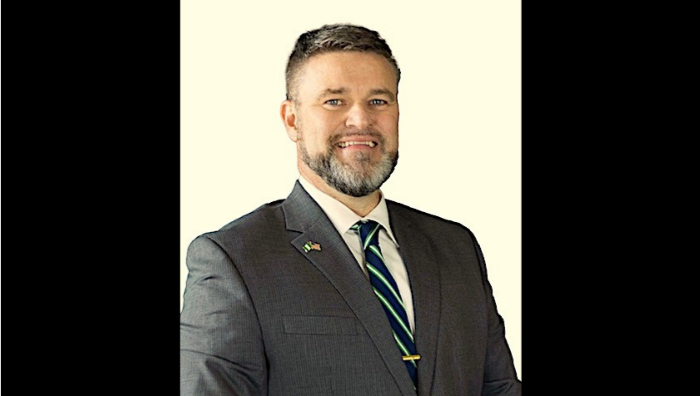
President DeWayne Frazier of the American University of Nigeria (AUN), Yola, Adamawa State, recently spoke with ZEBULON AGOMUO, during the Commencement Ceremony of the Class of 2025. He touched on various areas including his experience in the last two years; how it feels to be selected by TETFunds as centre to train scholars, collaboration with Times Higher Education, navigating the power challenge, and expansion of hostels and other infrastructure. He also spoke on the quality of education in the institution as it prepares the students to face the future. Excerpts:
You have been here since 2023 as the sixth president of AUN. Can you briefly share your experience with us here for record purposes. What has been your greatest discovery?
One of the things that made me smile and my greatest discovery is that contrary to what the media reports say, especially, the Western media, that the North and this region is highly unsafe, and that it is a place that you can’t go if you’re an NGO, if you’re a person from America; but I found such report as untrue. And my number one discovery has been that this place has been so welcoming to me, so kind to me. The people in the traditional kingdom, all the government workers, the campus community, and especially the children of the community have been welcoming. You know, I try to empower children often. So, travelling in this community, seeing people, the welcome that you get, and it’s not fake. It’s more of a genuineness that happens only really in places like this here in Nigeria. I tell people all the time that it might sound like I’m trying to, you know, just build something up, but this is so true. Nigerian people, it doesn’t matter if they don’t have enough money for food, if they didn’t have enough money for clothes, they’ll give their last bit of food to a stranger, to somebody. And so, for me, the kindness and the love, especially in this region, has absolutely changed me forever. It’s been my greatest discovery about the people of Nigeria. So, it’s been great.
Sometime ago, you spoke about your plan to work with Times Higher Education in terms of ranking, and then to host international conferences in the campus. How far have you gone with that?

Well, I like it that you said how far. I’m doing well. So, interesting enough, with Times Higher Education, they have asked me now twice to be one of their main speakers at their big conferences. One was in South Africa, and one was Rwanda. That’s a great privilege to represent a part of Nigeria because I was one of the few speakers, and the other conferences with someone from Covenant University. So, Timothy, who’s a great guy, too, the VC there. So, we actually have been able to go into the sub-Saharan, you know, the Africa rankings and impact, and we’re the number one school here in Nigeria. And I take as much pride in that as anything because some of these ranking systems are based on just purely research numbers, but here it’s based upon this private school that has this public mission, the impact in the area, the impact of teaching on the young people that we are able to touch lives, like very few schools, not just in Nigeria, but in all of Africa. But, hey, I know I’ve had some graduates here that are younger now, but they’re getting ready to change this country in a positive way. And, you know, the Times Higher Education thing was a great way for us to use an outside ranking system, not an internal newspaper where someone will say, I paid you to do this or that, not that you all even accept it, but I’m saying, you know, people will get one of these small newspapers to make them the number one ranked school for this, this or this. But here, you know, they were completely independent. It’s a British company, and we provided all the data. It had to look at all the impact. They looked at articles, and then they put us as number 12 in the entire continent. And then, like we said, number one here. So, now, that’s great. And so, what you do to bring up the reputation is not only if I spoke around the country and around the world. So, we actually now have our own international journals. And we have, like, all the different disciplines from social science to chemistry to physics, even English. But we have these journals, which are bringing up some of the research here at the school.
But the other thing we did, we started hosting, it was last year, the year before, our first international conference. And so, an international conference, we brought speakers. This is going to be the third year of the international conference this fall semester in September, October. And so, what we’re going to do this year is focusing on food stability. And so, we’re using our contacts in America with a group called the World Food Prize. You all have probably heard of Norman Borlaug, the gentleman that’s the father of the Green Revolution. He was in Iowa before he passed away, and that’s where I come from. So, international conferences, rankings, things in the last two years have actually accelerated faster than it ever has for us. And I tell people all the time, if you do things the right way, God will bless you. And we’re trying to do it all with integrity.
Over 200 students graduated this time around; what is your wish for them and the message you want them to take out there?
I want them to really take out the message that they found their voice here, that they are able to speak for themselves, that they’re able to have the confidence to go out and do whatever they want to do in terms of their dreams. You know, there are people that are always, I’ve had it in my life; I was from a very poor family, tell you; you can’t do this; you’ll never do this. You’ll make nothing in your life. But don’t listen to the naysayers. Don’t look in a rearview mirror because the mistakes are going to happen. But what I want to see is these kids looking to the future and doing things that they never thought would have been possible. And that’s what’s so exciting about being an educator. Because everything, everything, all careers, all jobs in the world, all start with good teaching. And that teaching starts at home and in the classrooms. And these young people, I want them to know that their dreams are going to become a reality because they believe. And they’ve got the preparation now. You’ve heard me say it over and over. We are preparing them for jobs that don’t exist today. That’s why the liberal arts education, there’s no way that I’d just teach them one discipline because they need to be prepared to, who knew artificial intelligence would pop up? When I was a student, Internet popped up all of a sudden everywhere, and it changed things. So, for me, it’s really preparing them to be those lifelong learners that won’t ever look back and say, you know what? The future is mine. I’m ready to grab it.
We understand that TETFund has chosen AUN as one of the centres to send scholars for training. How does it feel to be one of those chosen, and what burden does such place on you as the leader of the management team in the institution?

Absolutely. So, first and foremost, the most important thing is it’s an honor that TETFund would look through all the institutions in the country and say you are worthy.
Part of the reasons they said that we’re worthy is the academic excellence, which they really have seen in our graduates. But the other thing that can be said is that we’ve had uninterrupted semesters for years after years, and after years. We ensure that we will not allow disruption in our academic programmes. There are strikes and there are things that happen in other places, and students are not graduating in time. When they don’t graduate in time, they can’t get employed or move to the next level in their life. For the teachers coming for training, if there are disruption in the programmes, their employers will lose out too. My greatest fear is, even though I’m an expert, I don’t want to see ‘japa’. I don’t want to see the best and the brightest leave because they keep going overseas. And they wouldn’t come back because an American school or British would offer them a full-time job. And then we would lose some of our brightest members of faculty also. We need those people here to be able to get this country to be able to raise up and to be at the level that it should be. So, with the TETFunds for me, the greatest challenge in all of that is obviously the numbers will grow. But it’s kind of a weighty responsibility to think that we’re getting to train the academic staff of tomorrow that will be leading so many of these public universities. And for me, I see it as an awesome responsibility, but I also see it as an honor.
As the population of the students is increasing, are there plans to expand the infrastructure- hostel accommodation, etc?
We are working with businesses right now to do what’s called a build, operate, and transfer, the BOT model. So, you don’t take on any debt, but what you do is you pay them from the number of students that live in the resident halls, and they’ll make their money. And at the same time, we’ll get tuition and fees, and we can grow sustainably. We have some really good architects, building companies that have put proposals, and we’re close to signing a deal that would come this summer, and then it would start.
Now, once we start building that, it’ll give us another male dorm and another female dorm, and that will be completely energy-efficient. We’ll have two in each room, and we’ll have inverter heaters; so, it’ll all run on solar so that we are actually being sustainable, and it’s going to look beautiful, and there’ll be two in a room with all new furniture. We’ll start out with women because the population of women is always more. So, we’re actually making housing for graduate students because some graduates are living or postgrads are living here; so, we’re even looking at using all of our spaces, our academy or academia. They have some resident halls that are ours that’s on that space. They’re more mature instead of putting an 18-year-old over there with 17, 16-year-olds.
Again, we need more social space because, you know, students come here to study, and then some would try to come in to gist, and their friends get mad at them. So, we had to even look at that. That’s why Alumni Park, working with Jaiz Bank on another entrepreneurship park, there’s going to be a lot of things that will help these students grow, more classroom space, which we’ve already started to do, more housing space. We also have like three, four different providers on campus for food.
We only used to have one, so we have different options on food, but it also allows for larger populations of students. And then outside of all of this, you know, we just continue to hire more faculty, more staff to accommodate, to make sure these students are getting the attention that they need to be successful. And from my standpoint, it’s called sustainable development, and that’s what we’re doing.
What is your management doing on employee motivation and retention? You know, you may run the danger of looking at how to run the institution well without looking at the human input, those who are really doing the job. What are you doing to motivate the workforce, to ensure the employees are retained to avoid the ‘japa’ syndrome?
So, let me start out by telling you all, and it’s very documented and you can read about it because I’ve published articles about this and my whole dissertation is called Job Satisfaction. So, I have studied in business and leadership what it means to motivate people. The truth is, money is only a small part of it. Everybody wants to feel like they’re cared for by their supervisor, by their ‘Oga’, and they want to feel like they have a relationship with the people they work with and they feel that they’re making a difference. So, what we did is, I spent the first six months going around. Perhaps, as the VC, I know more cleaners, more cooks, more security personnel than any of my colleagues. I don’t care if you’re a cleaner; I don’t care if you’re a president; I don’t care if you are a driver. Love what you do and people will follow. And so, what we have done is motivate them in ways with staff of the month, faculty of the month recognition, just like we do in the States. That’s not where it stops. You have to invest in your people. If you don’t invest, they will leave.
Prohibitive electricity bills occasioned by the advent of Band A is constituting a serious challenge to many businesses and educational institutions in the country. How is AUN handling the issue?
Like, I’ve been speaking to friends, vice chancellors in other schools- public and privates, and it’s a problem that plagues all of us. We can’t pay this price, and many schools have had to cut off from the grid altogether. We haven’t cut off from the grid necessarily, but we’ve tried to be good partners with the Yola Electricity Distribution Company (YEDC). Part of it is they want to keep us on Band A, and we really want to be on Band B, because one of my greatest legacies that I’ll leave here is to be energy independent. And in one year, we’ve already, out of our operating budget, we didn’t raise tuition on students, we have put solar on our campus, everywhere. Now, we have built ourselves for years as the 24-7 electricity institution. We were one of the few schools in the country that would say that. You know, even President Tinubu is building a solar place at his official home. Now, the people that installed all of that for us are our engineering professors and students; we did it by ourselves. We saved that significant amount of money. So, for the most part, students do get 24 hours of electricity. We are also looking at a full solar farm that will allow the secondary electricity, which will then give the boost to be able to run inverter, air conditioner units, and everything.
I mean, can you imagine as a professor, you can’t do research, you can’t charge your laptop, you can’t do a PowerPoint, you can’t use your LCD projectors, and it’s not their fault. It’s because energy has become a crisis in this country, and it breaks my heart for the teachers everywhere. But we’re all looking at what we can do, and for us, it will be solar. By the way, if you know, I come from Iowa in the United States of America. In Iowa, all the power there, about 70%, 80% is on wind. So, you’ll see windmills everywhere, and the rest of it Is renewable through hydro, no fossil fuels. And so, it’s smaller populations, three million people, but all in sustainable energy.
Well, the price is so different on tariffs. We say that it’s the energy we use that we pay for, because that’s the concept, like, you go to a restaurant and look around and see food in there and say, I’m going to pay for all this food, or do you pay for the food you consume? Of course, we pay for what we eat. Well, that’s not what the energy companies want to do. They say, we’ll send you this much electricity, and now you have to pay, and it’s not just YEDC, it’s all of them, and they say you have to pay for all of it. So, even though we’ve asked for only, like, 10, 12 hours of grid, to recharge the batteries in the middle of the night, everything from solar because we have lithium batteries. They tried to give me N140 million bill for one month. How is that even honest? I mean, I know they have a quota to meet, and they see us as the only partner to be able to do that, and that’s not fair because when you take away from that, it takes away from my students and the programmes and the activities I can do here. We already have seen good savings, but if we can be on Band B until we get fully independent, the price should have been like N30, N35 million. Instead, it was N140m according to them. I say we cannot do that, and there are saying, nope, it’s what we send you. We’re like, no, it’s what we use, and then that’s the argument, and it’s not easy to win.