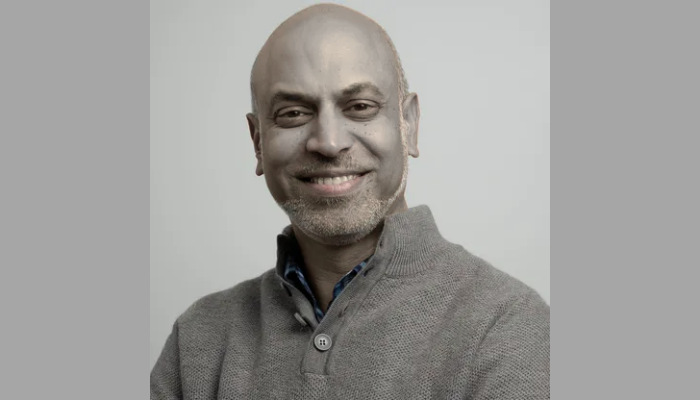
Satya Patel, cofounder of venture capital firm Homebrew, has built a career backing companies many investors initially overlooked. He focuses on startups in “boring” sectors like banking, HR, and defence, applying a strategy he describes as “bottom-up” investing, according to Forbes.
His early-stage bets—such as Chime, Gusto, and Headway—have gone on to become billion-dollar firms, driven by a mix of timing, deep conviction, and clear strategic input.
Patel ranks No. 14 on this year’s Forbes Midas Seed list, an annual ranking of the world’s top early-stage investors. His approach involves identifying promising startups in traditional industries and supporting them with capital and experience as they expand. “Most people don’t find HR or payroll exciting,” Patel said. “But the problems in these sectors are real, and software can solve them.”
A clear example of this philosophy is Patel’s early involvement with Chime, the digital bank now preparing for an initial public offering (IPO). In 2015, Chime CEO Chris Britt was preparing to launch a feature that would round up transactions and automatically transfer the difference into a savings account. According to Britt, Bank of America warned that it would sue if the feature went live, citing similar patents. Patel advised Britt to go ahead anyway.

“There would be nothing better for a young startup than to be sued by Bank of America,” Patel recalled telling the founder. “And for us and them to make a ton of noise about it.”
Read also: Meet the world’s top 7 billionaire venture capitalists in 2024
Chime went ahead with the feature. The bank never sued, and the feature proved critical to the company’s early growth. Today, Chime is valued at $25 billion, with 2024 revenue of $1.7 billion.
Patel’s approach stands out not just for the sectors he targets, but for the type of support he offers founders. “Satya knew when to get into our business and where to push, and where to pull back and let us do our thing,” Britt said. “It’s a fine line.”
In another example, Patel backed online payroll platform Gusto early on. The company is now valued at $9.6 billion. He also invested in Plaid, the financial services platform valued at $6.1 billion, and Headway, a mental health startup valued at $2.3 billion.

His investment in defence technology company Shield also reflects his long-term thinking. Shield, valued at $5 billion, builds military drones. Patel helped the company raise more capital and expand beyond the seed stage. “Satya just, over and over again, put himself out there, put his reputation on the line to introduce us to top quality investors,” said CEO Ryan Tseng.
Challenges have emerged too. Forbes previously reported an incident involving Shield’s V-BAT drone that injured a U.S. service member. Still, Tseng said Patel’s support has remained strong. “I’ve always felt like he’s had my back.”
Patel’s understanding of technology and science began early. He grew up in suburban Las Vegas, where his father worked at a nuclear test site under security clearance. During university, Patel took a summer internship at Raytheon, the same site where his father worked. “It gave me an early appreciation for science and what science can enable, both the positive and potentially the negative,” he said.
Patel began his career in venture capital at GeoCapital Partners in 1997. Before most startups had websites, he subscribed to hundreds of trade publications and walked conference floors to scout for talent. In 2003, he joined Google and worked on AdSense. He later moved to Twitter as vice president of product but left after the company began slowing its roadmap ahead of its 2012 IPO.
In 2013, he co-founded Homebrew with Hunter Walk, a former product leader he met at Google. Homebrew writes seed cheques between $1 million and $3 million. Patel is known for being quiet in meetings, offering short, direct advice. “Satya, I’m going to take five minutes that we don’t have to give this answer. Can you give the better answer in 30 seconds?” Walk said of their dynamic.
Patel also cofounded Screendoor, a fund that backs first-time venture capital managers, alongside Walk and investors like Aileen Lee and Rob Hayes. The fund requires its backers to contribute at least 10% of the capital when raising their own funds.
Chris Britt said Patel’s strength lies in his dual perspective as both a former product executive and experienced investor. “He understands the role of an early stage investor. Sometimes it’s more art than science.”