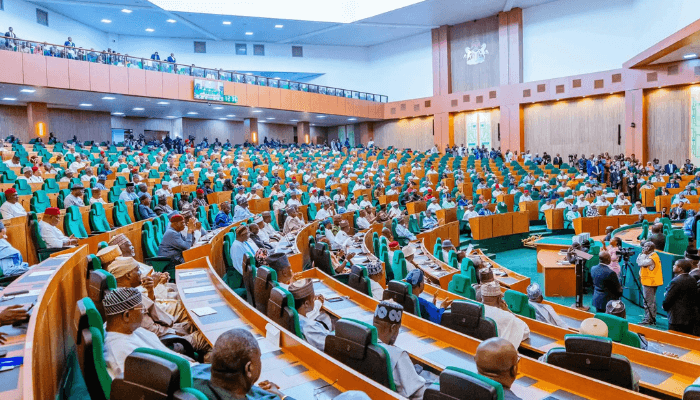
By all appearances, the House of Representatives is struggling to find its footing with another batch of bills to amend Nigeria’s Constitution. In the last two weeks, the amendment process unravelled into a tangle of procedural missteps, chaos and legislative confusion, further revealing a chamber seemingly at odds with its own rulebook.
At the centre of this confusion are seven constitutional amendment bills, covering sensitive and potentially transformative areas: from the controversial rotation of the presidency across Nigeria’s six geopolitical zones, to stripping the Independent National Electoral Commission of its regulatory powers over political parties sponsored by Tajudeen Abbas, speaker of the House.
Others sought to create the Office of the State Auditors-General for Local Governments and the Federal Capital Territory Area Councils; provide for the Number of Judges of the Federal High Court to be not less than one hundred. empower the National Judicial Council to fix and review, in conjunction with the National Salaries, Incomes and Wages Commission, the Salaries, Allowances, and other Emoluments of Judicial Officers and staff of the judiciary; and a Bill to create Ughelli East Local Government Area in Delta State.
When the bills came up for second reading in one of its plenary sessions presided over by Benjamin Kalu, the deputy speaker. The bills were bundled together and put to a single vote, and lawmakers overwhelmingly voted ‘nay,’ blocking the entire batch from proceeding.

Francis Waive, chairman of the Rules and Business Committee, quickly flagged the misstep. He argued that each bill ought to be considered on its own merits. His intervention, though procedurally sound, came too late to reverse the initial rejection. Under House rules, a formal motion of rescission filed in advance and listed on the Order Paper would be required to revisit the matter.
And yet, just days later, the House appeared to ignore its own rulebook.
Last Tuesday, the chamber quietly began considering and passing the rejected bills.
One of the previously rejected bills — to create Ughelli East Local Government Area surfaced again, passed a second reading, and quietly made progress.
By Wednesday, they were back at it again, debating another amendment, this time one seeking to establish the Offices of State Auditors-General for Local Governments and FCT Area Councils. This bill also sailed through second reading, despite the unresolved procedural questions hanging over its reintroduction.

The Speaker of the House was not even aware that the bills had already been rejected and proceeded with consideration, exposing cracks in parliamentary discipline, understanding of legislative protocol, and coordination within the House leadership.
It was at this point that Kingsley Chinda, the House Minority Leader, stood up to remind the House: these bills had already been rejected. Without a motion on notice to rescind that decision, reconsidering it was in breach of the rules.
The scene that followed was telling. Speaker Tajudeen Abass appeared visibly puzzled. “Ah, ah, this bill has been rejected?” Abass queried.
The House was forced to once again suspend proceedings on the bills, including the one that had just passed second reading.
The back-and-forth has left many observers wondering whether the House leadership is in control of its own agenda, or whether political expediency is clouding adherence to legislative norms. For a process as weighty as a constitutional amendment, even the appearance of procedural shortcuts can prove damaging.
Lawmakers may yet return to file the appropriate motions and correct the record. But the episode further raises questions about if the legislative chamber is up to the task of overhauling its most important legal document.