



|
Getting your Trinity Audio player ready...
|
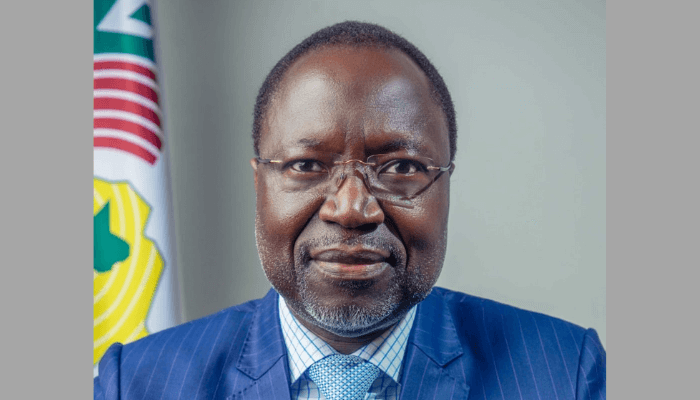
Omar Touray, President of the ECOWAS Commission, has expressed strong concern over the deteriorating state of infrastructure at the Nigeria–Bénin Republic Seme border, despite millions of dollars investment by the regional body.
Touray made the remarks during an on-the-spot assessment of the Seme border, a critical gateway for trade and travel in West Africa.
The visit aimed to evaluate how well the ECOWAS Protocol on the Free Movement of Goods and Services is being implemented and to identify major obstacles.
“This is one of the busiest and most strategic border posts in West Africa, yet scanners, lighting systems, and bridges are not functioning. That is simply unacceptable. We cannot justify the millions spent on idle equipment. Our citizens expect results, not excuses”, Touray said.

He emphasised that while ECOWAS provides infrastructure, Member States must take responsibility for maintaining it.
“If a lightbulb goes out, ECOWAS should not be called to fix it. Member States must step up”, he added.
Touray also criticised the proliferation of security checkpoints, which he said, undermines the spirit of the free movement protocol.
“Why do we have multiple customs and immigration posts for the same corridor? It frustrates travellers, delays trade, and creates opportunities for corruption”, he noted.
He called for transparency and warned against unofficial payments at the borders.

“We’ve received troubling reports of people being asked to pay without receipts. This damages trust. Any legitimate fee must come with a receipt—period”, he added.
Touray clarified that the protocol does not waive the need for proper documentation.
“Free movement is not a free-for-all. Travelers still need valid ID, and proper customs and security checks must be maintained for safety and order”, he added.
During the visit, Ben Oramalugo, Comptroller of Customs at the Seme Border, listed several operational challenges, including broken scanners, lack of lighting in pedestrian areas, no roofing or water in offices, and total dependence on electricity from Republic of Benin due to a lack of connection to Nigeria’s national grid.
“This is Nigeria’s number one border, connecting the Francophone region, yet we have no national power connection. The road tells the story of Nigeria; what people see here reflects on all of us,” Oramalugo said.
He also appealed for the streamlining of security checks along the corridor, starting, “from here to Badagry, I have ensured only three customs checkpoints, but other agencies still have too many”, he added.
Musa Nuhu, Nigeria’s Permanent Representative to ECOWAS, who was part of the delegation, described the Seme border as a litmus test for the ECOWAS free movement policy.
He acknowledged the gap between policy and practice, noting that President Bola Tinubu had approved a Presidential Task Force to dismantle excessive checkpoints nationwide.
“This is the busiest border in West Africa. If the free movement policy is working, we should see it here,” Nuhu said.





