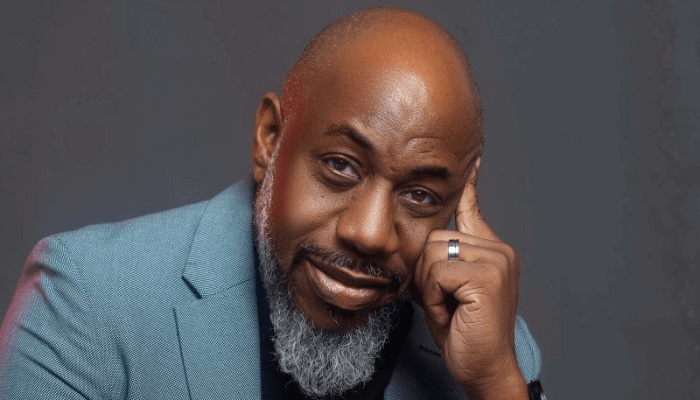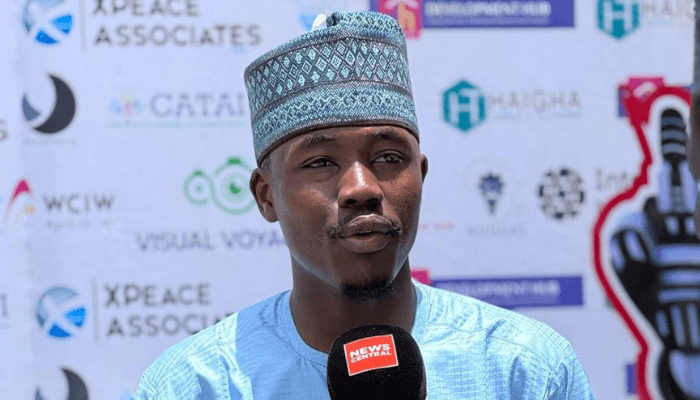
Mohammed Bukar Umara is the Chief Executive Officer, Co-Development Hub and Fellow Mandela Washington fellowship for young African Leaders. In this interview with OLATUNJI OMIRIN, he spoke on how the youths can leverage skills and provide services in the global ecosystem market. Excerpts;
Can you tell us brief about yourself?
My name is Mohammed Bukar Umara; I’m the founder for Co-development hub, which is the Social Innovation Centre that works in the areas of creativity, innovation and technology for youth development, as well as general development capacity building startup incubation and acceleration, building MSMEs and startups in Borno State and other parts of the north east.
Some attributed the root cause of Boko-Haram insurgency to joblessness, endemic poverty and illiteracy? What is your take on this?

It’s true that one of the reasons and one of the factors that contributed in fueling insurgency and Boko Haram crisis itself has to do with the lack of access to education.
I think, it would be top the list, because any population that is not really educated can be miseducated because they do not have an antidote for whatever sort of malicious information that would be given to them. And I think another thing is that there was poor attention paid to vocational skills as well as other very important elements like innovation and technology. At some point, people who do not go to school are considered as not really important in the society, and they have not been given enough platform to be able to express their creativity. And this is one of the things that contributed immensely to insurgency war.
Do you think negligence of vocational skills contributed to insurgency conflicts?
To a great extent. We are looking at how to make sure we nurture people’s creativity, whether they’ve gone to school or not. Some of them that have not gone to school are doing some fantastic innovations with their hands, and they are also contributing to the society. So, beyond education, there is also a lot of other opportunities that young people can be able to have so that they can harness and nurture their own creativity and innovation to be something valuable in society. I think if we can give opportunities for young people; they have their own uniqueness that have been acknowledged. They have their own abilities and skills that should be given the opportunity to thrive.
How can young people harness opportunity with only skills?

I think the social orientation has been programmed in such a way that you could not make an impact if you are not educated, or you are not an important component of the society, and that meant that there was more attention given to people who went to school to get a job, to fit into the society. So, people with vocational skills and capacities were not given as much attention; also, other people who do not have a college degree, who do not have a certificate, but are very innovative and creative were not given the same opportunity. Let me give you a typical example, there is a young man in Borno who has done something really exceptional, his name is Mustapha Gajibo, a school dropout. He has not finished his undergraduate studies. He left school, went and did something marvelous. I’m sure even some of his professors have not achieved some of the feats that he has achieved. Now, we are talking about an automobile factory or plant that he’s just set up in Abuja, which is set to start production and manufacturing of automobile parts in Nigeria.
Talking about other people within the automobile industry, like Jelani and Innoson, and a host of others. That tells you that beyond education if you go to Japan people even without high school certificate, are doing marvelous in their manufacturing industry. Go to China, it is the same thing. Go to even the United States. You have a lot of them who are not college graduates, but they are making their names very big. So, the government must pay a lot of attention to skills to grow people’s creativity and innovation.
Because the world is becoming more competitive by the day. We cannot help but agree to the fact that it does not take only a college degree to get a livelihood in our society today. And I can’t think of anything more than skills. It is only skills, very important, skills and competence that would be able to get you into rooms without even a leg, without a connection. So, a degree with skills is very, very important, but if it’s just a degree without skills, I think it’s just as good as a paper that someone else can carry on the floor. So, skills are very, very important. Even if you get a job without skills, you’ll be redundant.
Recently, the federal government warned the Multinational companies that skilled jobs should be given to Nigerians; especially, in oil and gas industry. What do you have to say on this?
I totally agree that some of the most important skills today are scarce in Nigeria. If you talk about tech skills, people just think technology skills is to learn computer application or plumbering work. But beyond that, there is a lot of other skills that many organizations need to survive. Remember, even some of the biggest economies in the world today, like the United States, I think over 83% of their economy is dependent on service, not even manufacturing or service. Because of technology, most of the technologies we use today are products from their own places, and that is why most of their economy is built upon these products that they are providing to all of us. Meta, e-bay, wechat, GPT, AI, what have you. All the antiviral systems we are using, the computer Microsoft all of this. They’re all American products. So, we are all consumers of their services. You see, all of these are services, and they are making a lot of billions of dollars from that. And organisations today, because of how much technology has integrated, our systems and our ways of livelihood are also dependent on services from technology entirely to be able to run. And who are the people offering the technology and the services? It is US, as much as a lot of Nigerians are coming up now, especially from the Southern part of Nigeria and unfortunately, from our own part of the region, we are still lagging behind, as much as we are trying to catch up, but there is still a very wide gap that we need to fill up.
How many data scientists do we have in the whole of Maiduguri and the North East? I can tell you, without any fear of contradiction, there won’t be more than five. They won’t be more than that. But if you ask me the demand of data science in the Northeast. I can tell you; the demand is uncountable. So, who will do the job? It has to be somebody elsewhere. Because if there is demand and the skills are not there, it means you have to fill the gap.
We don’t have more than five certified cyber security specialist that can secure an agency’s cyber infrastructure. How many of them do we have in Borno or in this region? I can tell you there are very few, if at all we have. And then you can think of a lot of other very important skills like machine learning and artificial intelligence. As Nigeria is transitioning into a national digital economy, and with recent draft of the National Digital Economy Act, it means Nigeria, in the next three or four years, will be fully digitally economised nation. Every transaction would have to be online. You won’t write paper contracts. Everything has to be online. It means some of these skills are very, very important now, because when Nigeria transitions into digital economy, it means the way you have to hire a security man at the gate of your office. You have to hire a cyber security specialist for your office, because everything about your organisation is now on the cyberspace, and it needs someone to protect it.
Recently, you organised a Northeast creativity and innovation summit. What did you set out to achieve by the summit?
Yeah; what necessitated that particular summit for us as members of the innovation ecosystem in the North East is looking for a platform that would be able to really ignite and spark the entire innovation ecosystem into something really meaningful, to position ourselves within the global ecosystem, not just in the region, but within the global ecosystem. The summit was organised in commemoration of the 2025 World Creativity and Innovation week, which began on the 21st April. And we thought of doing it as a regional event, because we believe the issues we have in Borno are very much similar to some of the issues we have in other North Eastern states. And since the ecosystem they operate in states are weak on their own, we thought, okay, if we come as a region, they would be much stronger and there would be more sustainability. So, one of the reasons why we did that is to be able to spotlight some of the creative ingenuity of the people of the North East, as well as our innovative endeavours. We have a lot of creative talents. We have a lot of innovative talents who needed to be spotlighted and have a light shined on them to be able to inspire other people. But also, we have a lot of other ones who do not even have the platform to be able to express themselves. So, through this particular summit, we were able to host a lot of activities like pitch competitions, where we invited people who believe they have fantastic and beautiful ideas. They came, they pitched their ideas, and after pitching their ideas, we had a very vibrant ecosystem partners that served as judges, and they had selections and, deliberations around some of the best ideas that were spotlighted. Some of these best ideas received prizes and received even commitments for support from their state governments. A typical example, the Gombe State government was present there and supported; we had support from the Yobe State government that was there and was happy to see over two young people from its state emerge as the second and third place, while the first person is from Borno, and we have another top winner from Gombe. All of these government efforts began to see some of these innovations, and had already started taking up conversations on how do we support these young people to be able to develop these ideas? Even, they are not college graduates, who do not have a college certificate, and we had other young people who are not educated, entirely not educated. But we are doing some fantastic innovations, like the harnessing of solar power for creating of mini generators for one room house or one-bedroom apartment, very fantastic innovations that needed some leverage, needed some acceleration, to be able to achieve the full vision. They cannot turn this vision into something really tangible or something really valuable if the society doesn’t support them. We trained people on creative intelligence, how people can carve a niche for themselves within the creative economy. We also did other trainings around how young people can position themselves for global remote work, because now we are not talking about your state labour market or your regions or your nation’s labour market, we are talking about a global labour market.
You talked about the global market or remote work. How does young people tap into that?
Basically, we are talking about how young people can render services for an organization that is based in Paris, or in Geneva or in New York or in London. How do young people here be able to open up their eyes and see these opportunities? What are the skills that they need so that they can compete globally? Because when you are looking for global remote works, remember, you are not competing with someone from your local government, or you are competing from someone from your country but you are competing with someone from maybe in Paris, with someone from London, maybe with someone from Dubai or with someone from Doha. Because when you do something and it goes out and people see it, a lot of other young people get inspired. So, we’re talking about now opportunity for the young people, especially in a competitive market globally.
On access to resources and platform which plays vital roles in ecosystem, what support do you think sub-region governors need to give to actualise these things?
Yeah, I think the Northeast Governors Forum had a meeting in Damaturu, the Yobe State capital, and some of the compositions that were topping the list centered around youth development, insecurity and other things that bedevil the region. And I think what the youths especially need most in this particular region is access to platforms that they can harness and nurture their creativity in a way that allows them to be themselves first, but also allows them to be very, very valuable in the way that they think is really valuable. If you see, the Northeast now has a lot of ICT development centres, and others. But I think there is still a lot more that needs to be done in the area of programming, how to programme using some of these facilities. It is very good to have facilities and infrastructures, but it is more important thinking around how to utilise some of these facilities and infrastructure to the benefits of human beings that are living in those regions. So, I think more than ever, the North Eastern youths and especially the innovation ecosystem needs to be strengthened and supported. So, attention needs to be paid a lot in strengthening the innovation and creative industry, because it is when you strengthen the innovation and creative industry that this particular social investment schemes can be sustainable. So, you strengthen them in a way that builds this public, private partnership, come to think of Lagos. Why is it that most of the interesting startups in Nigeria would emerge from Lagos? Because Lagos has the most vibrant innovation ecosystem in Nigeria. And what is the secret? The secret is government support to strengthen them. That is the truth. I will tell you. Most of the innovation centres in Lagos are working very closely with the governments. They are working closely with the governments to identify problems in the society and propose innovative solutions for them. We need innovators, creatives, and researchers, that would go a long way in making sure that it supports, and through educational institutions also. Our educational institutions have to work very closely with the innovation ecosystem, because innovation goes very hand-in-hand with research.
What are the challenges facing ecosystem in the North East?
Like I said, some of the challenges include lack of capacity; a lot of us within the ecosystem are self-taught innovation leaders; self-thought in a way that we leverage existing resources, open source information, and also other little mentors here and there to support and as well as lack of funding. A lot of us are struggling with funding because the innovation ecosystem is usually run by private sector, and the private sector are usually startups, and funding for startups is a challenge. It’s a challenge for a lot of people. And I think these are ways that the government can come in to support innovation centres through a public private partnership, in a way that a lot of innovation ecosystem partners can come in, work with the government, and be able to drive the government’s agenda within the innovation and ICT development, you know, industry with very little resources.
So, if we bring these forces together, I think there is a lot that we can do, but usually a framework for that synergy, for that partnership would be needed to be able to really harness the potentials of the ecosystem, as well as what the government has in place, to be able to build a very vibrant ecosystem that supports the communities, to build ICT solutions, to build ICT capacities, and be able to accelerate in whatever they are doing.
Do you think if governments at regional level key into the ecosystem in terms of supporting partnership, things would take a great new turn for the better? And if your answer is in the affirmative; what gives you that optimism?
Of course, I really believe if there would be a regional approach to building the ecosystem in the North East, the North East can be the next Silicon Valley in Nigeria, the North East can build a very vibrant ecosystem. Because if there is a regional approach, imagine if the six North Eastern Region states come together and say, okay, let’s build a state-of-the-art innovation ecosystem, or innovation hub that supports all of these innovation centres that we have to be able to develop solutions and investment is being done for that to be able to support our creative industry and innovation ecosystem. Imagine the impact that would have. That would be a very marvelous impact. That would be a very, very great impact. So, I think if there is support from the government or support from the sub-region this would certainly go a long way in changing the ecosystem for good. It would go a long way in making sure that we are filling those gaps that we are talking about lack of employability skills which is very important, and young people from this region can be positioned in a way that they can compete globally.