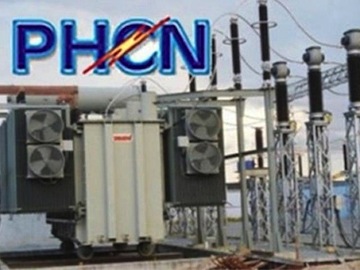
In a move to address the nation’s intractable epileptic power supply, President Goodluck Jonathan, on August 26, 2010, launched the Roadmap for power sector reform. Highlights of the reform measure include Federal Government’s plan to divest interest in all except one successor company to the Power Holding Company of Nigeria( PHCN), retention of transmission, review of existing tariffs, creation of a bulk purchaser, creation of a national gas initiative for power, and the construction of a super grid. Specifically, the government is to divest interest in 11 distribution companies by selling a minimum of 50 percent in each of these companies to core investors. For the 6 generation companies, the government is to use a mix of strategies to be decided by the Bureau of Public Enterprise( BPE).
The designers of the roadmap noted that the current low tariffs are a disincentive to prospective investors and observe d that the Multi Year Tariff Order ( MYTO) which has been in place since July 2008 is not reflective of the true cost of power supply. The tariff became necessary following studies which revealed that the tariff in Nigeria is less than 50 percent of what is prevalent in comparable countries. Based on this finding, there are indications that the cost of power under the new dispensation may go up by 100 percent.
To serve as a mediator between generation and distribution companies, the Nigerian Bulk Electrical Trading Company (NBETC) has been incorporated to purchase power from successor generating companies, independent power producers and re-sell to distribution companies until individual distribution companies can enter into direct power purchase agreement. Based on the fact that gas is to account for about 88 percent of the nation’s total generating capacity by December 2013, the Presidential Task Force which spear-headed the roadmap formulation said efforts will be made to boost domestic production of gas and encourage the sale of the product to generating companies by international oil companies.
Towards actualizing the reform measure, the Federal Government approved the construction of a new 700kv super grid at the cost of $3.5 billion over a period of 4 years. What this means is that since transmission will remain in the hand of government, the Federal Government will have to fund the construction of the super grid with support from the private sector and international agencies. The steps taken by the government is a bold one to tackle the power problem in Nigeria. The contents of the roadmap confirms the pedigree of the people who make up the Presidential Task Force and we commend their effort. It is heartening that the private sector will be at the driving seat of actualizing the power reform programme. That government is going to provide financial guarantee to prospective investors no doubt, will instill confidence and attract local and international interest. Although government has decided to hold on to transmission, it has opted to allow credible private sector operators manage the infrastructure under a 5 year management contract. This will provide the needed private -public partnership to drive the process of project implementation. It is expected that government would provide the conducive environment for this to happen. The fear in some quarters that government’s continued ownership of transmission could be a challenge should be allayed by the private public partnership.

Read Also: Reps asks Minister to sanction DisCos over poor power supply
However, as laudable as the roadmap for the power sector reform is, deliberate efforts should be made to ensure policy consistency and sustained implementation. This is important in view of the suspension of the Obasanjo administration’s National Independent Power Project(NIPP) by the Yar’Adua administration. Thus, the targets and deadlines should be strictly adhered to, in order to avoid unplanned rise in cost which could stifle implementation.
As the government goes ahead with increasing tarrif, it should be ready to deal with possible protests by labour unions and manufacturers who fear that the reform could trigger a short term rise in cost. It should therefore increase public awareness and proactive negotiation with labour unions to remove a potential clog in the wheel of the power reform.