Onyebuchi Onyegbule
There’s something intriguing about violent acts of which militancy is one. They often begin with a genuine, endearing and understandable cause nobody can contest. But they also come with blindness and have the tilt of a stray cat. The actors tend to see their cause primarily in the immediate, its wider consequence is usually out of reach and when at all, then very narrowly defined and understood.
When in 1966, Chukwuma Kaduna Neogwu carried out his military coup, he had one objective in mind – to ‘wipe out’ corruption . The flamboyance, profligacy and spiteful recklessness of some ministers, with no check in sight, was for him, an unbearable irritation considering the lofty ideas at independence and the ocean-wide expectation of an emerging great nation. If this corrupt seed were rooted up and blotted out, the country in his calculation would be the better for it. But he could not simply undertake this having superior officers above him unless he first sacked them, and that was a tall order. Equally, he was not a politician and had no platform to push the removal of his hate-objects – the corrupt ministers. The only weapon left was the youthful surge in him. With it, he recruited his fellow military youths who mostly happened to come from what we know today as the South-South and Southeast. Zoom they went and it was bloody. The public rejoiced at first but the casualty count gave it the brash interpretation of an Igbo coup. So began the ethnic cleansing of all Easterners Igbo and non-Igbo from the rest of Nigeria mostly in the North to herald Nigeria’s heinous historic page. The fact that Nzeogwu was more Hausa than Igbo lost meaning; the objective of his coup, deleted; what mattered was the sentiment on ground- an Igbo coup and its reprisal. The civil war capped it all. Nzeogwu fought corruption, but got civil war which fell outside his calculus. He meant well, but like a stray cat, he delved into the domain of power in the pursuit of a vice without its concomitant mechanics. Ever since, Nigeria has never been the same and still managing to hold itself together. Where could he have stopped? At the point where he could not weigh the consequences of his planned action. But militancy sees more of the immediate.
Read Also: Niger Delta Ministry’s budget defence held in secret

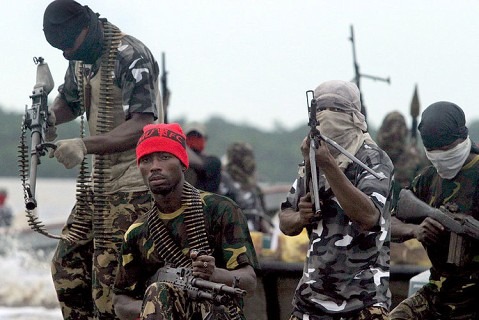
In the Niger Delta, deprivation, neglect and marginalization form the theme. They are real and understandable. That’s why the sympathy of the nation runs with them. Their resort to arms is a response to protracted provocation but without a formal organization to back it up. In the process of resistance, the militants discovered the lucrative side of the struggle- the interruption of oil activity and its accruals. The lure dragged many into the struggle for various reasons and because there was no formal organization, any who could assert himself became a warlord. Now there are many warlords. The saving grace is the fledgling amnesty kept alive by the tact not to rock the boat now that their own stands a chance to continue as the nation’s helmsman.
Last week, Soboma George was slain. Investigations they say are continuing. I hope the actors have a full grasp of the implications. It’s not just about the slain militant, it’s more about his constituency – the militancy clan which now feels threatened having lost its protection to embrace amnesty and not knowing who really their enemy is – rivals or government agents? In the presence of this fear element, too many things can begin to go wrong. There could be a mutative split if agents of government are found to be involved. Threatened militants would go underground to watch and probably rearm. In the process, new warlords will emerge just because trust in government is lost. Consequence: amnesty is impaired. If his death emanated from a rival gang, then too bad. It’s Somalia. Reprisal and counter reprisal. This is the point militancy should never get to. The insecurity and the resulting internal displacement that go with it will be beyond government control, especially now they can find easy use in political activities. Should the report then tell lies? No.
But government has to breast up to explain itself well. Not because it can’t confront the militants but because, that energy is needed somewhere else. It should give assurances that such incidents would be put to check and in return, extract commitment that they would not engage in untoward activity during the elections, no matter the overtures of overzealous politicians. This way, a productive outcome can emerge. To use the amnesty program to corner erstwhile militants is an option that should never ever be contemplated.