Ebere Onwudiwe and Okey C. Iheduru
Recently, the share price of Transcorp plunged to an all-time low of 79 kobo from its 2006 high of N7.21 on the Nigerian Stock Exchange. The market lost N6 trillion from a March 2008 record high of N12.6 trillion, and Transcorp is certainly among the many Nigerian corporations that have lost over 50 per cent of their share value in the past 12 months.
But Transcorp is not just another Nigerian corporation. Indeed, it was put together with great fanfare by the private sector at the behest of former President Olusegun Obasanjo in 2005 as a national dream company.
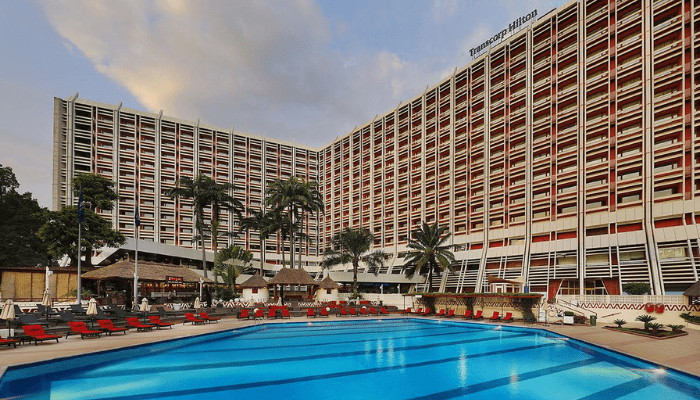
OBJ had encouraged Nigerians from all walks of life to invest in the company whose initial investments were a hurriedly acquired 51 per cent stake in state-owned NICON Hilton Hotels (Transcorp Hilton) in Abuja, NITEL, and M-Tel at the cost of US$500 million. Obasanjo even bought about N200 million Transcorp’s shares through his Obasanjo Farms Holding Company, igniting furious allegations of conflict of interest and corruption.
Still, the idea of Transcorp is not a bad one. We reject the argument that it was created to meet the grandiose and self-important personality of OBJ. It was, as we think OBJ believed, Nigeria’s answer to the rise of mega corporations’ linked to the rapid economic growth of Southeast Asian countries many of whom ranked much lower than Nigeria on the development scale in the 1960s. We had high hopes for Transcorp and have supported it in print. And we were apparently not alone.

Read Also: NSE ASI rose by 0.13% in week marred by protests
The company has attracted very high quality mangers from both home and abroad. Top Nigerians in the Diaspora including those with high flying careers in fortune five hundred companies have abandoned the prestige and luxury of such jobs to serve Transcorp, our country’s first mega corporation. Dr Ndi Okere-Onyiuke, the long-serving president of the Nigerian Stock Exchange, an ex-Wall Street fellow traveler and chairperson of the board of directors of the corporation saw to that.
But despite the quality of professionals at the helm of its affairs, Transcorp’s shares are now penny stocks, and ideally should trade over the counter. Why the quick demise of this national dream corporation? If your answer is the global credit crises, you may be only half-right.
While the downfall of Transcorp cannot be unrelated to the global credit crisis, its roots lie in the endemic cronyism of the OBJ administration that gave it birth. Cronyism by impeding efficiency and promoting rent seeking is always deleterious to economic progress. Transcorp’s many crises is once again, a sad commentary on the inability of the Nigerian elite to finally come to its senses and act out its class interests”defining a nurture capitalism agenda and trying to convince Nigerians to adopt it.
The overwhelming clamor for Transcorp’s shares at IPO shows that the Nigerian elite have a ready capitalist army waiting for the emergence of a committed general. It’s a pity that OBJ’s mega corporation which could have led the charge was allowed to be still born into the toxic arms of cronyism.

By the time OBJ left office in May 2007, the vanguards of his government-business synergy had already abandoned him. They failed to provide the funds for Transcorp and to fully pay for its acquisition of 51 per cent equity in NITEL and M-Tel. It is this desertion of cronies rather than the current global crisis that was the beginning of the end of Transcorp.
Cronyism killed other great ideas in the past”from the indigenization decree programs to Operation Feed the Nation to the various national industrial development programs. Transcorp and its travails are warning signals for the Nigerian business and political elite to develop genuine capitalist agendas to accommodate the many good ideas Nigerians generate every year.
We need to promote a culture of depersonalizing policies and institutionalizing related processes so that they will outlive their creators. That is the most effective remedy to virulent cronyism. The situation where every new ruling clique insists on creating its own clients and cronies cannot be tenable. We are bombarded in the media with reports of how waivers tailored to individuals have killed local industries and thrown thousands of our fellow citizens out of work.
Nigerians continue to suffer the scourge of policy somersaults from Aso Rock to all the state houses and even at the local council offices. To break the jinx, we must start by respecting policy continuity, building sustainable, depersonalized institutions with clear rules, justiceable property rights regimes under a general atmosphere of the rule of law.
This we believe should be the main lesson to learn from the failure of Transcorp.