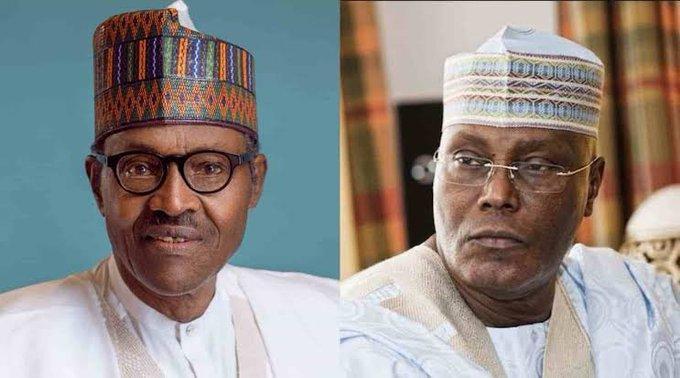
Former Vice President Atiku Abubakar has advised the Federal Government to unbundle loss-making Nigerian National Petroleum Corporation (NNPC) and improve the country’s chances of attracting Foreign Direct Investment by respecting the rule of law and institutional independence.
This, he said, is a better option to trading the future of the country through costly and poorly managed debts.
Atiku’s warning comes as federal lawmakers start the process of approving a $29.96bn concessionary loan request, for which President Buhari had failed to secure the approval of the 8th Assembly three years ago.
Senate president, Ahmad Lawan, said at a news conference on Monday that the Senate would approve the loan request.

Atiku, in a piece entitled ‘Endless Borrowing Will Lead to Endless Sorrowing’, criticised Nigeria’s rising external debt profile under President Buhari and warned such borrowings could cost the future of a country that recently became both the global capital for extreme poverty and out-of-school children, unless there is a change towards visionary leadership and a display of business acumen.
The former Vice President argued that “rather than turn in regular losses (which it has consistently been doing), the best thing to do with the Nigerian National Petroleum Corporation is to reform it,”.
“Saudi Arabia’s ARAMCO, the most profitable company in the world, took that route and almost broke the global stock market with the most successful initial IPO in world history, bar none. Ironically, Saudi Aramco raised $29.4 billion via this IPO. Just the amount this administration wants to borrow.”
Atiku said Nigeria could fund its infrastructure and growth without borrowing but is missing out on that opportunity. He pointed to the success of the Nigeria Liquefied Natural Gas company (NLNG) model as the joint venture between the Nigerian government and the private sector churns in billions of profit in dollars annually.
Some economists, including Ayo Teriba, the CEO of Economic Associates, have said that a country like Nigeria in the post-commodity-boom era must utilise its national assets to attract global capital, which is more available than it ever was, instead of going into more debt.

“If we had taken that route, not only would we have attracted Foreign Direct Investment into Nigeria, but even better than investment, we would have attracted confidence in our economy, because it would have shown that we have a thinking leadership,” Atiku said.
The flag-bearer of the main opposition party in the 2019 presidential election, queried the Buhari administration on its utilisation of public funds and the viability of the projects it invests in, like “the digitalisation of the Nigerian Television Authority (NTA) and other similar projects” while the administration retrieved a $322 million Abacha loot in 2018 and claimed it shared it out to poor Nigerians, only to obtain a $328 million loan from China, allegedly for ICT development the very next month.
Following a recent downgrade on Nigeria’s sovereign rating by Moody’s and better performance of economies like Ghana and Rwanda in attracting FDI and achieving faster growth, Atiku advised the government to respect the independence of key institutions, such as the Judiciary and the Central Bank of Nigeria, to restore investors’ confidence in the economy.
“Why are foreign investors leaving Nigeria for Ghana? The answer is that Ghana, unlike Nigeria, has learnt how to divorce key institutions from politics,” said Atiku. “You will not hear Ghana’s leaders give flippant interviews overseas about their plans for the cedi, as Buhari has done in Europe about the Naira. It rang alarm bells because it is not the job of the executive to interfere in the role of the reserve bank.”
He also warned that impunity for the rule of law would diminish investors’ confidence in the ability of the system to defend their investment and deliver justice in events of a misunderstanding.
Atiku, who during his tenure as Vice President had Nigeria secure debt forgiveness, said the country has “plunged into second slavery by those who only know how to reap where they have not sown.”
“Nigeria had taken almost as much foreign debt in the last three years, as she had taken in the thirty years before 2015 combined,” Atiku said. Nigerians should be worried over this level of indebtedness, “not just because of the amount, but because after such unprecedented borrowing, we have emerged as the world headquarters for extreme poverty and the global capital for out-of-school children… what were the funds used for?” Atiku noted.
“That is why I call on the Senate of the National Assembly to show loyalty to Nigeria and reconsider its decision with regards to approving Buhari’s $29.6 billion loan request,” he said.