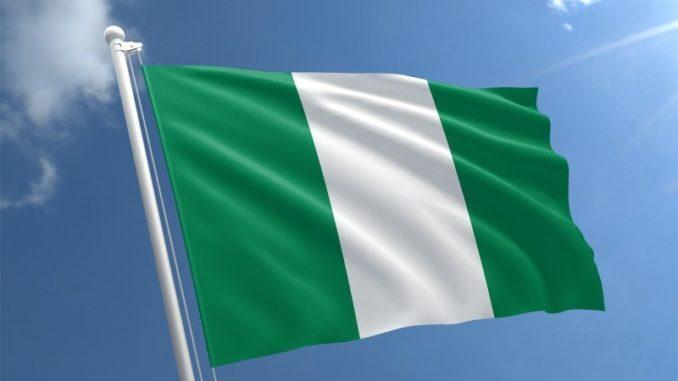
Parents are progenitors, predecessors that shape the lives, thoughts and even behaviours of their offspring. All living beings, man and beast, have or at one point had parents who shaped and formed their lives. This truism is however not exclusive to living beings alone, even states have parents. Modern-day Nigeria is a confluence of different religions and ethnicities. Although the defacto ethnic groups in Nigeria are Yoruba, Igbo and Hausa, a total of 250 ethnic groups exist in Nigeria, with Islam and Christianity being the dominant religion, although traditional religious societies still exist.
Multi ethnic and multi religious configurations are not spectacular variables, being that different countries of the world also share the same characteristic. For example, the People’s Republic of China has five state recognised religions and other religions although not recognised by the state but are still tolerated. More interesting is the fact that the Asian giant is home to 56 ethnic groups, making it a multi-ethnic society. This is also the reality of other countries notably the US, UK and so on.

In the case of Nigeria, you see how religion and ethnicity has and is still shaping the society. It is for this reason that I call them parents of modern-day Nigeria. Expounding this assertion would require a brief snippet of the country’s history. From its independence till date, one can easily identify the prevalence of ethnic prejudice in the country. This was even one of the factors that led to the counter coup of July 1966 against the government of Aguyi-Ironsi, which was a stepping-stone to the bloody civil war that ravaged the country, a war that led to the deaths of more than two million people.
The aftermath of the civil war still witnessed the presence of ethnocentric behaviours by Nigerians. The Ife-Modakeke crisis, herdsmen-farmer clashes and so on are all examples.
Then the other parent or progenitor, religion. Nigerians are very religious people. If religion was a pathway to economic development one could vehemently assert that Nigeria will be at the top of every economic index. As at 2011, there were more than 80 million Christians. In a population of more than 200 million people, 60 percent are Muslim. On the surface, this could be described as a good characteristic of modern Nigeria, being that religion propagates selfless service and in some cases unity.

However, the prevalence of eastern religions in Nigeria has been a fountain of conflict for the state. Since independence in 1960, the Nigerian state has witnessed religious crisis in one form or the other. The Maitatsine crisis, tensions which evolved as a result of Ibrahim Babangida’s move to enrol Nigeria in the Organisation of Islamic Conference which arose tensions in the state, Islamists movement of the Boko Haram, religious tensions in Kaduna, etc. are all pointers to the disunity that religion has wrought in the country. The afore-mentioned are examples on a macro level. But what about the micro-level analysis?
It was not until recently that inter-religious marriages were slightly tolerated. Before now, any attempt to marry someone not in your tribe or religious circle will be viewed as sacrilege. Now this does not mean that religion is an ill to the Nigerian society. It simply highlights the Nigerian interpretation of religious doctrine.
Having talked about religion and ethnicity, what or in this case “who” is modern day Nigeria? You see, there is no succinct way of describing who Nigeria has come to be, but as a progressive, I should give it a try. Modern day Nigeria is that entity that is always full of surprises. On a micro level, we may discuss the prevalence of ethnic and religious conflicts which have ravaged the state. Asides clashes, the country is one riddled with nepotism and/ or favouritism, corruption, crime, etc.
These ills will not be a possibility without the Nigerian people. Let me explain; Nigerians have a very dynamic but inimical interpretation of their ethnic backgrounds and religious affiliations. Most citizens believe so much in their tribes that they see anyone from other tribes as competition, enemies of progress, etc. Their interpretation of religion on the other hand is equally funny, putting it mildly. Some are of the opinion that those of opposing faiths are enemies or messengers of evil. With this kind of thought process, no wonder there is always one religious crisis or the other. You see, when people have preconceived notions about others, crisis is inevitable.
As I have said in the previous section of this comment, the problem of Nigeria is not religion or ethnicity, but rather the interpretations of these things. However, my only hope is that we all have re-orientations before it becomes too late.
God bless the federal republic of Nigeria.
SEYI OGUNNOWO