|
Getting your Trinity Audio player ready...
|
Nigeria is depending too much on oil, making its economy susceptible to developments in the global oil market, thus putting much pressure on the finances of the government.
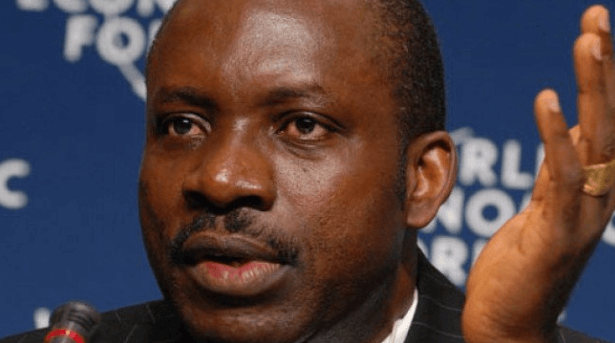
But the country’s biggest bet is never in oil but in a growing population which has been challenged by a high illiteracy rate at 60 percent due to a failing education system, said Charles Soludo, a one-time governor of the Central Bank of Nigeria (CBN) and member of President Muhammadu Buhari’s newly appointed Economic Advisory Council (EAC).
Soludo, while speaking at The Platform, a programme organised by the Covenant Christian Centre to mark Nigeria’s 59th Independence Day, said the future of Nigeria would be driven by people, particularly the youths, and technology. The event had the theme ‘Securing the nation’.
Soludo explained that the country’s next biggest earner would be its human capital, arguing, however, that the country would not start exporting illiterates.
“What is fundamentally wrong with Nigeria is that we have implemented all kinds of plans, all designed to diversify the economy. But we are still tied to the life-support of the oil sector, without plans for its booming population,” Soludo said.

“Is Nigeria preparing enough to welcome its 400 million population in the next 20 years or its 800 million citizens in 40 years’ time?” he asked. “Hence, those who have something to offer, especially the youths, must stand up to be counted.”
Soludo, who spoke alongside other renowned economists including Bismark Rewane, CEO, Financial Derivatives Company (FDC) and member of the Doyin Salami-led Economic Advisory Council, noted that state governments have to sit up in generating their revenues internally as the Federal Government is cash-strapped and cannot even cater for its own finances.
“Let Zamfara keep their gold and pay taxes to the government. Let Kaduna and Kogi keep their solid minerals. Most states have their own resources. Concentrating power in Abuja won’t help us develop our resources,” he noted.
According to him, a post-oil economy requires that agents maximise their fullest potentials which would require a national rather than a federal response.
“What we need is a new national business model. You are designing good ideas and good plans without the underlying infrastructure to carry those ideas forward,” he said. Soludo said institutions are major drivers of economic transformation of any country but, sadly, that of Nigeria is either obsolete or inappropriate and so need “fundamental overhaul”.

“The institutions and systems that we have are for a bungalow. And the new economy that we want to build is a 100-storey building but the world is not waiting for Nigeria.”
While electric cars are fast replacing petrol cars, Nigerians are still buying petrol stations,” Soludo said.
Peter Obi, People’s Democratic Party’s vice-presidential candidate in the 2019 general elections, said Nigeria needs to do something very quickly and drastically on its present security situation which is the number one job of any government.
Obi noted that three major factors affecting the growth of Nigeria are security, education and the economy with emphasis on solving the current underemployment and unemployment situation.
“Unemployment and under-employment are the greatest contributors to the challenges to the growth of our economy. When people don’t have jobs, we will have terrorists and criminals in society,” he said.
The former Anambra state governor also noted that one of the crises Nigeria is currently facing is the high level of debt accumulation which is not positively impacting the development of the country.
“Nigeria’s unemployment rate is over 25 percent, global life expectancy is 75 years, while for Nigeria, it is 54 years. Nigeria is the only country where you have a low literacy rate of 51 percent and this is caused by the nonchalant attitude towards our educational system,” Obi told the audience.
He expressed concern about the cost of governance in the country which he termed “unacceptable” while also noting that Nigeria needs to reboot its economy if it wants to get more revenue.
“If the money spent on subsidy was invested in education and health, it would have impacted positively on our economy at large,” Obi said.
Speaking at the programme, Rewane said Nigeria lacks the mental discipline to execute plans for the growth of the economy.
“What our economy needs is a mental discipline to learn from the mistakes of the past. Our vulnerability has increased because we have not learned from the mistakes of our past and that of other countries,” Rewane said.
He noted that people are tired of being told one thing and then seeing another as the social contract between the rulers and the ruled is very important, saying it’s cheaper to just talk than to act.
Anil Gupta, an expert on globalisation and emerging markets, said without power, it is difficult to forge ahead on economic ideas while also noting that the high rate of unemployment among young South Africans gave room for xenophobia, hence Nigeria should not treat unemployment with kids gloves.
“Looking at where Nigeria is coming from and where we are going, a lot more lies ahead. The success of the economic health of a society is determined by per capita income which distributes wealth but this has declined over time due to our declining GDP,” Gupta said.
Babajide Sanwo-Olu, governor of Lagos State, at the event responded to the chaotic traffic situation in Nigeria’s commercial capital, stating that the causes of recent traffic situation in the state include potholes which would be fixed faster after the rainy season, the population size viz-a-viz the land size, and the transportation system.
“To solve this problem on a medium- to long-term basis is to work on our rail, water and bus system,” Sanwo-Olu said.
MICHAEL ANI & DIPO OLADEHINDE