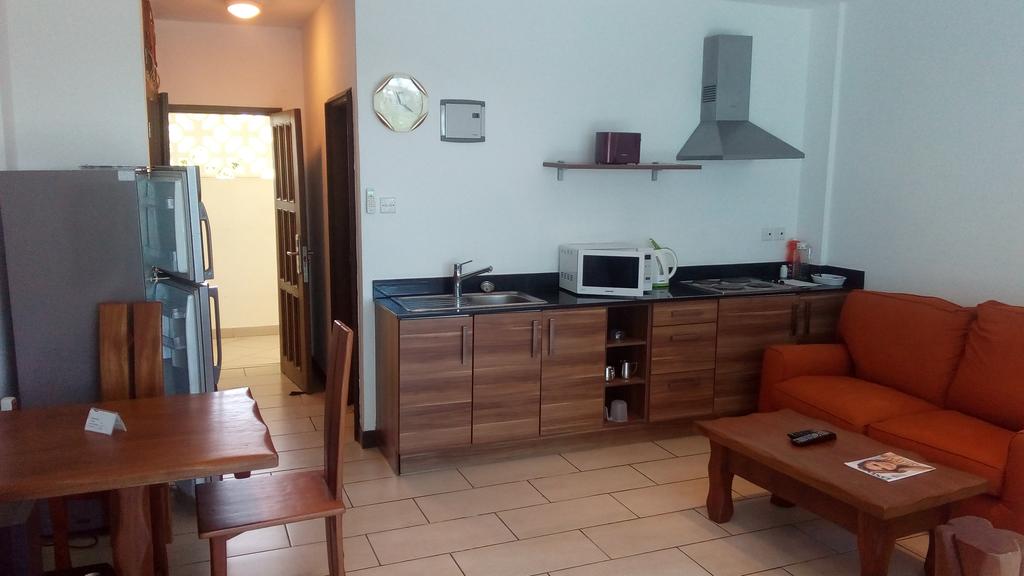
Developers are attuning their building projects to shell apartment option as demand for fully furnished apartments crawls on the back of economic crunch, BusinessDay checks reveal.
Demand for apartment furnishing is typically driven by multinational corporations seeking to book stays for relocating employees or those in town for extended periods.
It is also driven by foreigners on tourist mission, or people who have suffered fire or flood attack. These set of people move with their families and usually crave ready-made homes fleshed with every home appliance to ease their relocation to the new city.
But recently, these demands have not been forthcoming due to the contraction in the size of the expatriate community in the country.

According to Afriland Properties, while the country managed to exit economic recession in 2016, the real estate sector has not, leaving adverse impact on the capacity for demand and supply.
“Real estate continues to hurt from the negative impact of economic recession. You need a lot of capital and most projects are long term. So if you are looking for fund, you basically may not have access to long term funds,” Oluwaseun Adebola, communications manager at Afriland Properties, told BusinessDay.
However, a fully furnished apartment such as Caterer’s Court in Ikoyi continues to record growth, although marginal, as it is considerably cost-effective compared to top-rated hotels. The lease windows could be as much as a year under offerings like two or three bedroom flats.
“If you look at those 5-star hotels, if a room is 150, 000 per night, short-let apartment could still provide grade A quality room at N80,000,” Adebola explained.
“Some people are wary of hotel and want to live like they are in their homes. The good thing is that you can live as if you are living in your house. This means you can cook and have all the infrastructural settings you have in your house.”

But in response to full furnishing shortfall, developers have found shell apartments more interesting.
New building apartments are now being delivered mostly for sale to clients with plastered walls, screed walls, plumbing or electrically installed, leaving out other essentials such as kitchen, tiling, bathroom ceramics and walls in need of painting.
This stems from the fact that buyers were often disappointed with the quality of finishing offered by developers and demanded lower prices and shells they could complete by themselves instead.
Dotun Bamigbola, chief executive officer of Bamigbola Consulting, agrees that shell apartment has become a trend outpacing furnished apartments.
“This is because when people buy finished apartments, they still want to attune the features to their taste, leading to extra expense and waste of materials,” he said.
But when you sell as shell, the developer does not waste resources and buyers also don’t have to waste by ripping up and fixing all over again. “The shell model comes with flexibility, allowing buyers to do the finishing at their convenience and giving room for resale,” Bamigbola noted.
He believes that apartment furnishing will only rebound when the economy improves and opens up many projects for foreigners to act as consultants on
The market is also not likely to find local alternatives for demand as regular Nigerians do not subscribe to it except their organisations pay them as expatriates.
People also rarely have as much capital as they need to do the business because clients are financially constrained to go for desired options.
Temitayo Ayetoto