Phillip Isakpa
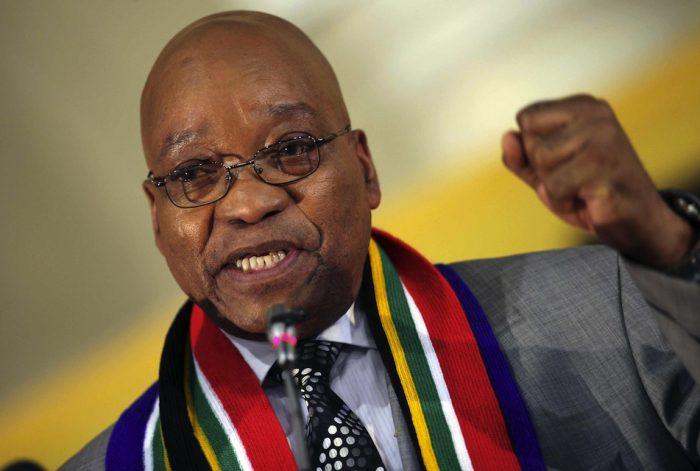
It happened that in the week I paid a return visit to the fine production of Soyinka’s Death and the King’s Horseman at the National Theatre on the South Bank there were pictures in the newspapers of the new President of South Africa Jacob Zuma with three of his wives at the State opening of the new Parliament a precedent already established at his inauguration on May 6. Unconnected, of course, but it set one thinking of the abiding issues of tradition and modernity in Africa. One of the themes explored in Soyinka’s play is the impact of British colonialism and modernisation on in 1940s Oyo, especially concerning the question of ritual suicide of the horseman on the death of the Alaafin. As I noted in my review in April, the play’s subject matter transcends the simple view of a clash of cultures’ between British and African. This is Soyinka’s own position as expressed in an interview which appears on the Methuen Drama student edition of the play, that it is a portrayal of complexity rather than conflict: we do have both tragic drama and comic drama resulting from within the internal factors in society, he says.
Seeing it a second time, the lavish production with its glowing synthesis of colour, costume, music, dance and language appeared even better than the first showing. I was also impressed that even in the last week of the season, it was playing to full houses, and included a large number of Africans in the highly appreciative audience, something that would have been an unfamiliar feature at a West End theatre even twenty years ago. Evidence perhaps of the greater integration of the African diaspora in British society? I hope so, but it also contains a certain refutation of the idea that Soyinka, with his intricate and sometimes over-intellectual use of the English language, is too difficult for wider audiences. His poetry resonated eloquently in the grand auditorium of the Olivier Theatre, and there was plenty of spontaneous audience response to his often sardonic humour.
Read Also: Embattled Zuma takes aim in controversial photo
It must also be said that, as is the wont of the British (or should I say the English?) who find self-mockery one way of dampening criticism, there was wide amusement at the grotesque portrayal of the colonial British, bearing in mind that one of the inspirations for the play admitted by the author was the sight of a statue of Winston Churchill in Cambridge. The scene of the fancy-dress ball, in its brittle irrelevance to the African society in which the colonial British found themselves, is a marvellous set-piece of staging with its black actors in Brechtian white-face and its comic opera song. This was not so much an anti-colonial rant (as the Daily Mail reviewer Quentin Letts benightedly claimed); rather an illustration of Noel Coward’s lines: It seems such a shame when the English rule the earth, they should give rise to such hilarity and mirth, or of the brilliant short film Les Maîtres Fous (the Mad Masters), made in Ghana in the late 1950s by the French cineaste Jean Rouch, that showed African kids mocking the rituals of Governors in their uniforms and plumed hats. Soyinka’s most telling comment comes from Olunde, the horsemans student son, who tells the Pilkings, who had helped him to get a British education: I have now spent four years among your people. I have discovered that you have no respect for what you do not understand. This applies particularly to their thoughtless wearing of the costumes of egungun masqueraders to the fancy-dress ball, a good cause for which they desecrate an ancestral mask. The pain of societal transition is acutely paralleled in the play by the pain of transition to the ancestors.
Where does this tie in with the arrival in power of an honest polygamist in South Africa, which triggered a somewhat meretricious debate on the subject in South Africa’s media? One cannot but admire the deft way in which Zuma responded to all the speculation about who will be the first lady by producing three first ladies at state occasions One commentator deplored that this was a debate was largely driven by US news values and that it was a subject of indifference to most South Africans. Although a very up-front Christian, who proclaims that the ANC is a party of Christian virtues, he is also, as they say, Anglican by day, African by night. By being closely associated with traditional practices, including polygamymanaged to create an image of himself as a straight-talking honest man among rural supporters across South Africa’s ethnic lines, according to Protas Madlala, a political analyst quoted by a BBC report. This issue takes me back to another under-performed Nigerian historical play Ajayi Crowther by Femi Osofisan in which one of the issues that caused the hypocrites of the Church Missionary Society in the 1890s to turn on Crowther, their protégé and Africa’s first black bishop, was precisely the deeply rooted tradition of polygamy.