Operators in the telecommunication service industry (telcos) in Nigeria are rearing to get their hands on mobile money operating licences, which will give them the opportunity to play in financial services, a situation many traditional institutions may be uncomfortable with. But could the biggest competition be coming from elsewhere?
Mobile money is an electronic wallet service that allows users to store, send, and receive money using their mobile phone. It can be used on both smartphones and basic feature phones.

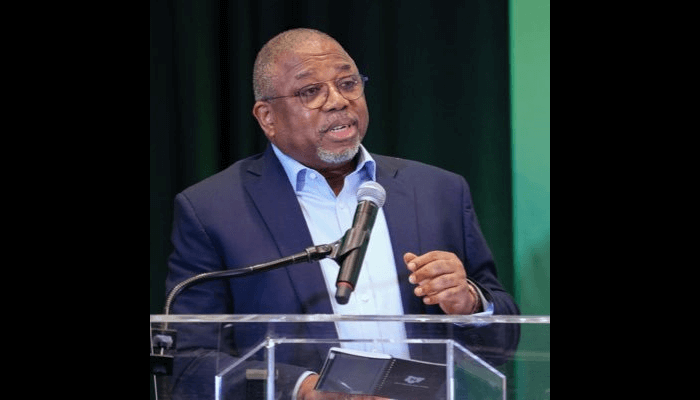
At the ITU Telecom World 2018 in Durban on Tuesday, 12 September, the executive vice chairman (EVC) of Nigerian Communications Commission (NCC), Umar Garba Danbatta, disclosed that the Central Bank of Nigeria (CBN) may soon lift the embargo on mobile money it placed on mobile network operators (MNOs).
According to the EVC, “The feeling I’m getting from the Central Bank of Nigeria is that very soon the telcos will be licensed.” He further revealed that the NCC and the CBN had set up a joint committee to look into mobile money licences for telecommunications groups after network operators including MTN expressed an interest.
Should that statement become reality any time soon, MNOs like MTN, Airtel, Glo and 9Mobile could become mobile money players in no distant time.

Many experts have said that the non-involvement of telcos in mobile money is majorly the reason mobile money has not been successful in Nigeria like it has been in countries like Kenya, Uganda, Tanzania, Cote D’Ivoire, Senegal, Rwanda and Ghana. Safaricom, Airtel, Tigo and MTN have mobile money licenses in these countries.
However, the space has a lot more to gain from a partnership than competition battles between MNOs and banks.
Inasmuch as the MNOs command some of the largest users – MTN has 55.2 million subscribers in Nigeria – it is non-financial and non-telco companies with deeper pockets and more sophisticated technology that has been widely tested could prove tougher challenge to Nigerian banks. In recent times, these global business entities including Alibaba, Google, Transsion – makers of Tecno, Infinix and iTel range of phones – have made public their interest in the financial technology space in Africa.
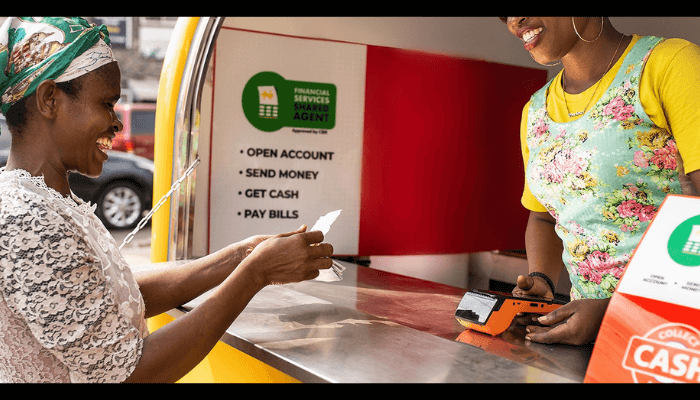
At only 1 per cent penetration, Nigeria’s mobile money is bank-led. This is despite repeated efforts by the CBN to drive penetration with the objective to deepen financial inclusion in the country. One recent effort was the launch of Shared Agent Network Expansion Facilities (SANEF) aimed at empowering 500,000 agent networks to offer basic financial services such as cash-in, cash-out, funds transfer, bill payments, airtime purchase, BVN among others, to an estimated 50 million unbanked Nigerians. The licensed mobile money operators are expected to deploy financial services agents’ outlets in under-served urban and rural areas in Nigeria.
The success of the scheme will depend on whether partnering banks will be willing enough to provide the needed financial support. This is very unlikely given the notorious trust issues that exist between banks and small businesses. This however can be dealt with by big telcos which outmatches the banks in terms of userbase and have better grassroot strategy to organise the agent networks.
While speaking to The New Times, Bart Hofker, MTN Rwanda CEO linked partnership and close collaboration between the two sectors to growth in financial inclusion.
“Telcos can be a channel for all the banks, we are stimulating it,” he said. “It however probably needs a little more time. It also requires technical work of feasibility and banks need to gain confidence that we are not in their way. Banks should feel free to join us.”
But if collaboration fails, an opportunity opens for the big tech companies. Telcos in Nigeria may be big but they are no match to global players like Alibaba or Transsion that make their lunch from removing obstacles by any means necessary.
Jack Ma, Alibaba’s co-founder and soon to become ex-chairman (company announced he will be retiring in 2019), was in South Africa recently on his second visit to Africa. Apart from unveiling a $10 million Netpreneur Prize for innovative startups, his company signed an agreement with the United Nations Economic Commission for Africa (ECA) and International Financial Corporation (IFC) to provide digital payment services to power Agenda 2030 which also ties into the African Continental Free Trade Area (AfCFTA) vision of the continent. That deal could see it become the most important payment link between small businesses in Africa and the AfCFTA dream.
Transsion which currently controls the smartphone market in Africa with 38 per cent ahead of Samsung’s 23 per cent recently announced a payment application called PalmPay to be launched on across Africa.
The mobile money market is larger than banks actually want to believe.