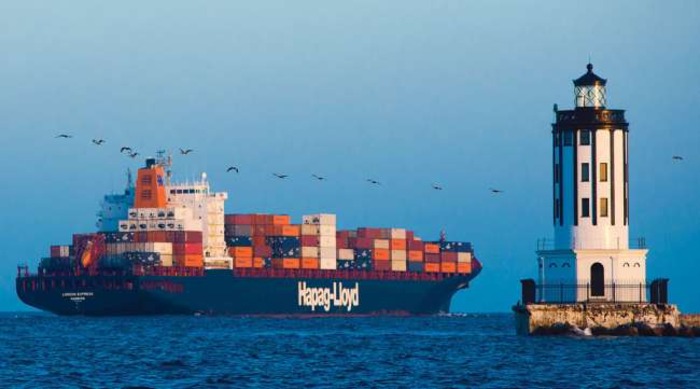
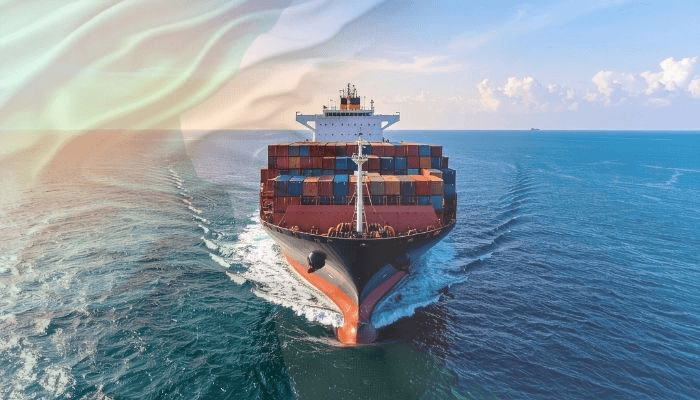
Nigerian-bound imported petroleum products including Premium Motor Spirit (PMS), Automotive Gas Oil (AGO) popularly known as Diesel, Dual Purpose Kerosene (DPK) known as Kerosene, brought in by ‘Mother Vessels,’ are first discharged in Lome before using smaller vessels to shuttle the products to Nigerian seaports.
Allowing Mother Vessels to berth in Lome, analysts say, has proven to have huge implications for Nigeria’s economy judging by the volume of the above mentioned products that are brought into Nigeria annually. By estimation, about 85 percent of the total imported petroleum products that come to West African sub-region are destined for Nigerian market.
BusinessDay understands that one of the major reasons Mother Vessels are discharged in Lome, is due to the shallow nature of the water channels leading to Nigerian ports. This means that when Mother Vessels get to Lome, the cargo would be transshipped to Lagos, using lighter vessels that can berth in Nigerian jetties.
For instance, vessels such as very large crude carrier (VLCC) with 200,000 to 325,000 dead weight tons; used mainly in the Mediterranean Sea, the North Sea, and near West Africa, have capacity to convey up to 2,000,000 barrels of oil at a go.

While an ultra large crude carrier (ULCC) with 325,000 to 550,000 dead weight tons; used in the Persian Gulf to European and American to Asia, has capacity to carry up to 4,000,000 barrels of oil. But Nigerian oil jetties have capacity to receive vessels with the capacity to convey about 80,000 to 120,000 metric tonnes of products.
Also, lack of adequate security on Nigerian waters has also been blamed for the inability of mother vessels to berth on Nigerian waters. This, according to analysts, is fueled by pirate attacks and other criminal activities that occur on the Nigerian waterways, which are succeeding in taking Nigerian shipping business opportunities away to more secured water channels.
Five things Nigeria loses to Lome include:
1. Revenue loss: Nigeria is currently losing multi-million dollar worth of revenue to the neigbouring seaport of Lome in Republic of Togo for allowing Mother Vessels to berth in Lome port. Government revenue is lost in areas like tax, tariff and levies, which Nigeria would have been collecting, if the imported petroleum products are brought directly to Nigerian seaports.
On the other hand, Nigerian operators have also lost the lucrative bunkering business to Togolese operators while Nigerians bunkers remain idle. Bunkering, which is the business of supplying fuels, food stuffs, water and other needs of ships and their crew, is a business that is legitimate in the international shipping business, but unfortunately, it was often mistaken in Nigeria with the economic monster known as ‘oil thief’.

Singaporean economy rakes in about $65 billion annually from bunkering; meaning that government needs to encourage operators in such business by using stringent regulation and monitoring.
2. Loss of shipping business: Foreigners have taken over the nation’s shipping industry. Here, the same foreign shipping companies involved in bringing imported petroleum products to the country were also the ones who distribute the wet cargoes.
Nigeria, according to Temisan Omatseye, a ship owner, has lost its shipping business based on the fact that as Mother Vessels remain offshore Lome, other smaller foreign-owned vessels are used in bringing in the petroleum products into Nigerian waters. This development, he said, has robbed the indigenous shipping companies of a lot of jobs and revenue.
Apart from earning money from chartering ships, owning ships enables a country to make use of its own people, thereby creating jobs for Nigerian seafarers.
Therefore, Nigeria as an oil producing nation must have plans to get value from selling crude oil just like other oil nations like Iran, Kuwait and so on that have ships for lifting their crude oil. These nations know exactly what they want to derive from the business of selling crude oil, Temilola Okesanjo, managing director of NLNG Ship Management Limited (NSML), said in a recent interview.
On the other hand, the Nigerian National Petroleum Corporation (NNPC) also need to deliberately create value along the crude oil supply chain and enable the economy get value by owning the means of delivering the produced oil to buyers.
3. Loss of Seafaring jobs: The inability of imported petroleum products to directly come to Nigerian seaports, has also taken seafaring jobs away from Nigerians. This is as many foreign seafarers including those from India, Philippine and other countries, have taken jobs away from Nigerians.
Currently, Nigeria, through the Nigerian Maritime Administration and Safety Agency (NIMASA), is building a crop of qualified seafarers from notable universities in different countries of the world including Egypt, United Kingdom, and others, but unfortunately, the jobs that are supposed to be done by these seafarers upon their graduation, have been taken over by foreigners.
For Omatseye, the trainings given to seafarers becomes a waste, if they can hardly find jobs since there were no ships to engage them.
4. Lack of capacity development: the indigenous ship owners in Nigeria are currently finding it difficult to develop capacity to compete with their foreign counterparts, which was why the nation’s shipping business, is largely foreign dominated.
For Nnajiuno Ogbuagu, a ship operator, limited job opportunities for local ship owners force indigenous ship owners in Nigeria to pass through difficult times and limit their chances of investing in acquisition of new and standard vessels.
Though, he believed, that ship owners need to invest in upgrading the standard of their vessels, he also, gave an instance where Nigerian owned vessels have severally been denied opportunity to participate in Cabotage trade due to inability to meet international classification standards.
5. Poor manpower development: Nigeria is presently losing the opportunity to train her cadets especially the graduates from Maritime Academy of Nigeria (MAN) Oron, who supposed to undergo sea-time training before they can be internationally certified as seafarers.
Sea-time is a practical training experience that is required of any cadet, in line with the stipulations of the International Maritime Organisation (IMO), before such cadet would be issued with a Certificate of Competence (CoC) to enable him or her to work on oceangoing vessels.
Though, most oil jetties in Nigeria are privately owned, the Federal Government through the Nigerian Ports Authority (NPA), needs to draw a master plan that would help develop a deep seaport for berthing of large crude carriers to limit the above listed economic losses and even make Nigeria a hub for oil cargo.
AMAKA ANAGOR-EWUZIE