|
Getting your Trinity Audio player ready...
|
Stakeholders in the agricultural sector are canvassing for improved technology and innovation in the sector to boost farmers’ productivity.
The stakeholders who spoke during the recent agric social media week, organised by Cooperate Farmers International and the International Institute of Tropical Agriculture (IITA) express optimism that with modern technology in the sector, agriculture would drive economic growth.
Woke Ogunlade, co-founder and chief marketing officer, Probity Farms said that the country’s ability to improve the quality of its seeds and seedlings depended on the level of technology in the sector, saying that lack innovation is fast slowing the growth that would have been recorded in the sector.
“Farmers need to start enhancing technology in various aspects of farm work to improve quality and quantity of yields,” Ogunlade said.

He said lack of technology in the sector for farmers has made it complex for financial institutions to properly evaluate production, making it difficult to finance farming projects.
Halina Apaila, country representative of Digital African Woman said that farmers need to be trained on technological tools to make them adopt innovative ways in farming and marketing strategy.
Apaila noted that when Nigerian farmers embrace technology, they would be able to access international engagements and investments, noting that it has been the major focus of her organisation to train farmers on modern farming technology.
“Digital African Woman gives a platform for training with technological tools to improve ideas, seeds marketing, website developments and engagements for international investors,” she said.
Also speaking during the event, Akin Alabi, co-partner, CFI, said that since the country’s agriculture is becoming more vibrant, technology and digitalisation are inevitable.

“Farmers need mechanisation and innovation to boost productivity if we are to feed ourselves as a nation,” Alabi said.
Lack of technology has continued to limit the capacity of farmers to expand their cultivation areas, perform timely farming operations and achieve economies of scale in food production, stakeholders say.
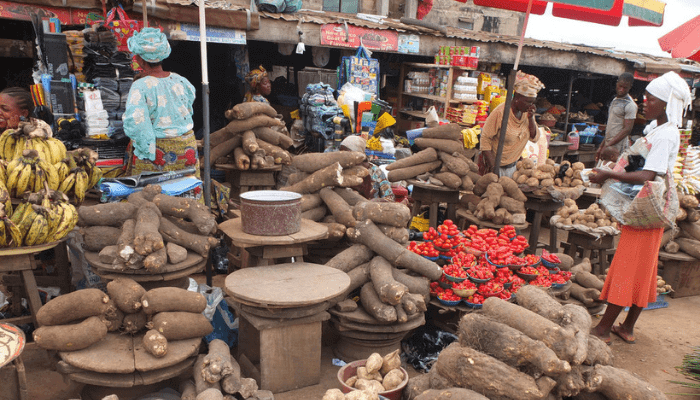
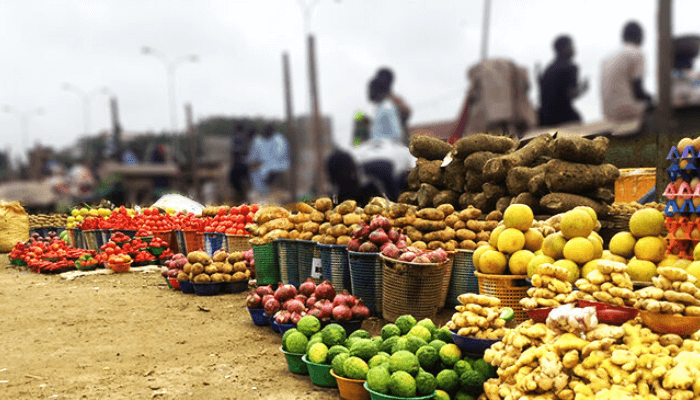
Nigeria is populated by 182 million people who must be fed with staple foods ranging from yams, rice, cassava to beans, bananas and tomatoes.
However, there is still much demand-supply gap in most of the staple foods, even as the population growth rate stands at 2.6 percent per annum.
The stakeholders stated that for Nigeria to attain high level of food sufficiency and reduce dependency on food imports, it has to adopt technology and innovation in its food production.
Available statistics show that Nigeria is one of the least mechanised farming countries in the world with the country’s tractor density put at 0.27 hp/ hectare which is far below the Food and Agriculture Organisation (FAO)’s 1.5hp/hectare recommended tractor density.
Josephine Okojie