Gambitzero
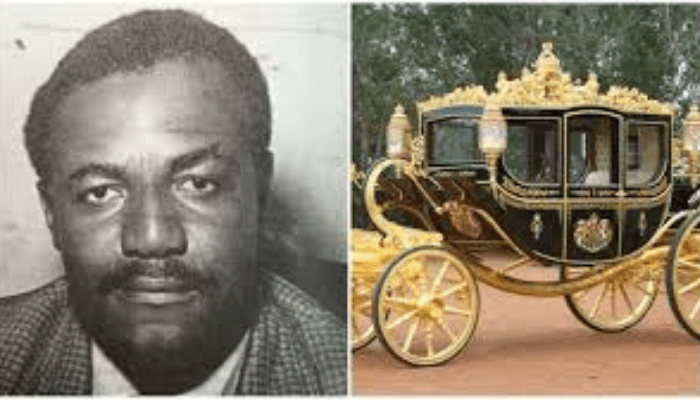
Joao Essan da Rocha was a metaphor for enormous wealth in Lagos – and much of southern Nigeria “from the late 19th century. In Victorian Lagos, da Rocha symbolised the new economy that emerged in the late and post slave-trade era. For a man who himself had been commoditised, da Rocha knew well how to turn commodities into wealth. The young Joao “his acquired name “was captured by slave raiders in Ilesa, present-day Osun State, in the 1850s and sold to Brazil. He was eventually freed from slavery. In 1870, he returned to Nigeria and settled in Lagos where he became a prosperous merchant. Before long, his measured wealth became a matter of myth and many in Lagos and adjoining areas weaved stories around how da Rocha’s money had become lame “unable to walk away from him! In fact, until the emergence of M.K.O. Abiola in the late 1970s, no one had captured the imagination of the southern Nigerian society as a symbol of wealth as much as da Rocha did.
A few decades later, not many remember who da Rocha was. Nigerians who were born from the second half of the 1970s would probably never have heard of this man unless they studied the social history of Lagos. His descendants are still in Lagos. Most probably, in one plush living room in some corner of Lagos today hangs the dignified portrait of (this) moustachioed great-grandfather, as the New York Times once described da Rocha. Nowhere in Nigeria stands any social monument to the comparative monumental wealth of this Lagosian. No foundation, no scholarships, no enduring philanthropy.
Even his successor, whose benevolence is legendary, survives only as a symbol of our collective search for a free, democratic and egalitarian society “and not in terms of his philanthropy. Abiola’s philanthropy has largely been interred with his bones. Like many wealthy men and women in Africa, and Nigeria in particular, whose philanthropy is tied strictly to their personal generosity, and who do not institutionalise their generosity, Abiola’s progeny are caught up in the battle for his will and have almost no will left to extend the frontiers of their patriarch’s philanthropy.
Read Also: How to keep MKO Abiola’s memory alive – Sanwo-Olu

The American, Andrew Carnegie, was probably born around the same time as da Rocha in 1835. He became an industrialist, businessman and a major philanthropist. Today, many causes for the betterment of humankind around the world are still being funded by this man who died as long ago as 1919. This is because he institutionalized his benevolence. His fortune was invested in the Carnegie Corporation, the Carnegie Endowment for International Peace and Carnegie Mellon University in Pittsburgh and the Carnegie Museums of Pittsburgh. The man regarded as the second richest man in history gave away most of his money to fund the establishment of many libraries, schools, and universities in the US, UK and other countries.
Carnegie declared that, There is no class so pitiably wretched as that which possesses money and nothing else. He did more than realise the truth of this statement – like many others, including the MacArthur couple of the MacArthur Foundation in New York, Henry Ford of the Ford Foundation, and Bill Gates, whose fortune “let me confess – through the Bill and Melinda Gates Foundation’s scholarships in Cambridge University, at a point, made yours truly FORTUN-ate. Gates has stated that he would give no less than 90 percent of his fortune to charity and leave only ten percent to his family. Like Carnegie said, Gates resolved to stop accumulating and begin the infinitely more serious and difficult task of wise distribution. He has given more to stop the spread of malaria in Africa than most African governments have spent on the same scourge which kills millions. His much older friend, Warren Buffet, the second richest man in America, is giving 85 percent of his $44 billion fortune to the Gates Foundation. Can you imagine an Okoya-Thomas handing over his fortune to, say, Dangote Foundation “if that were to exist?
Socrates, many millennia ago, posited that If a man is proud of his wealth, he should not be praised until it is known how he employs it. This brings the African wealthy class, particularly the Nigerian variant, to mind. Where they are benevolent at all, the generosity is so personalised, and sometimes so trivialised and vulgarised, that it is hardly socially redeeming.
It is a shame that whereas Nigeria has produced a galaxy of super rich men and women, some even appearing on the fames Forbes list of global billionaires, many of our universities, scholars, Nigerian researchers and students still rely more on American foundations to fund their research and grant them access and scholarships to world-class universities. Also, our civil society organisations are reliant on the Euro-Dollar Zone for the grants which condition and facilitate their work.
Some would dismiss any concrete socially-redemptive expectations from the preceding and emergent Nigerian bourgeois class because of the form and method of their accumulation. The truth is, everywhere in the world, accumulation, is, essentially, a form of organized theft. What separate the African wealthy from the Euro-American wealthy are the latter’s concerns with social preservation and the possibilities of immortality inherent in the institutionalization of social generosity. The wealthy in Nigeria hardly recognize how their long-term organic interest is enfolded into the struggle for the reconstitution of Nigeria and the building of a better society.
Here then is to you all, the Dangotes, the Otedolas, the Adenugas, the Iwuanyanwus, the Otudekos: Take up the task; institutionalize your philanthropy “if you already have the inclination “and match the monies given by the Euro-American foundations to repair your own society. No matter how much you leave to your progeny, this is your most secure path to immortality.