|
Getting your Trinity Audio player ready...
|
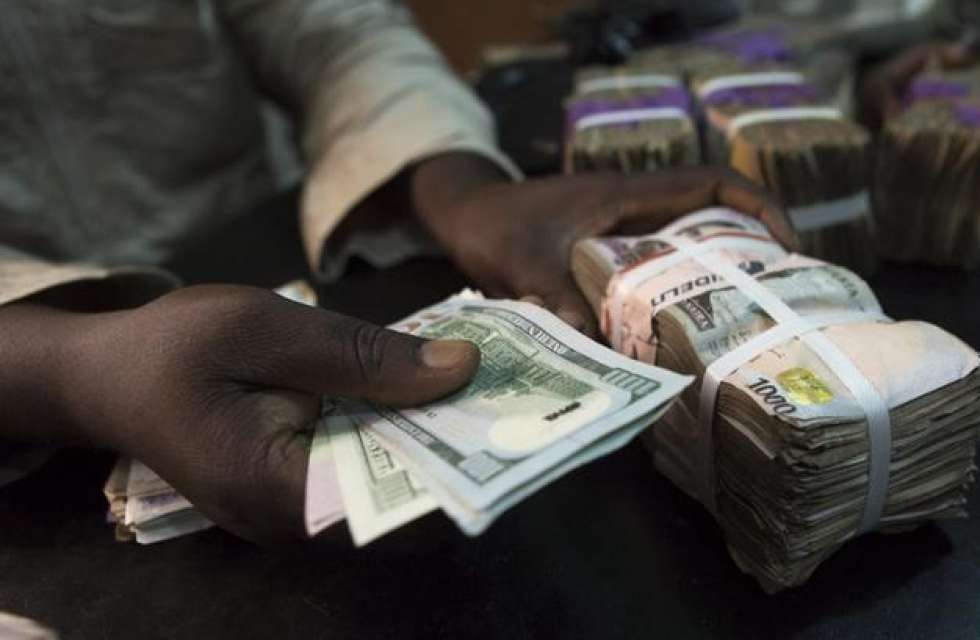
The naira yesterday maintained gain over the dollar across segments of foreign exchange markets following increased volume of sales to Bureaux De Change (BDC) operators by Travelex and International Money Transfer Operators (IMTOs).
The proceeds from Diaspora funds, which are sold to BDCs by Travelex, a global foreign exchange dealer, and IMTOs, have been increased to $15,000 this week from $10,000 per BDC operator last week.
Consequently, the local currency closed stable at N472 against the greenback, the same as on Tuesday at the BDC segment of the forex market.
At the parallel market, naira gained N1 or 0.21 percent to close at N475 against the dollar yesterday, compared with N476/$ traded the previous day, BusinessDay findings showed.
Naira also appreciated at the interbank foreign exchange market, gaining N10.07k as it closed at N310.24 yesterday, representing 3.14 percent compared with N320.31 closed the previous day, data from FMDQ revealed.
Aminu Gwadabe, acting president, Association of Bureaux De Change Operators of Nigeria (ABCON), told BusinessDay that Travelex would on Friday sell $15,000 to each BDC at $346/$, while the BDCs were to sell to end users at N356/$.
Read also:https://businessday.ng/lead-story/article/world-records-highest-single-day-cases-of-coronavirus/
The Central Bank of Nigeria (CBN) had on July directed banks and authorised dealers who were agents of approved international money transfers operators to sell foreign currency accruing from inward money remittances to licensed BDCs.
The CBN subsequently increased the weekly dollar sales to BDCs by banks to $50,000 from $30,000 per BDCs. But the failure of the banks to comply with the directives pushed BDCs to partner with Travelex for dollar sales.
The CBN’s efforts towards maintaining a stable foreign exchange rate were sustained in the first half of 2016. However, external shocks, speculative demand pressure and low accretion to external reserves remained the major challenges to the stability of the exchange rate.
Consequently, the CBN introduced the Flexible Exchange Rate regime on June 20, 2016 and revised guidelines to strengthen the operation of the foreign exchange market were issued. The objective of the new policy was to enhance efficiency, boost liquidity and promote stability in the market.