Of late, I have begun to worry about the spectre of our bourgeoning debt overhang. It was the German philosopher Hegel who opined that the only lesson history teaches is that we do not learn anything from history. One of the bitter lessons of our recent macroeconomic experience has been the debt peonage that was inflicted on the Nigerian people from the eighties to the mid-2000s. During the Age of Obafemi Awolowo, Nigeria prosecuted a costly civil war without incurring any debt from abroad. We also executed an ambitious post-bellum Rehabilitation, Reconciliation and Reconstruction without recourse to external borrowing. Mysteriously, the first jumbo loan we incurred was towards the tail-end of the Obasanjo administration, in 1979. It was in the staggering amount of US$1 billion. To this day, nobody knows why we went borrowing, precisely at a time when our treasury was awash with dollars. The late Professor Ayodele, an engineering and mathematical genius, and a political activist, made strong allegations about a jet load of dollars that had been carted out of the country before the hand-over to civilian rule. Perhaps we would never know the truth.
From this small amount of US$1 billion, the Shagari civilian administration, having looted the treasury like a bunch of drunken sailors, found themselves in dire straits towards the end of 1982. They had to resort to borrowing from the Bretton Woods Institutions. The debt soon ballooned to US$10 billion. By the latter part of the 1980s, a bunch of thieving and murderous generals perfected the means of borrowing for fictitious projects, aided and supported by international creditor sharks who were happy to oblige them.
All in all, Nigeria borrowed an amount that was no more than some US15 billion. Because these loans were incurred in variable interest rate terms, the repayment obligations began to balloon out of control each time we were in arrears and each time the U.S. Federal Reserve decided to raise interest rates. The total debt amounted to nearly 60 percent of GDP, and we were paying nearly a half of the national budget just in servicing interest payments, not even having touched the principal. Faced with the arduous challenges of poverty, parlous infrastructures, unemployment and a low human development performance, it was clearly not a sustainable situation from the viewpoint of economic prudence.
When Olusegun Obasanjo won his second term in office he was determined to seek debt relief. In 2004 our total debt stock stood at US$46.2 billion, of which US$35.9 billion was owed to external creditors while the remaining US%10.3 billion was owed to local lenders. Following a long drawn-out series of negotiations with the Paris Club, an informal network of bilateral and multilateral creditors, an agreement was reached in April 2006 to provide debt relief for Nigeria. According to the terms, we would have debt relief amounting to US$20 billion to be written off while we would do a buy-back on the remainder. We ended up paying three tranches in the amount of US$12.4 billion, followed by some US$4.52 billion, both of them to the Paris. A final sum of US$2.15 billion was paid to commercial creditors.

All in all, we coughed out a staggering amount of nearly US$20 billion to settle a bunch of foreign shylock creditors. There has been a lot of debate about the wisdom or otherwise of coughing out such an amount of money. It certainly went down in the annals as the single largest transfer of funds from a poor country to a club of wealthy nations. But that was not the end of the matter. We had to agree to an IMF monitoring programme, in addition to an express commitment to provide hundreds of billions of naira each year for so-called poverty alleviation. With these ill-thought poverty programmes, Nigerians got poorer. The World Bank called it “jobless growth”.
Like the Bourbons of old, it would seem we have learned nothing and forgotten nothing. We now seem to have come full cycle. Once again, our debt profile seems to be mounting. According to data from the Debt Management Office (DMO), Nigeria’s total public debt stock, including the total debts of the State Governments, currently amount to US$67.73 billion. This is already way ahead of where we were by year’s end 2004. This figure is equivalent to 12.65 percent of our total GDP. It seems clear to me that the ratio of debt to gross domestic product (GDP) is going to become an issue of major concern. During 2010 it stood at 17.6 percent, rising to a high of 22.43 percent in 2012. However, it came down to about 12.65 percent, only due to the rebasing of the economy. If the economy had not been rebased, the ratio of national debt to GDP would most probably have increased dramatically. At year’s end 2014, following the rebasing of our GDP, the ratio fell to 12.65.
Well, we may derive some comfort in the fact that the ratio of debt to GDP is still below the country-specific threshold of 19.39 percent and the West Africa Monetary Zone (WAMZ) recommended convergent threshold of 70 percent. But this is not to say that we can relax. With the gap of some N1.6 trillion that may be needed to finance the deficit in the budget, we are easily seeing a requirement of more than US$3.5 billion that would be needed. This will actually worsen the debt to GDP ratio in the coming years.
Here again, there are critical issues of concern for all of us. Debt servicing obligations of all tiers of government have been growing steadily from US$4.6 billion in 2010 to US$9.62 billion in 2013 and US$13 billion in 2014. Most of these figures are in naira, of course. The picture seems somewhat better when we look at the figures for external debt servicing obligations. According to the data we have been given by DMO, external dollar denominated debt service obligations fell from US$8.53 billion in 2010 to US$3 billion in 2013 and US$2.7 billion in 2014.
But we have good reason to worry. The external debt has been steadily climbing up again. From a low figure of US$4 billion in 2010, the external debt profile has risen to US$9.7 billion in 2014. In 2015, total external debt obligations stood at US$10.32 billion, of which US$7 billion was incurred by FGN while US$3 billion by the States. At current trends, we may find ourselves back to where we had extricated ourselves in 2005 if care is not taken. From available information, some US$8.2 billion of the external debt is owed to official creditors, representing 84.55 percent, while some US$1.5 billion is owed to private international creditors. The official creditors are largely multilateral creditors such as the IMF, the World Bank and the African Development Bank Group, in addition to official bilateral creditors.

With regard to external debt service, we also face a situation requiring greater care, wisdom and prudence. As at year end 2014, our external debt service obligations amounted to the sum of US$346.72 million. It was a major jump from the previous year’s external debt service obligation of US$297 million. Multilateral creditors, who cannot fail to be paid under any circumstances, took the bulk of our total external debt payments in the tune of US$152.74 million, which is 44.05 percent of the total payments, while the rest went to bilateral creditors. Of the total external debt payments, some US$91.26 million went to holders of Eurobonds while US$12.07 million was paid to commercial creditors and some US$41.72 million was paid in respect of Oil Warrants.
From the foregoing, it seems clear to us that we have to be more careful. We may soon find ourselves in a situation where are coughing out billions of dollars in external debt service payments, at a time when revenues from oil are going down and our current account and trade balance continue to fall while our external reserves continue to be depleted.
Ordinarily, it is OK for governments to borrow. In fact, some economists recommend borrowing through financing vehicles such as bonds and treasury bills as a means of deepening the yield curve in the capital markets. A sophisticated money and capital market is deemed good for liquidity in the financial system, freeing up money that could go a long way in filling up financing needs in the economy. It can indeed be good for growth. But it must be properly managed. It is essential to manage the risks that go with accumulating higher debt profiles. One of such risks, especially for external debt, is the exchange rate risk. When we borrow from multilateral or private creditors in dollars, such borrowing is subject to the vagaries of the dollar. When the dollar rises or when the U.S. Federal Reserve raises interest rates, it is likely to mean higher repayment obligations for dollar denominated debtors. Also, when the naira falls, it could also mean having to pay more naira to meet our external dollar payments.
A debtor nation can neither be considered truly free nor a democracy in the real sense of the word. Debt peonage is equivalent to slavery and a colonial status. For the love of our people and for the love of freedom, we must control our appetite for debt. While debt financing can play a crucial role in filling the financing gap, we must remain ever vigilant to avoid the follies of the past. Nigeria’s debt profile is rising fast. It is important that we tame the monster before it becomes a voracious tiger that could consume us.
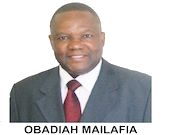
Obadiah Mailafiya