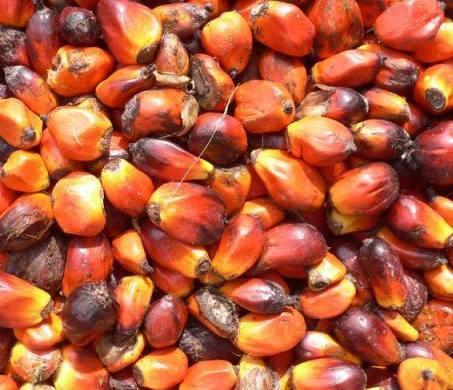
More than 50 years after Nigeria lost its position as one of the world’s largest palm oil producers, the country is yet to recover and take its proper place in the comity of producer nations.
The Nigeria geographical space, as well as the Democratic Republic of Congo (then Zaire) was the world’s largest palm oil producers for over 100 years, up till 1960, shipping oil to Europe, the Americas, Asia and other parts of the world.
Oil palm production in British West Africa reached 157,000 tonnes by 1911, out of which about 75 percent came from Nigeria, according to Andrew Walker, an agro analyst.
But the discovery of crude oil at Oloibiri in present day Bayelsa State, a few years to Nigeria’s independence, changed Nigeria’s palm oil story, prompting Malaysia and Indonesia to surpass Nigeria in palm oil production by 1966.

Despite controversies surrounding Malaysia picking palm fruits from Nigeria, historical evidence clearly shows that in the 1870s, British administrators took Nigeria’s palm oil to Malaysia, and by 1934 the country surpassed Nigeria as the largest exporter of the product. Currently, Malaysia is the world’s second largest palm oil producer and exporter, trailing Indonesia.
“If you know the history of Nigeria, you will understand that this country was the world leader in oil palm in the 60s and 70s, but Malaysia and Indonesia took the know-how from this country and then over the last 30 to 40 years, they became world leaders,” Santosh Pillai, managing director, West Africa, PZ Wilmar, said during the award of ISO 22000:2005 by Bureau Veritas in 2015.
Celestine Ikuenobe, director of research, Nigeria Institute for Oil Palm Research, told BusinessDay that oil palm production in Nigeria has been moving at a very slow pace, despite a population growing very fast.
According to Ikuenobe, palm oil production in Africa’s largest economy has been slow, owing to poor innovation and technology. Ikuenobe however, pointed out that the recent level of investments in processing mills could bring major advancement in the growth of oil palm production in the country.
Data in the oil palm sector shows that the country is currently producing about one million metric tonnes (MT) per annum, with local consumption estimated at 2.7 million MT, indicating an estimated demand-supply gap of about 1.7 million MT.

About 90 percent of palm oil is used in the production of foods, while the remaining 10 percent is used by the non-foods industry. Foods like noodles, vegetable oil, biscuits, chips, margarines, shortenings, cereals, baked stuff, washing detergents and even cosmetics are made from palm oil.
The 1.7 million MT supply gap in the country frustrates manufacturers in the food and beverage industry, who depend largely on crude palm oil (CPO) as a major raw material.
“Attention is being focused on big players and not on smallholder farmers. Palm oil production of smallholder farmers has been stagnated over the last five years because it requires a lot of investment and government is not assisting farmers but the big players,” said Igwe Uche, national president, Oil Palm Growers Association of Nigeria (OPGAN).
The oil palm belt covers 24 states, including all nine states of the Niger Delta and the South-East part of the country. Eighty percent of production comes from dispersed smallholders who harvest semi-wild plants and use manual processing techniques. Despite the credit given to the immediate past administration on agriculture, the government did not pay much attention to this essential industry which has huge value-chain potential.
“Investment in oil palm requires huge finance. Farmers are not cultivating new farmlands because it requires huge finance. Funding is one of the major challenges we face in the industry,” said Henry Olatujoye, national president, National Palm Produce Association of Nigeria (NPPAN).
“The traditional processing has been very inefficient because of low technology, which has contributed to the shortage of palm oil for industries,” he said.
According to a forecast by the Food and Agriculture Organisation (FAO) of the United Nations, the global demand for palm oil will double by 2020, and triple by 2050. In the wake of crude oil slump, Africa’s largest economy has not made appreciable efforts to tap into the value chain in palm oil industry, which can create millions of jobs and make it an export hub.
With a well-developed palm oil industry, Nigeria can export the product and earn foreign exchange, thereby reducing the crude oil shocks on the economy, analysts say.
Oil palm plantations have the capacity to produce up to ten times more oil than any other oilseed crop. The big players like PZ Wilmar, Okomu, Presco and Dufil, with the largest oil palm farms, have turned to backward integration by cultivating palm tree plantations.
Experts say Nigeria needs a total plantation of about 3,000,000 hectares of land if it wants to be self-sufficient in the production of oil palm to meet local demand.
“Most of the seedlings available in the country are poor seedlings. We don’t get enough quality hybrid seedlings for planting which will give us higher yields. We have to source for quality seedlings by importing them,” said Brian Hammond, managing director, IMC Limited in an interview with BusinessDay.
ODINAKA ANUDU & JOSEPHINE OKOJIE